Choosing wall art for a living room comes down to three decisions: scale, color, and how the piece works with the furniture already in the room. Get those right and even a single large print can carry the whole space.
- Wall art for living rooms should span 60-75% of the sofa or console width below it — undersized art is the most common mistake.
- Large-format canvas prints are the safe pick for open-plan rooms in 2026; framed fine art suits smaller, formal spaces.
- Gallery wall sets of 3-5 pieces work best over sofas under 200cm wide, buy them as a coordinated set, not piecemeal.
- Metal wall art holds up in high-glare rooms where canvas and glass-framed prints wash out under direct sun.
- Center artwork at roughly 145cm (57 inches) from the floor — the standard eye-level convention used by framers and stagers.
Why this matters
A living room's main wall gets more visual traffic than any other surface in the house — it's what guests see first and what shows up in every video call background. Undersized, mismatched, or poorly placed pieces read as an afterthought no matter how good the furniture is.
The good news: wall art is one of the cheapest ways to change how a room feels, and it's fully reversible if you get it wrong. The Mercado da Imagem catalog spans canvas, framed prints, metal pieces, and gallery sets, which covers most of the scenarios below without needing to mix vendors.
Who this is for
This guide is for anyone furnishing or refreshing a living room in 2026 who has the sofa and rug sorted but is staring at a bare wall. It applies whether you're working with a rental you can't drill into, a formal sitting room, or an open-plan space where the living area bleeds into the kitchen. If you've already bought art and it looks small or off-balance on the wall, the sizing and placement sections below will tell you exactly what went wrong.
What to look for in wall art for living rooms
Scale relative to your furniture
Art that's too small over a sofa is the single most common styling mistake in living rooms. The rule of thumb: the piece (or the full gallery arrangement) should span 60-75% of the width of the furniture beneath it — a 220cm sofa wants roughly 130-165cm of art width, not a single 60cm canvas floating in the middle.
Color relationship, not color matching
Art doesn't need to match your throw pillows. It needs one or two colors that echo something already in the room — a rug tone, a wood finish, a lamp base. Exact matches read as decorator-kit and age fast; a loose echo reads as intentional.
Material and finish for your light conditions
Glossy canvas and glass-framed prints glare hard in rooms with south-facing or unfiltered afternoon light. Matte canvas, framed prints with anti-reflective glass, or metal prints with a brushed finish hold up better when the sun hits the wall directly for part of the day.
Style cohesion across the room
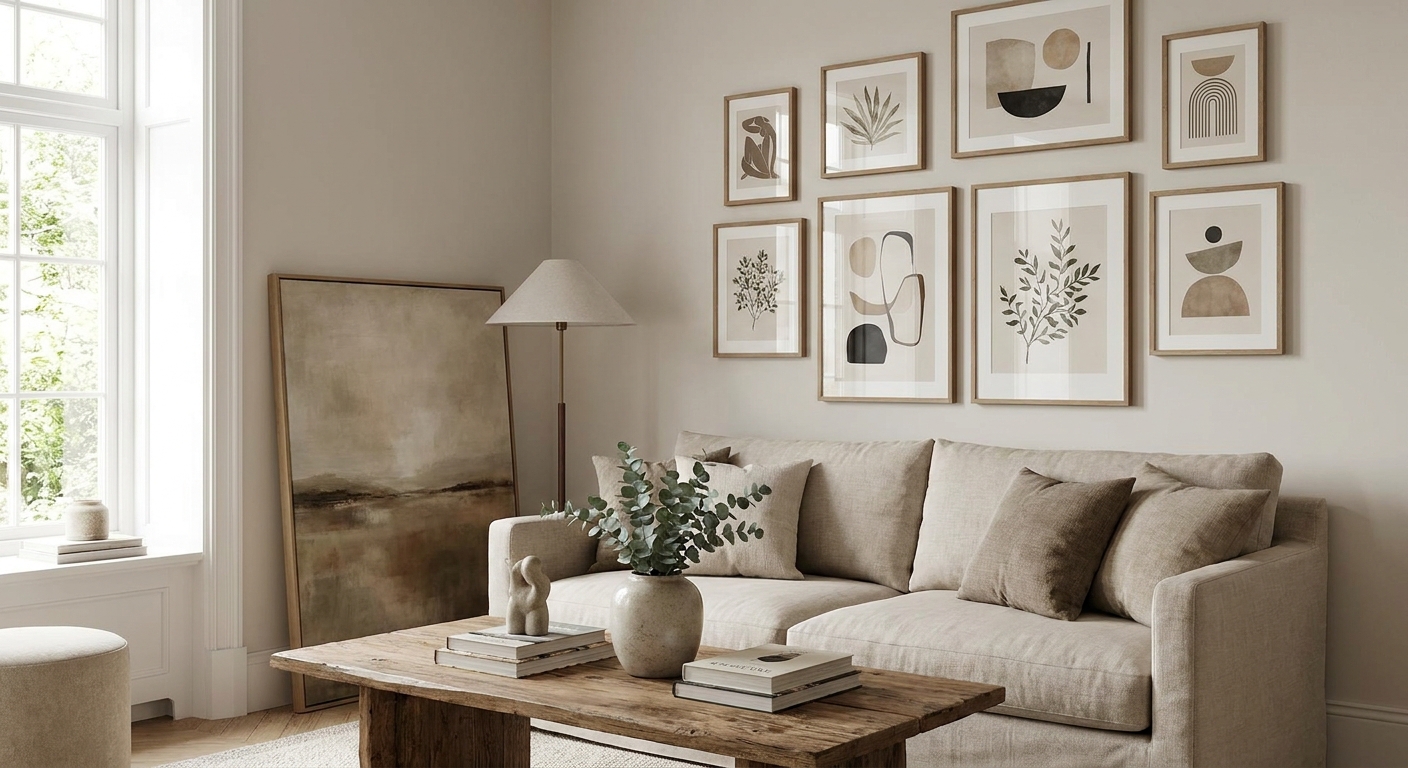
Pick one dominant visual language — abstract, photography, botanical, typographic — and let everything else support it. A living room with an abstract canvas, a botanical print, and a black-and-white photo on the same wall reads as clutter, not curation, unless the frames and mat colors are deliberately unified.
Frame and mount type
Framed prints suit formal or traditional rooms and protect the piece from dust and handling. Stretched canvas and metal prints suit modern, minimal spaces and hang without a frame lip, which reads lighter on the wall. Neither is objectively better — it depends on the room's existing hardware and trim.
Wall condition and hanging constraints
Renters and anyone with plaster or brick walls need to check hanging hardware before falling in love with a piece. Lightweight canvas on stretcher bars hangs on a single hook; large framed prints with glass often need two points and a stud, which isn't always available on an open living room wall.
Top picks by scenario
The safe pick — large-format canvas prints. A single canvas at 100cm x 150cm or larger fills a standard sofa wall without needing a gallery arrangement, and stretched canvas has no glare to manage. It suits open-plan living rooms in 2026 where the wall runs long and a cluster of small frames would get visually lost. Buy if your main wall is wider than 200cm and you want one statement piece instead of a composition.
The classic — framed fine art prints. Framed prints with a mat border suit formal living rooms, especially where the trim, mirrors, or existing frames are already traditional. A single 60cm x 90cm framed piece centered over a console or fireplace mantel reads finished without competing with the room. Buy for period homes or rooms where canvas would look out of place next to existing woodwork.
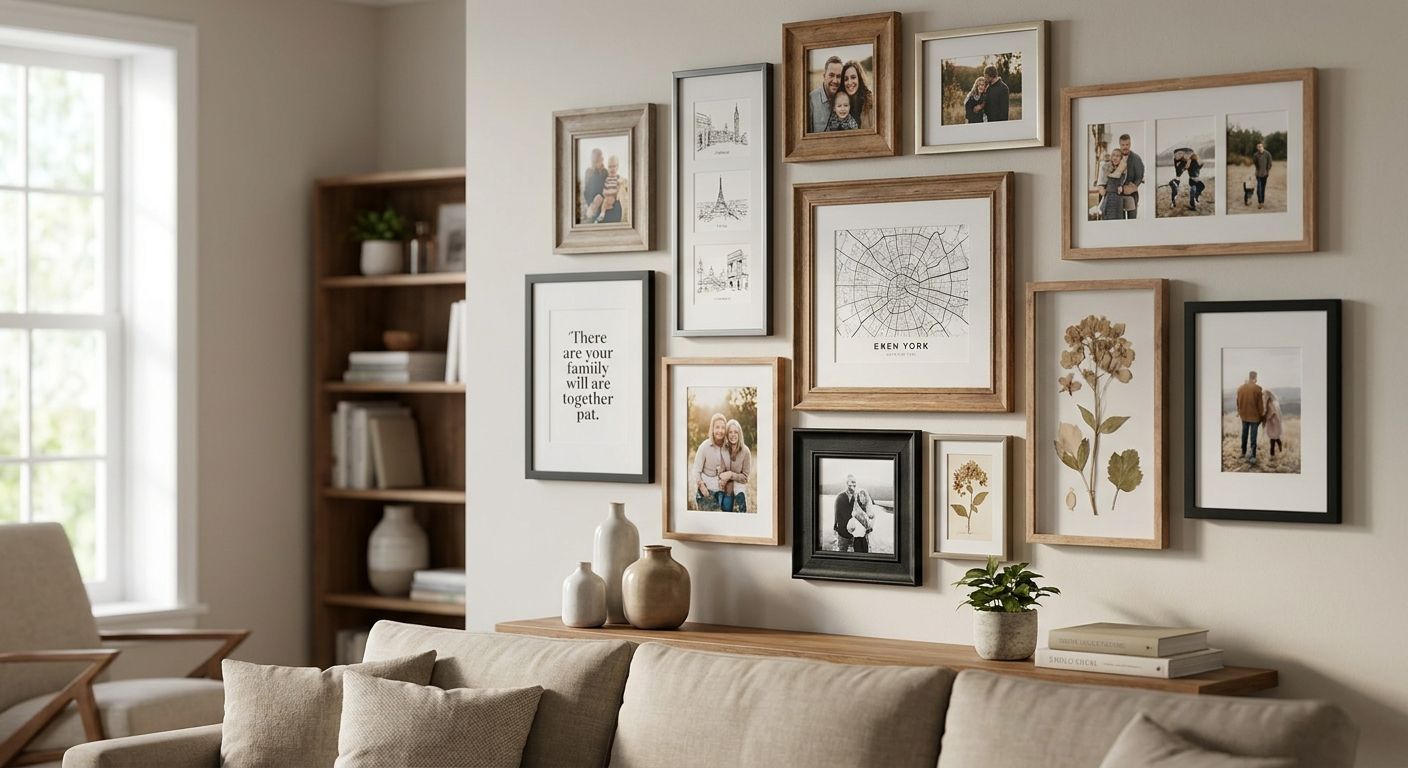
The versatile option — gallery wall sets. A coordinated set of 3-5 pieces, hung with a consistent 5-8cm gap between frames, works over sofas under 200cm wide where a single large piece wouldn't fit proportionally. Buying the set as a matched group avoids the mismatched-frame problem that DIY gallery walls run into. Consider if your wall is narrower than 200cm or has an irregular shape around a window or doorway.
The durable option — metal wall art. Metal prints resist warping in humid climates and hold color better than canvas in rooms with strong indirect light. They suit modern, minimal living rooms with metal or glass furniture accents already in place. Consider for coastal or high-humidity regions where canvas can bow over a few years.
The wildcard — oversized abstract or botanical prints. A single oversized abstract piece, 150cm or larger on its longest side, works as the anchor in a room with otherwise neutral furniture and needs almost no other wall decoration to feel complete. It's a bigger commitment than a gallery set because there's no easy way to swap out one element later. Consider if you want a single focal point and are comfortable living with one strong choice for years, Skip if you tend to redecorate often.
What to avoid
- Undersized art centered on a large wall. A 40cm print on a 300cm wall looks like it was hung as an afterthought, even if the piece itself is good.
- Mixing warm and cool frame finishes in one gallery wall. Black metal frames next to warm oak frames on the same wall reads unplanned unless it's a deliberate 50/50 split, not a random mix.
- Hanging art too high. The instinct to hang near the ceiling to make a room feel taller usually backfires — the 145cm center-height convention exists because it matches natural eye level when seated, which is how most people view living room art.
Find the right piece for your wall
Browse canvas, framed, and metal wall art by size and style.
Verdict comparison
| Type | Best wall width | Glare resistance | 2026 verdict |
|---|---|---|---|
| Large-format canvas | 200cm+ | Low-medium | Buy |
| Framed fine art | 100-200cm | Medium-high (with anti-glare glass) | Buy |
| Gallery wall set (3-5 pieces) | Under 200cm | Depends on mix | Consider |
| Metal wall art | 100cm+ | High | Consider |
| Oversized single abstract | 250cm+ | Low-medium | Consider / Skip if indecisive |
FAQ
What size wall art is best for a living room?
Wall art for a living room should span 60-75% of the width of the sofa or console beneath it. A 220cm sofa needs roughly 130-165cm of combined art width, whether that's one large piece or a gallery grouping.
How high should you hang wall art above a sofa?
Center the artwork about 145cm (57 inches) from the floor, and leave 15-20cm of clearance between the top of the sofa and the bottom of the frame. This keeps the piece at natural seated eye level.
Is canvas or framed print better for a living room?
Canvas suits modern, open-plan rooms and hangs without glare; framed prints suit formal or traditional rooms and protect the piece behind glass. Neither is objectively better — match it to the room's existing trim and furniture style.
How many pieces should be in a gallery wall?
Most gallery walls over a living room sofa work best with 3 to 5 pieces, spaced 5-8cm apart. More than 5 pieces starts to need a grid layout planned on the floor before anything goes on the wall.
Does wall art need to match the sofa color?
No — matching every color exactly reads as a decorator kit rather than a considered room. Pick one or two colors from the art that echo the rug, wood tones, or an accent already in the space.
What wall art works in a room with a lot of natural light?
Matte canvas, metal prints, or framed prints with anti-reflective glass hold up best in bright rooms. Glossy canvas and standard glass framing glare hard under direct afternoon sun.
Can you mix different art styles on one living room wall?
You can, but pick one dominant style — abstract, photography, or botanical — and let the rest support it. Random mixing of styles and frame finishes on the same wall tends to look unplanned rather than curated.
One last thing
The 145cm center-height rule isn't a design trend, it's a measurement convention framers have used for decades because it matches average seated eye level — which means it still works even after you rearrange the furniture around it. Get that measurement right before you touch scale or color, and most of the styling problems above solve themselves.