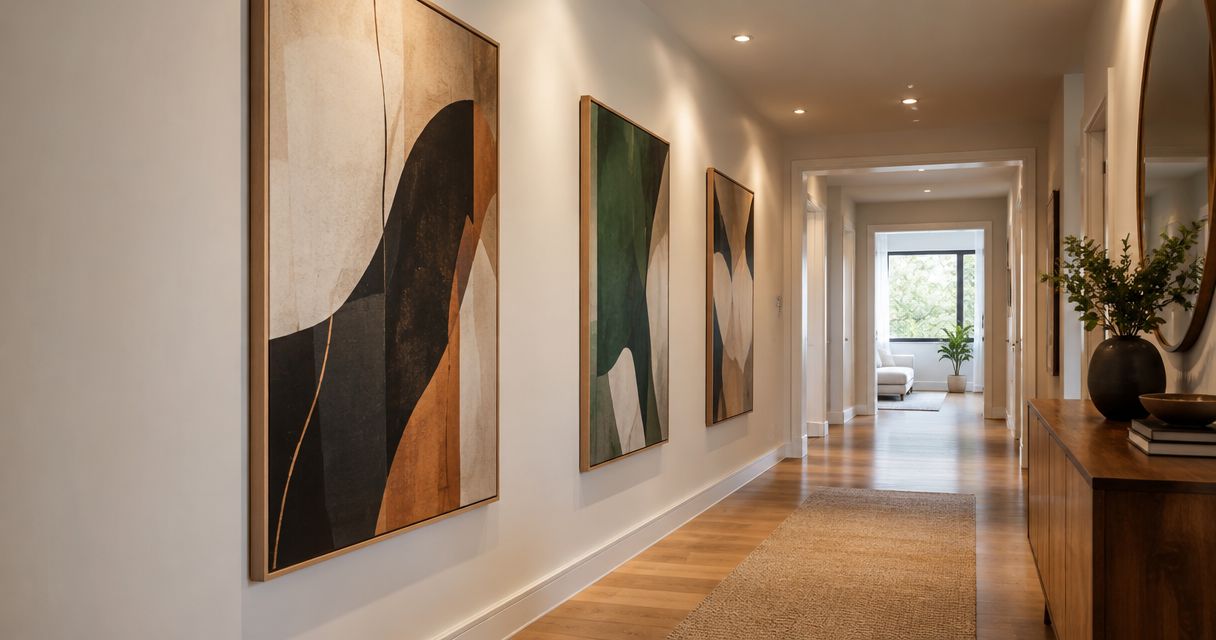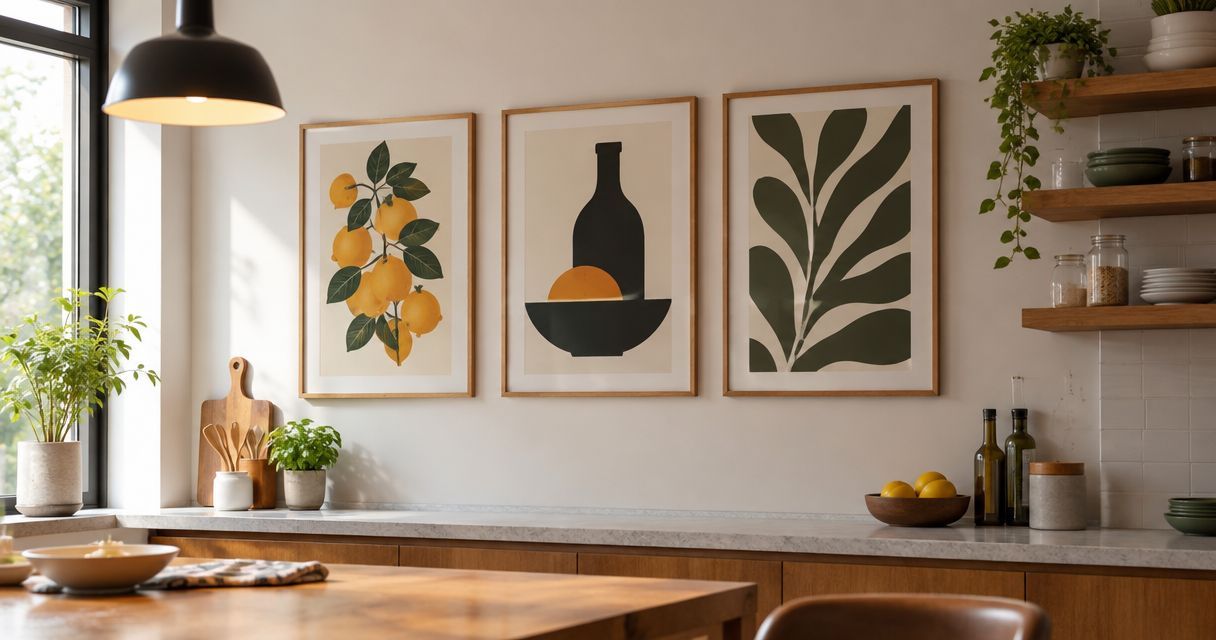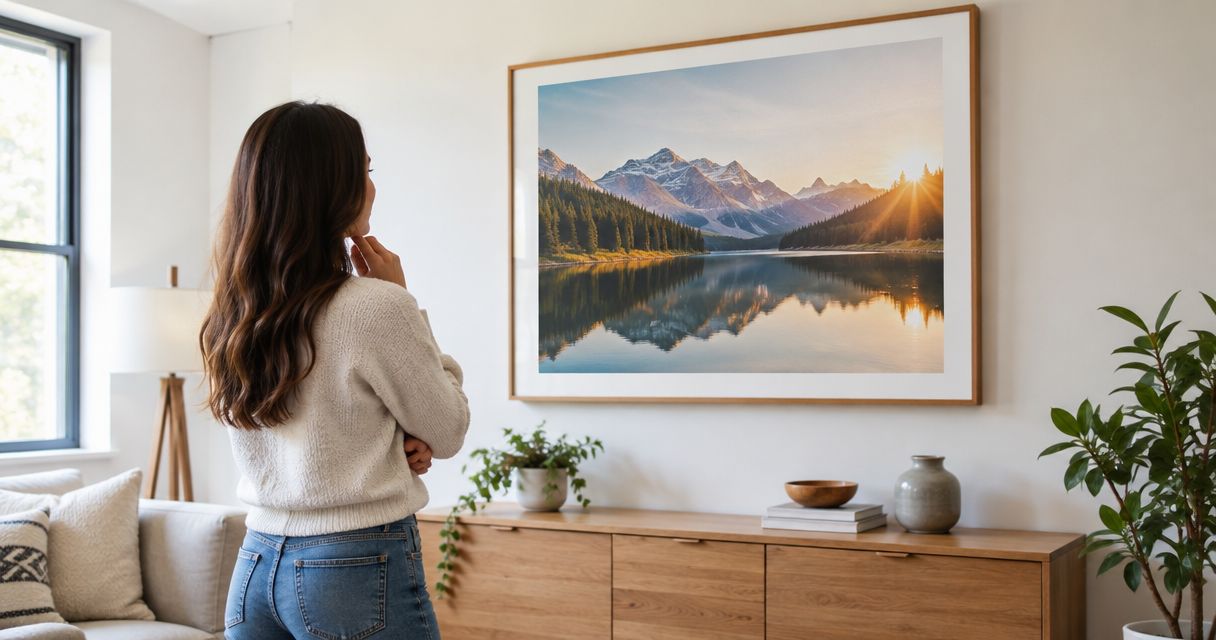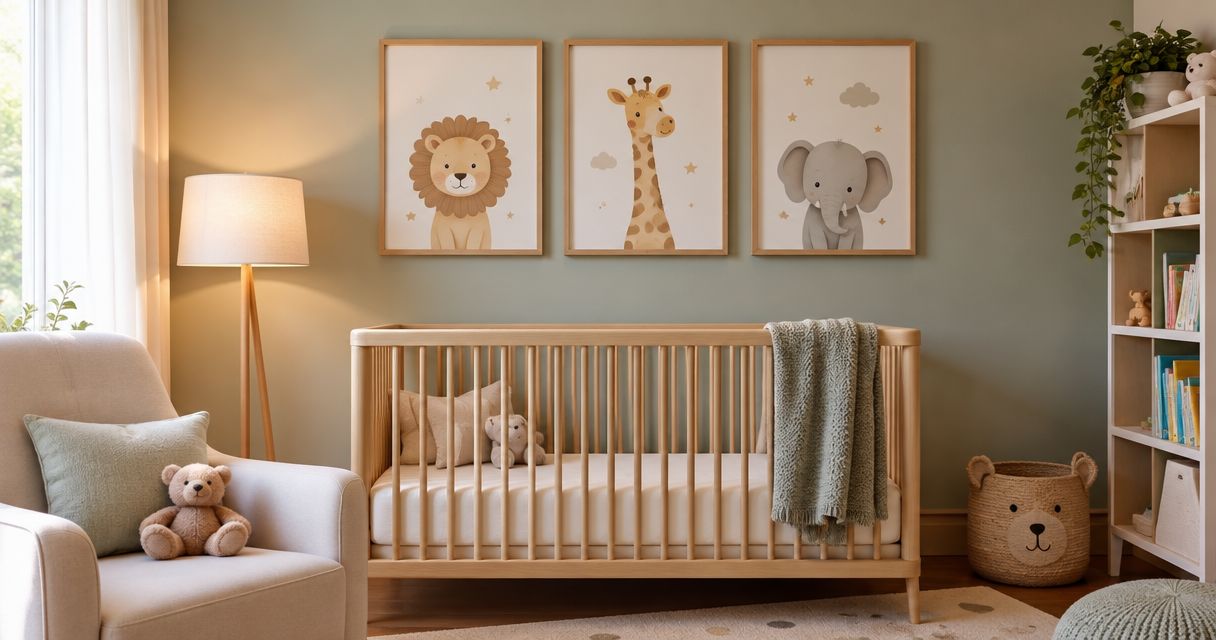
Best overall: botanical prints. Best for a character-led room: animal illustrations. Best for a simple starting point: a single abstract print. This 2026 nursery wall art guide compares six decorating directions and explains how to choose a composition before browsing art and wall decoration at Mercado da Imagem.
- Botanical prints are the best nursery wall art default when you want a theme that also suits an older child's room.
- Animal illustrations suit character-led nurseries; abstract prints suit rooms where color matters more than a theme.
- Mercado da Imagem sells art and wall decoration; evaluate individual pieces against your room plan.
- Choose the wall and frame arrangement before committing to artwork, and keep framed pieces away from the crib.
Why this matters
Nursery artwork has two jobs: give the room a clear visual direction and work with furniture you actually need. A print that looks appealing on its own can compete with patterned curtains, disappear against wallpaper, or leave an awkward gap beside storage.
Choose the wall before choosing the picture. For a nursery planned in 2026, that means considering the crib, changing area, chair, doors, and future furniture moves before treating an empty wall as decorating space. Decorative balance never takes priority over secure installation and keeping objects out of a child's reach.
What makes the best nursery wall art
- A clear focal point: The artwork gives you somewhere to look without competing with every other surface.
- Room-level color: The palette relates to something already present, such as curtains, a rug, or a chair.
- A workable composition: The number and shape of frames suit the available wall, not just a product photograph.
- Adaptable subject matter: You would still enjoy the image if the crib became a bed or the room changed purpose.
- Suitable presentation: Frame construction, glazing, hanging hardware, and care instructions are checked for the individual piece.
- Personal relevance: The subject reflects your taste rather than a theme chosen only because it appears in nursery searches.
Nursery wall art at a glance
These are artwork categories, not named products or claims about any retailer's current collection. The ranking separates six distinct decorating needs for 2026.
| Rank | Artwork direction | Best for | Standout feature | Key limitation |
|---|---|---|---|---|
| 1 | Botanical prints | A room designed to grow with your child | Plant subjects work without a baby-specific theme | Detailed foliage can compete with patterned walls |
| 2 | Animal illustrations | A character-led nursery | A recognizable subject anchors the decorating story | Mixed illustration styles can look disconnected |
| 3 | Abstract prints | Color-led decorating | Shapes connect colors without adding a literal theme | The composition needs careful selection |
| 4 | Name or initial artwork | A personal focal point | Typography makes the subject specific to your child | It is less adaptable if the room changes occupants |
| 5 | Landscape prints | A room with a wider visual scene | A horizon creates a clear horizontal composition | Fine details can disappear from across the room |
| 6 | Alphabet artwork | A reading corner | Letters give the wall a defined purpose | Small lettering becomes visual clutter at a distance |
1. Botanical prints: best nursery wall art for long-term flexibility
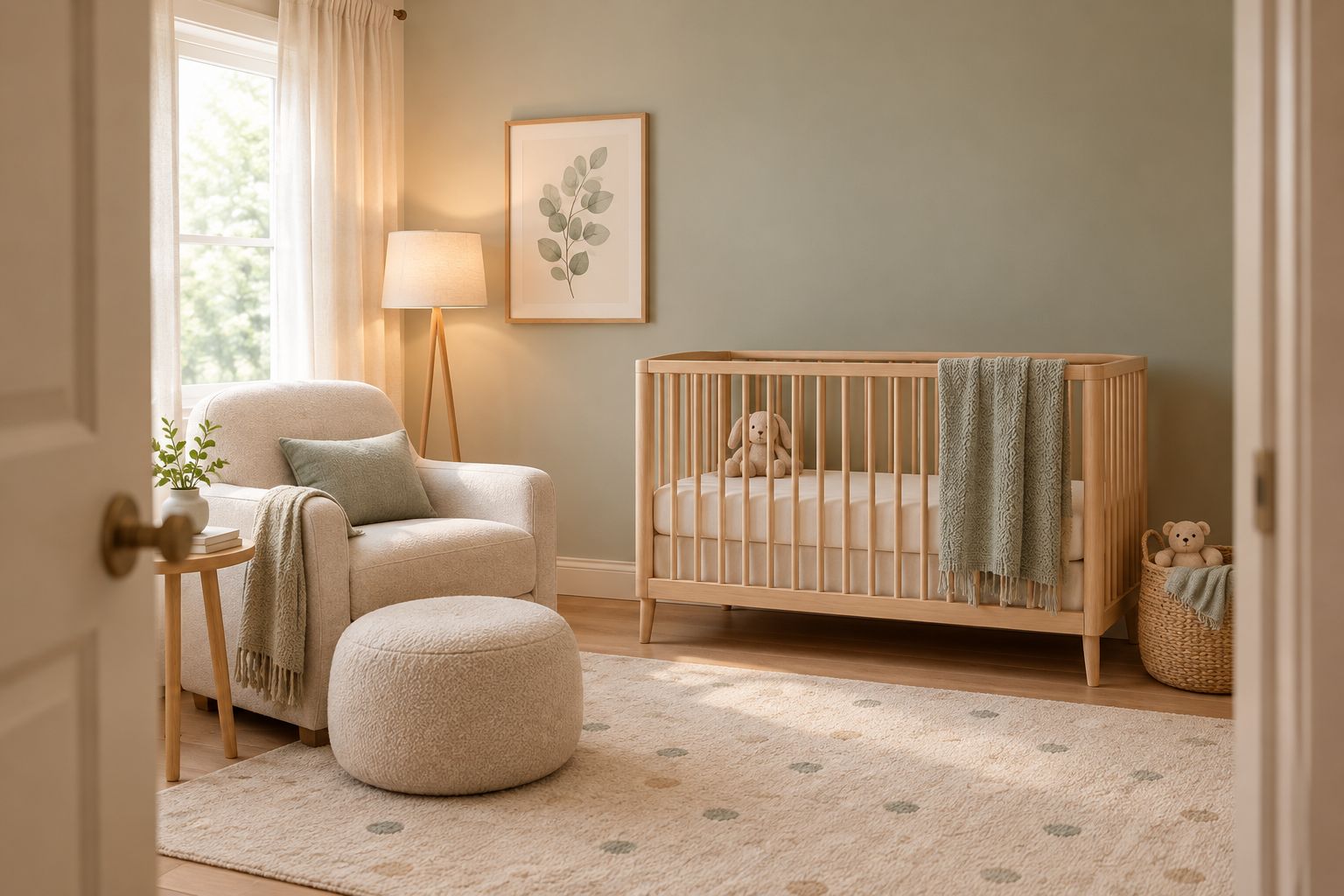
Botanical prints depict plants, flowers, leaves, or branches. They are the strongest default because you can build a nursery around them without making every other object follow a children's theme.
Choose the drawing style as carefully as the plant subject. A loose painted branch and a detailed botanical study create different effects, even when both use green. For a room with patterned textiles, start with an image that leaves generous space around the subject.
Botanical print pros:
- Plant imagery works beyond a baby-specific decorating scheme.
- Leaf and flower colors offer clear starting points for textiles.
- A single subject can stand alone without companion prints.
Botanical print cons:
- Dense foliage competes with busy wallpaper.
- Muted greens can look disconnected from a room dominated by unrelated colors.
Best for: Parents who want one decorating direction to carry through later furniture changes.
Verdict: Buy botanical prints when adaptability is your priority.
2. Animal illustrations: best nursery wall art for a character-led room
Animal illustrations give you a recognizable subject around which to build the room. Choose a woodland, ocean, farm, or other coherent direction rather than combining unrelated pictures simply because they all feature animals.
Consistency matters more than matching species. A softly painted fox and a softly painted whale can share a visual language; a photographic animal portrait and a cartoon drawing create a more deliberate contrast.
Animal illustration pros:
- Recognizable subjects make the decorating direction clear.
- Coordinated drawing styles help separate pictures read as a set.
- Animal colors can connect with existing wood finishes and fabrics.
Animal illustration cons:
- Strong character styling can feel tied to an early-childhood room.
- Mixing drawing techniques makes an arrangement harder to coordinate.
Best for: A nursery where the artwork establishes the main theme rather than supporting a wallpaper pattern.
Verdict: Buy animal illustrations if you want a clear character story; skip unrelated sets.
3. Abstract prints: best nursery wall art for color-led decorating
Abstract prints use shapes, lines, and color without requiring a literal subject. They suit a nursery where your main concern is connecting the curtain, rug, chair, and wall colors.
Start with the room rather than a fashionable palette. Identify an existing color you want to repeat, then decide whether the artwork should blend into the scheme or become its strongest contrast. One abstract print is a useful starting point when you do not want to plan a multi-frame arrangement.
Abstract print pros:
- Color can connect otherwise unrelated furnishings.
- Nonliteral subjects avoid committing the room to one theme.
- A single composition can provide the main focal point.
Abstract print cons:
- An unsuitable color balance can dominate the room.
- Similar colors do not guarantee that different compositions work together.
Best for: Parents decorating around existing furniture or textiles.
Verdict: Buy abstract prints when color is the problem you need to solve.
4. Name or initial artwork: best nursery wall art for personalization
Name or initial artwork makes typography the subject. It creates a personal focal point without requiring a room full of themed accessories.
Judge it as a graphic composition, not just a spelling choice. Letter shape, surrounding space, and contrast determine whether the finished piece reads clearly. Before commissioning anything, confirm the exact spelling, capitalization, and accents in the final proof.
Name or initial artwork pros:
- The subject has an immediate personal connection.
- Typography can work with either illustrated or plain surroundings.
- An initial offers a simpler composition than a long name.
Name or initial artwork cons:
- The artwork is less transferable between children or rooms.
- Decorative lettering can become difficult to read.
Best for: Parents who want the room's central artwork to refer directly to their child.
Verdict: Buy personalized typography only after approving the final lettering and layout.
5. Landscape prints: best nursery wall art for a panoramic focal point
Landscape prints bring a broader scene into the room: hills, coastline, countryside, or another outdoor setting. A horizontal horizon works particularly well when your wall calls for a wide composition rather than several separate pictures.
Check the image from the doorway, not only close up. A landscape full of tiny details can lose its structure at room-viewing distance. Look for clear masses of color and a composition you still understand when you step back.
Landscape print pros:
- A wide scene gives a blank wall a clear horizontal structure.
- Outdoor subjects do not depend on a baby-specific theme.
- The image can introduce several related colors at once.
Landscape print cons:
- Fine details are difficult to appreciate from farther away.
- A wide format is awkward on a narrow wall.
Best for: A clear, broad wall outside the crib area.
Verdict: Buy a landscape when the wall needs width; skip it when the available space is narrow.
6. Alphabet artwork: best nursery wall art for a reading corner
Alphabet artwork uses letters as its organizing structure, sometimes with accompanying illustrations. It gives a reading corner a specific visual purpose without requiring the rest of the nursery to follow an alphabet theme.
Treat it as decoration, not a promise of educational results. Check letter clarity, language, and any word-image pairings before choosing the piece. A visually attractive alphabet is not useful to your scheme if the lettering disappears into ornament.
Alphabet artwork pros:
- Letters provide an obvious organizing pattern.
- The subject relates naturally to a book-filled corner.
- Illustrated versions can connect with other artwork through color.
Alphabet artwork cons:
- Dense lettering can look busy from across the room.
- Word-image pairings need checking for the language you want to use.
Best for: A defined reading area rather than the nursery's main focal wall.
Verdict: Buy alphabet artwork for a reading corner; skip it if the room already has busy walls.
Plan the arrangement before choosing frames
For your 2026 nursery plan, begin with paper templates rather than holes in the wall. Trace the proposed outer frame sizes onto paper, position them on the chosen wall, and check the arrangement from the entrance and the chair.
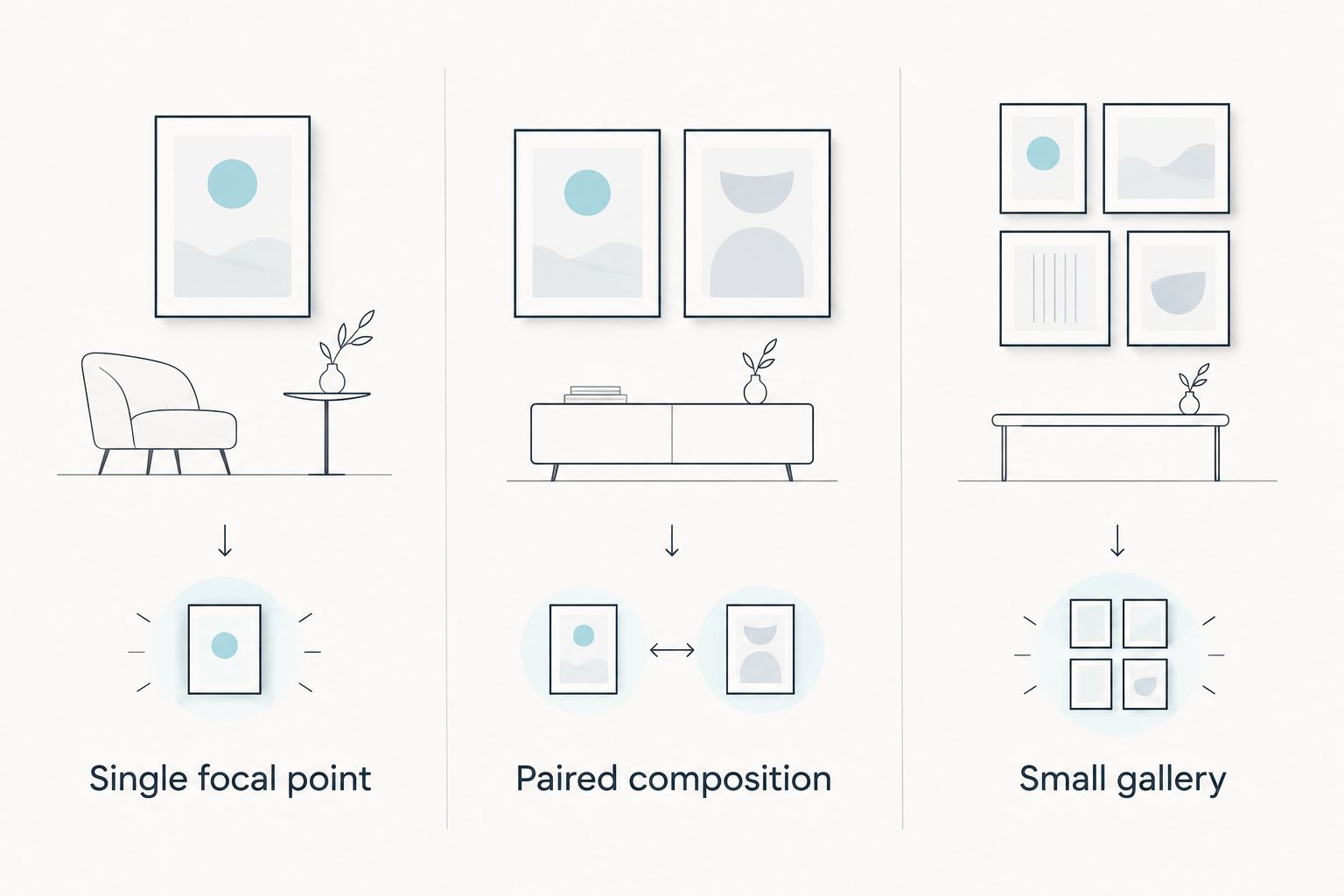
Use these composition exercises as starting points, not fixed decorating rules:
- Single focal point: Test 1 paper template when you want the image to carry the wall alone.
- Paired composition: Test 2 paper templates when you want a coordinated relationship between pictures.
- Small gallery: Test 3 paper templates when each image contributes something distinct to the arrangement.
Then check the installation separately. Follow the frame and fixing manufacturers' instructions for your wall construction, and keep artwork and hanging components outside a child's reach. Do not hang framed art above the crib or leave a frame leaning where it can fall.
Frame color comes after the composition. Use the guide to choosing a frame color for an art print to compare the frame with both the picture and the surrounding room, rather than matching it automatically to the furniture.
How the styles are ranked
This 2026 ranking prioritizes adaptability, a clear focal point, color coordination, and practical composition. Botanical prints take the default position because plant subjects do not require a baby-specific theme; the other categories win when you have a more defined decorating need.
The ranking evaluates artwork directions, not individual product quality. Paper, printing, frame construction, glazing, and installation requirements must be checked separately for each piece.
Which nursery wall art should you choose?
Choose botanical prints if you are undecided. Move to animal illustrations for a character-led scheme, abstract prints for color coordination, or typography for a personal focal point.
Mercado da Imagem sells art and wall decoration. When browsing Mercado da Imagem for nursery wall art, use your chosen category and wall layout as filters rather than assuming every attractive piece belongs in the room.
For a nursery being finished in 2026, decide what the room needs before adding another picture. A clear focal point is a stronger starting decision than filling every available gap.
FAQ
What's the best nursery wall art if I don't have a theme?
Botanical prints are the best default in this guide because they do not require a baby-specific decorating theme. Choose the drawing style and colors to suit the room you already have.
Are animal illustrations better than abstract nursery prints?
Animal illustrations are better for a character-led nursery; abstract prints are better for color-led decorating. Choose the category that solves your room's main design need.
Should I hang framed pictures above the crib?
Do not hang framed pictures above the crib. Choose another wall, keep artwork and hanging components outside your child's reach, and follow installation instructions for the frame and wall fixings.
How many pictures should I put on a nursery wall?
Choose the number by testing the composition on your actual wall. Compare a single paper template, a pair, or a small gallery before committing to frames or wall fixings.
Do nursery art frames need to match the furniture?
Nursery art frames do not need to match the furniture. Compare the frame with the artwork, wall color, and other visible finishes so the choice supports the whole composition.
Is personalized name artwork a good choice for a nursery?
Personalized name artwork is a good choice when you want a focal point specific to your child. Check spelling, accents, capitalization, and layout before approving the final proof.
Can nursery wall art work in an older child's bedroom?
Botanical, abstract, and landscape subjects can work without a baby-specific theme. Choose an image you would still enjoy after changing the furniture and textiles.
One last thing
Test the room without the extra picture. After placing your templates, remove the least convincing one and look again from the doorway. If the composition becomes clearer, the empty wall space is doing useful work.
Keep that edit in your 2026 plan: choose artwork for a defined role, not because an undecorated patch feels unfinished.