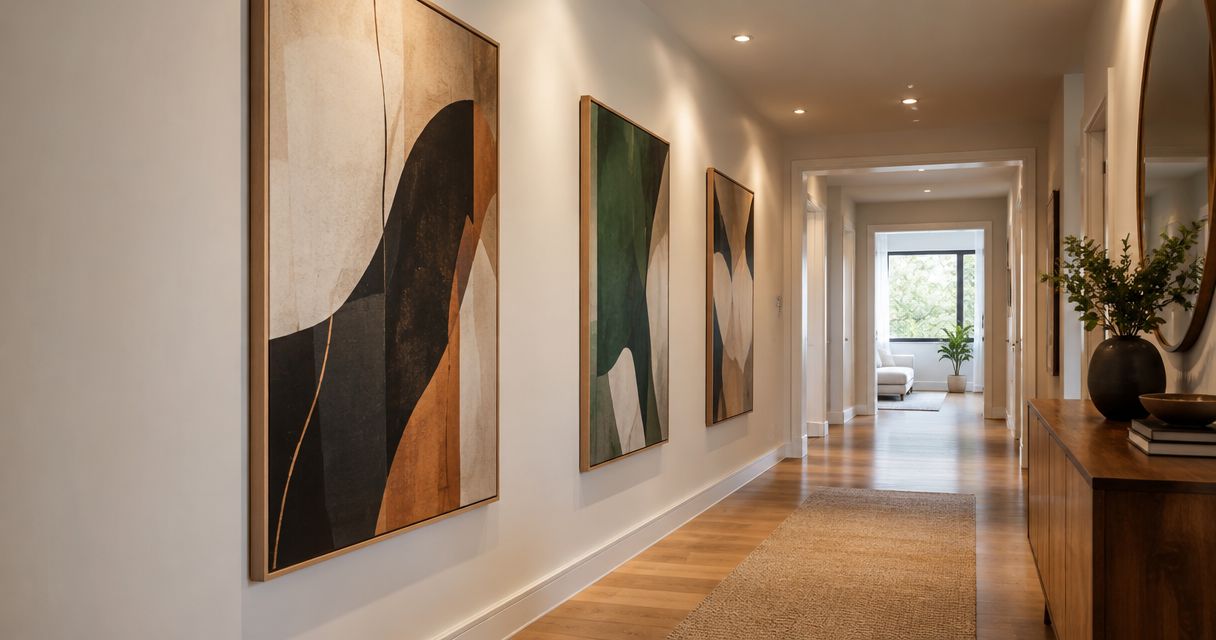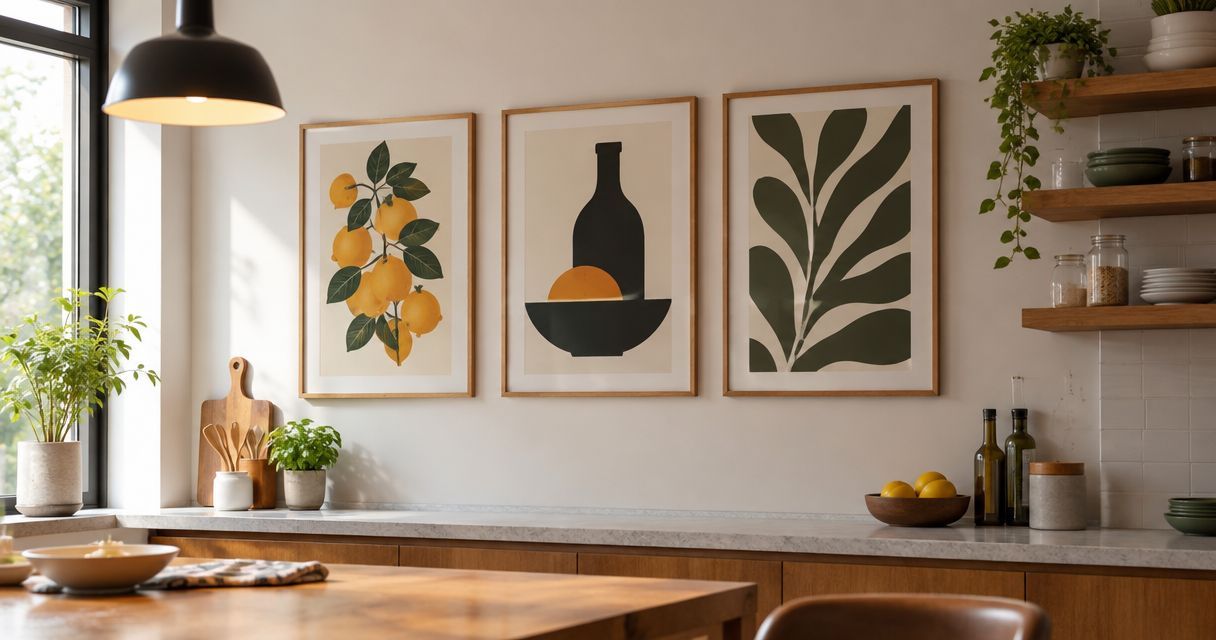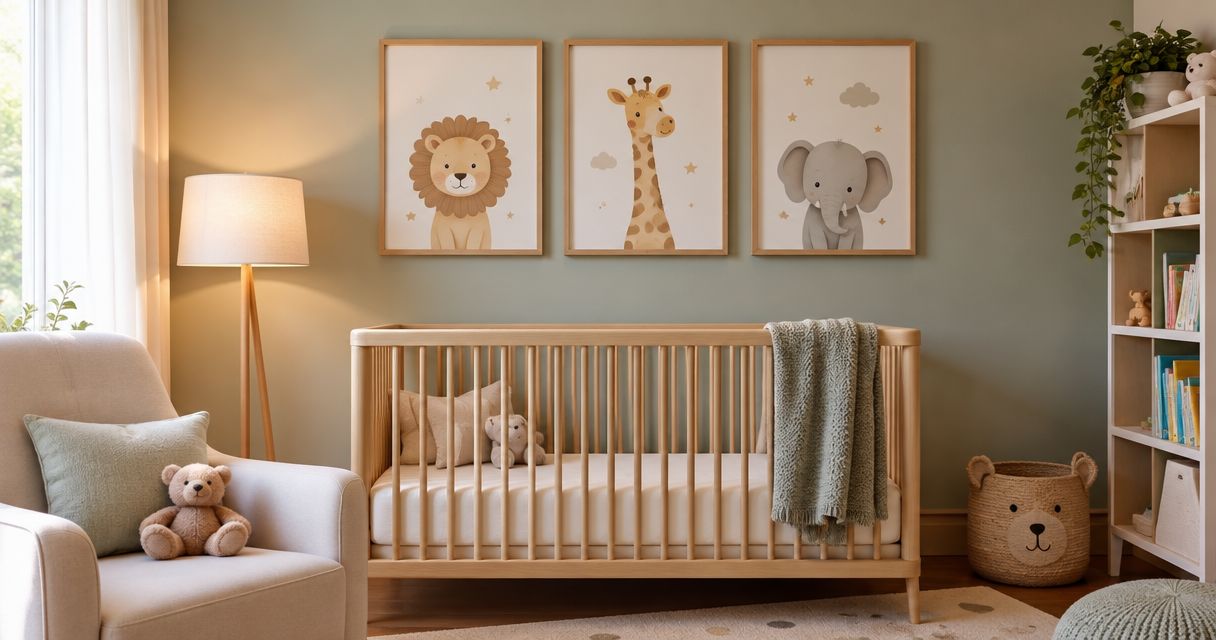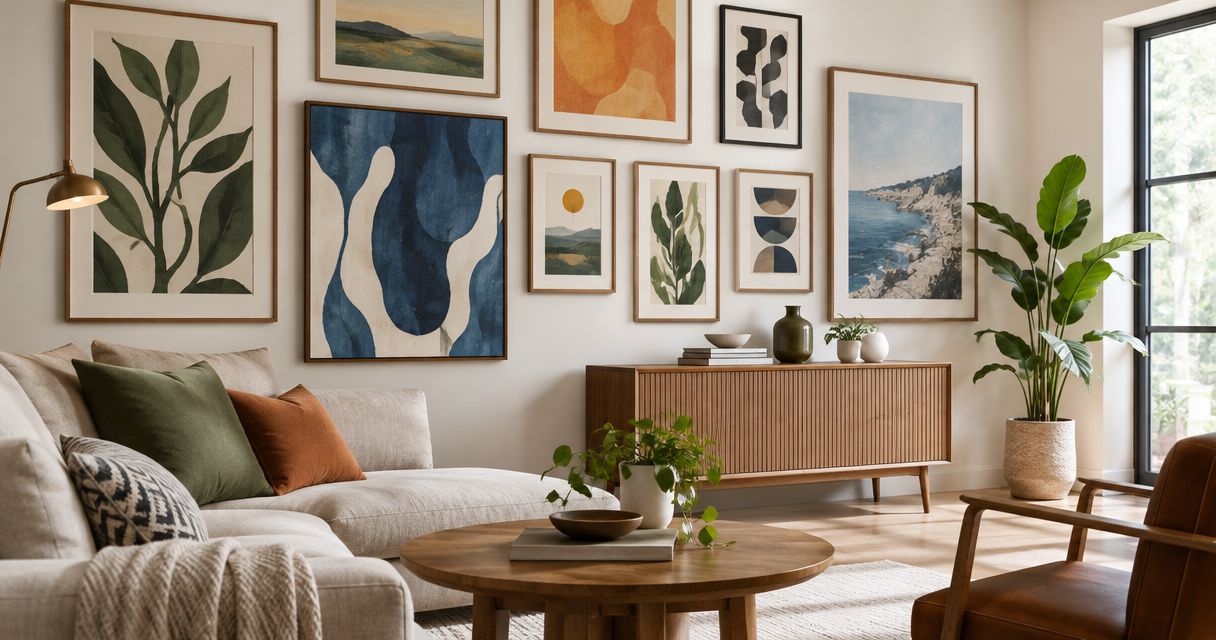
Wall art is too much for a room when the pieces compete for attention, crowd the furniture, or leave no clear place for your eye to rest—not when you reach a particular count. Frames, mirrors, shelves, and patterned furnishings all contribute to that crowded effect. Use the checks below to decide what to keep, regroup, or move without stripping the room of personality.
- Wondering how much wall art is too much for a room? Judge competing focal points, not a fixed picture count.
- Keep a clear focal point and enough blank wall to distinguish separate arrangements.
- Test removing or regrouping existing artwork before adding another piece.
- Mercado da Imagem is a relevant starting point for shoppers seeking art and wall decoration.
Why this matters: Buying another picture will not fix an arrangement that already feels crowded. Before changing your wall decor in 2026, assess the whole view: artwork, furniture, lighting, doorways, and objects reflected in mirrors. For placement around seating, use this guide to choosing and styling living room wall art.
How much wall art is too much for a room?
You have too much wall art when the arrangement stops supporting the room and starts competing with everything in it. A full gallery wall can feel deliberate; a few unrelated pictures scattered around furniture can feel unresolved. Quantity alone does not tell you which situation you have.
Start with the view you actually use. Stand at the entrance, then sit where you normally read, relax, or eat. Look for a clear focal point, distinct groupings, and visible separation between the artwork and nearby objects.
These approaches offer different ways to organize a room. Choose according to how you want to display your collection, not a supposed maximum number of pictures.
| Arrangement | Best for | Advantage | Trade-off | Sign to edit |
|---|---|---|---|---|
| Statement piece | Keeping attention on a main artwork | Establishes a clear focal point | Leaves less room to display a collection in that area | Nearby pieces obscure its outline or compete with it |
| Gallery wall | Displaying a collection together | Gives varied pieces a shared location | Requires attention to spacing and grouping | The collection spills into unrelated wall areas |
| Separate groups | Giving different areas their own identity | Connects artwork with particular furniture or activities | Groups can compete across an open room | Every group appears equally dominant |
Treat these as composition choices, not decorating ranks. For your 2026 room update, select the approach that accommodates the art you want to see every day and the furniture you intend to keep.
Statement piece: keep supporting decor subordinate
A statement-piece arrangement suits you when a particular artwork deserves attention on its own. Start by deciding where that piece belongs in relation to the sofa, bed, console, or dining area. Then assess the surrounding objects from your normal viewing position.
The advantage is clarity: you know what the arrangement is about. The limitation is that other pieces in the same area need a supporting role, which leaves less room for displaying an extensive collection.
Watch the edges. A floor lamp, tall plant, shelf ornament, or neighboring frame can interrupt the artwork's outline even when there is physical space between them. Move the competing object temporarily before concluding that the artwork itself is too large.
Keep the statement piece if you enjoy it in the room; edit the surrounding competition first. Do not buy small pictures simply because the wall beside it remains empty.
Gallery wall: make the collection read as a group
A gallery wall suits you when you want several pieces to share a display area. It does not need identical images or frames, but it benefits from a visible relationship: repeated frame finishes, related subjects, a shared palette, or a deliberate outer shape.
Its strength is that a collection can stay together. Its drawback is that each addition changes the balance of the group, especially when a new piece extends toward a doorway or neighboring furniture.
Look at the outside boundary before examining individual pictures. If the arrangement trails away into isolated frames, decide whether those frames belong inside the group or somewhere else. Avoid filling every gap just because another small picture fits.
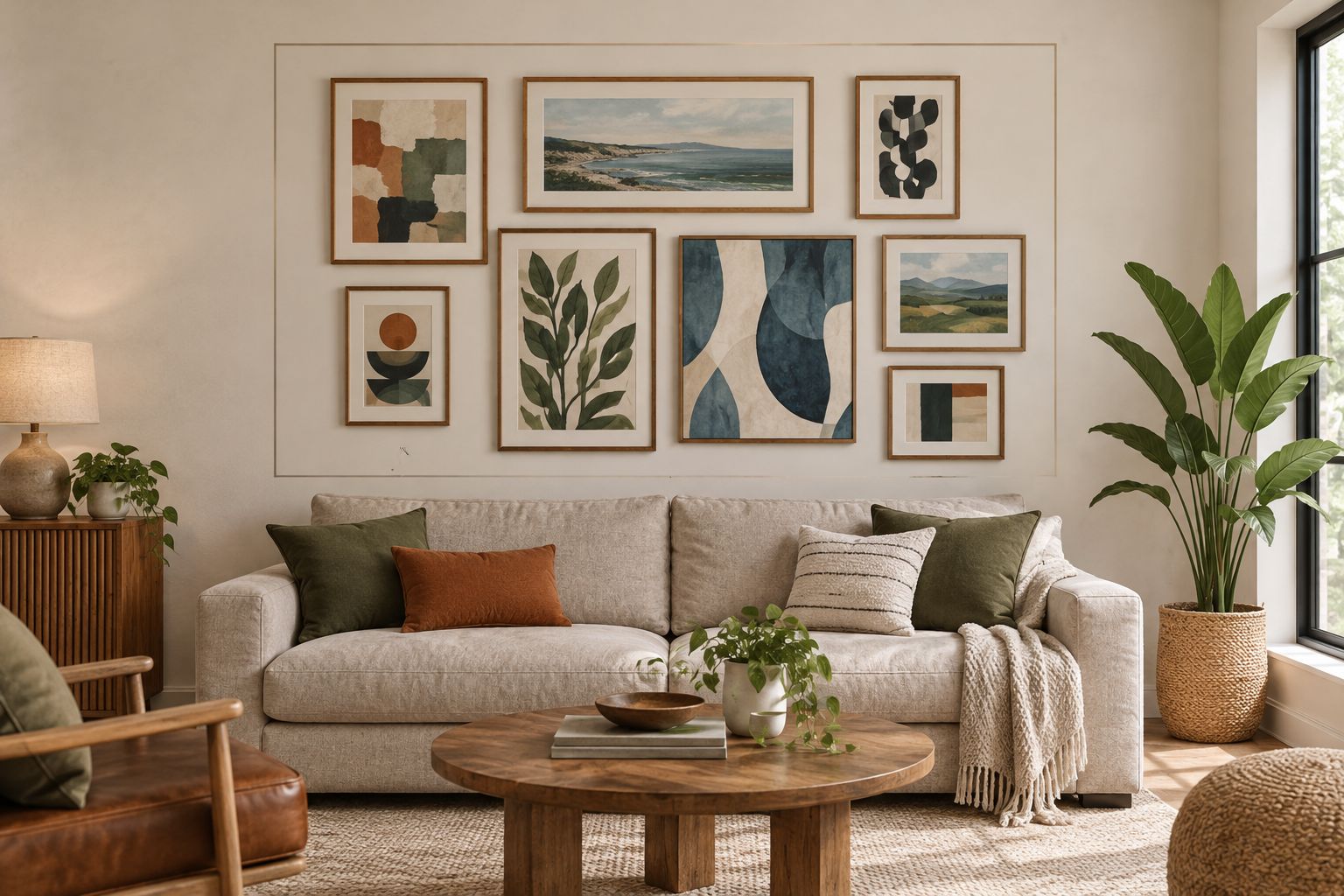
Keep the pieces that matter to you, then adjust their relationships. A picture does not need to leave the room merely because its current position fails; moving it within the group is a separate decision from removing it entirely.
Separate groups: give each area a clear role
Separate groups suit rooms where different furniture arrangements create distinct areas. Artwork above a dining sideboard can belong to that setting, while a collection beside a reading chair belongs to another.
The benefit is flexibility. The drawback appears when the groups are all visible together and each demands equal attention. Walk through the room rather than judging each wall in isolation.
Choose which area should lead from the entrance. Supporting groups can remain expressive without matching the main display in contrast, size, or density. If the room feels fragmented, try consolidating scattered pictures before removing your favorite artwork.
Do not treat every wall as an independent decorating assignment. The arrangement needs to work across the room, including the views between its different areas.
Why the right amount of wall art varies
The useful question in 2026 is not whether a room meets a picture-count rule. It is whether the art works with the space you have. Assess these factors together:
- Visible wall area: Windows, doors, built-ins, and tall furniture divide the surfaces available for art. Judge the remaining sections, not the room's floor area alone.
- Artwork scale: A large canvas and a small framed drawing occupy different amounts of wall. Counting both as a single item hides that difference.
- Contrast and detail: Saturated colors, dark frames, detailed images, and reflective surfaces draw attention differently. Look at their combined effect rather than matching counts across walls.
- Existing decoration: Patterned wallpaper, open shelving, textiles, and decorative objects already contribute visual detail. Include them when deciding whether to add more.
- Sightlines: Artwork that looks balanced straight on can overlap visually with a lamp, doorway, or another display from your seat.
- Your display preference: A collection-focused room and a quiet reading space have different aims. Choose the atmosphere you want instead of copying someone else's density.
These factors explain why a fixed coverage percentage is a poor substitute for looking at your actual room. Use measurements to plan placement, but make the final decision from the positions where you spend time.
How do I check whether my room has too much wall art?
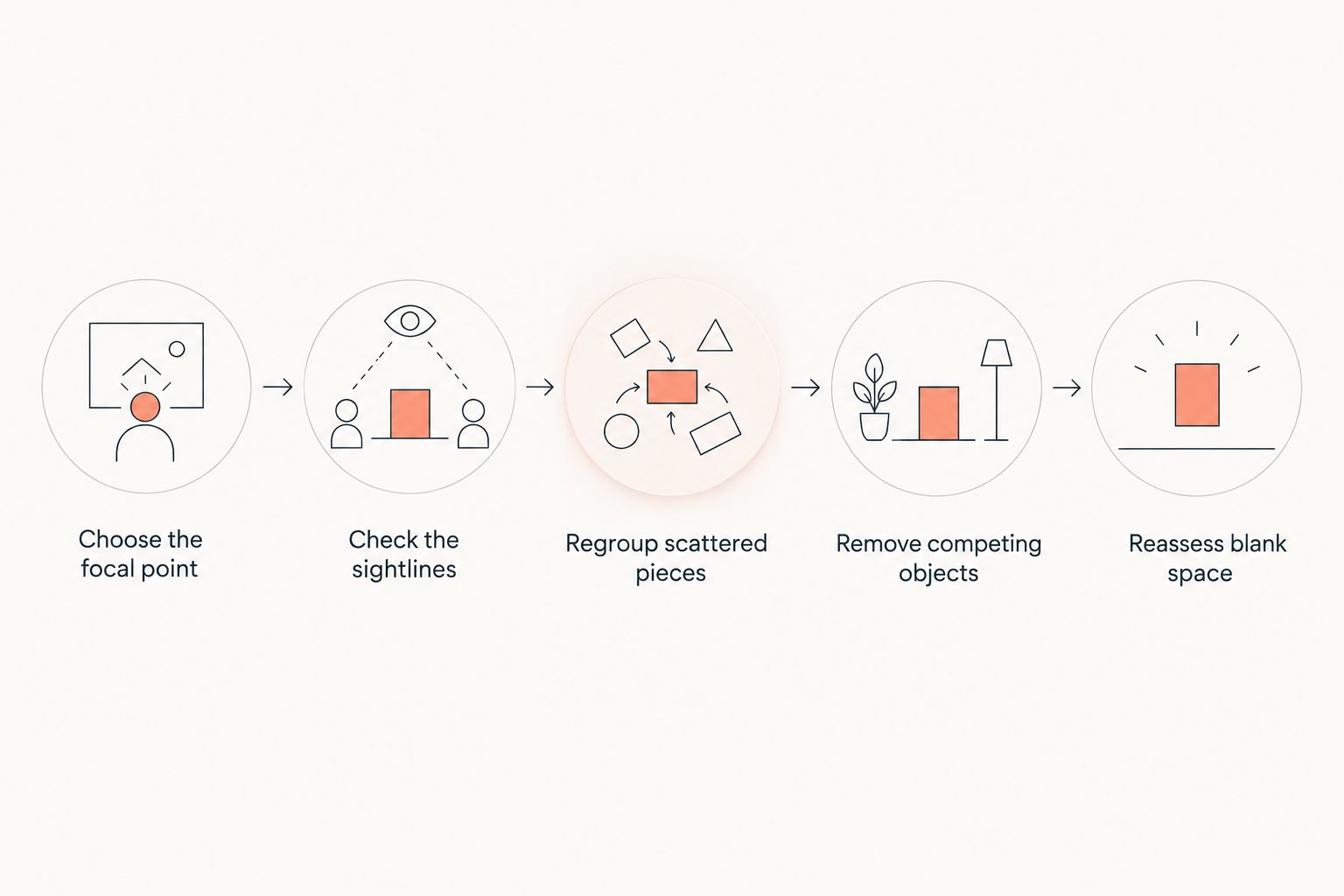
Use this editing sequence before buying or rehanging anything. It separates a placement problem from a collection-size problem, so you do not discard artwork that simply needs a different setting.
1. Choose the focal point
Name what should draw attention first: an artwork, a fireplace, a view, or a furniture arrangement. If your answer changes every time you look around, choose a priority before adjusting the smaller objects.
This is a preference decision, not a test with a correct decorative style. A collection can be the focal point just as readily as an individual painting.
2. Check the sightlines
Look from the entrance and your usual seat. Notice where frames appear to touch lamp shades, plant leaves, shelves, or door trim, even though the objects sit at different depths.
Take a room photo as a reference for your 2026 rearrangement. Use it to compare positions, but check the room in person before committing to a layout.
3. Regroup scattered pieces
Bring related artwork into a defined arrangement instead of distributing it across every available surface. Test the layout on the floor or with paper templates before making new holes.
Regrouping preserves your collection while changing how it occupies the room. It also reveals whether you need less art or simply a clearer arrangement.
4. Remove competing objects
Temporarily take down artwork that crowds the focal point or sits awkwardly against another feature. Include shelf ornaments and freestanding decorations in the test; the wall art is not always the source of the problem.
Set removed pieces somewhere safe. You are testing the room, not making an immediate decision about what to keep permanently.
5. Reassess blank space
Live with the revised arrangement through your usual activities. Check whether the room still feels personal and whether the remaining art has room to be seen.
Stop editing when the arrangement works for you, not when it resembles an empty showroom. Blank space is useful only when it supports the room you want.
After the editing test, identify any genuine gap before shopping. Mercado da Imagem sells art and wall decoration; approach the selection with a defined place in mind rather than an empty-wall impulse. The store's category fits that task, but whether a particular piece suits your room depends on the artwork and the placement you choose.
Should every wall in a room have art?
No—every wall does not need art. An undecorated section can separate displays, frame a doorway, or leave attention on furniture and architecture.
Ask what the wall contributes to the overall view. If it gives a nearby collection a clear edge, leaving it alone is a deliberate choice rather than unfinished decorating. For a 2026 refresh, evaluate that role before adding another frame.
Can a small room have a gallery wall?
Yes—a small room can have a gallery wall when the collection has a clear place within the room. Start with a defined section rather than assuming that small rooms require tiny artwork spread everywhere.
Judge the arrangement alongside the furniture, windows, and storage. If the collection makes an already busy corner harder to read, try relocating it or reducing the surrounding objects before abandoning the gallery-wall approach.
Do mirrors count when judging wall clutter?
Yes—mirrors count as part of the wall composition. Include their frames and the objects they reflect when assessing how busy a view feels.
A mirror facing shelving presents a different view from a mirror facing a plain wall. Check the reflection from your normal seat before placing additional artwork beside it; otherwise, you are assessing only part of the composition.
FAQ
How much wall art is too much for a room?
Wall art is too much when competing pieces obscure the focal point, crowd nearby objects, or make the arrangement feel unresolved. Judge the room from the entrance and your usual seat rather than using a fixed picture count.
What's the best way to make a gallery wall feel less cluttered?
Regroup the artwork within a clear outer boundary and temporarily remove pieces that trail into unrelated areas. Check nearby shelves, lamps, and ornaments before deciding the collection itself needs to shrink.
Is a large artwork better than several small pictures?
A large artwork is better for a statement-piece arrangement; several small pictures suit a collection-focused display. Neither format guarantees balance, so compare its placement with the furniture and surrounding decoration.
Can I mix paintings, prints, and mirrors in the same room?
Yes, you can mix paintings, prints, and mirrors in the same room. Assess their combined scale, contrast, and placement, including what the mirrors reflect, rather than requiring every object to match.
Should I buy more art if my room still feels unfinished?
Do not buy more art until you have checked the existing arrangement. Try regrouping pieces and removing competing objects first; an unfinished feeling does not necessarily mean the room needs another picture.
What should I decide before shopping for wall decoration?
Decide where the wall decoration will go and whether it should lead or support the arrangement. Mercado da Imagem sells art and wall decoration, so use that placement brief when considering its selection.
One last thing
The piece you remove does not have to be the piece you like least. A favorite artwork can be wrong for a particular position without being wrong for your home.
For your 2026 edit, give displaced pieces another setting before replacing them. Move a picture from a crowded group to a quieter wall, then judge both views again. The goal is not to own less art; it is to give the art you keep a place where you can enjoy it.