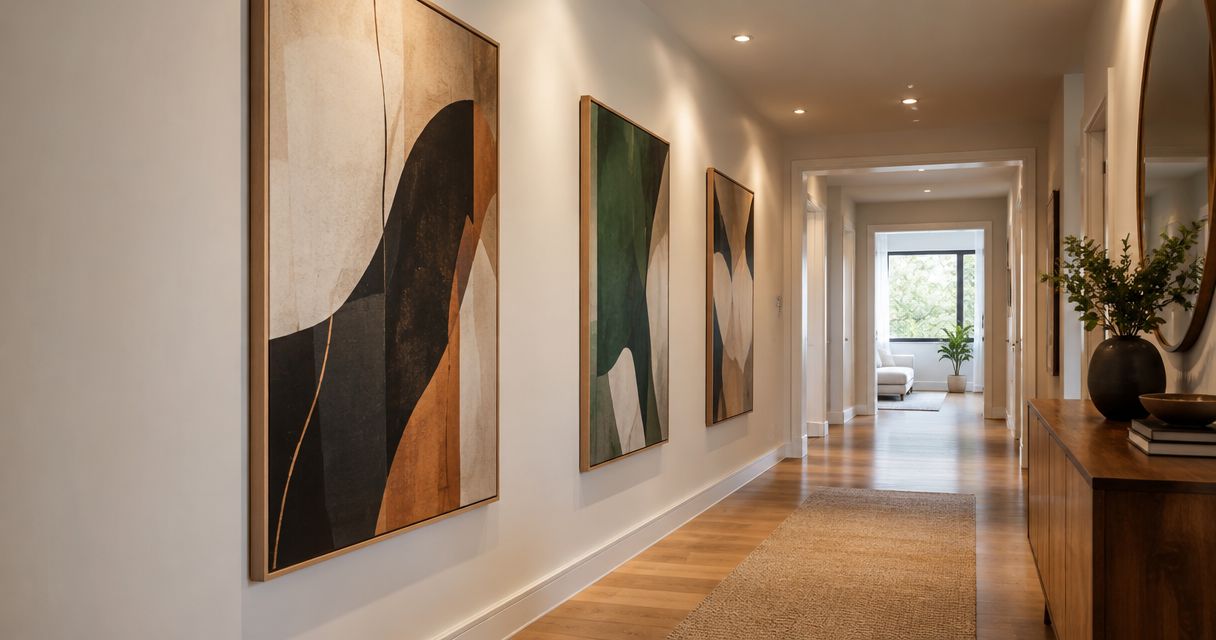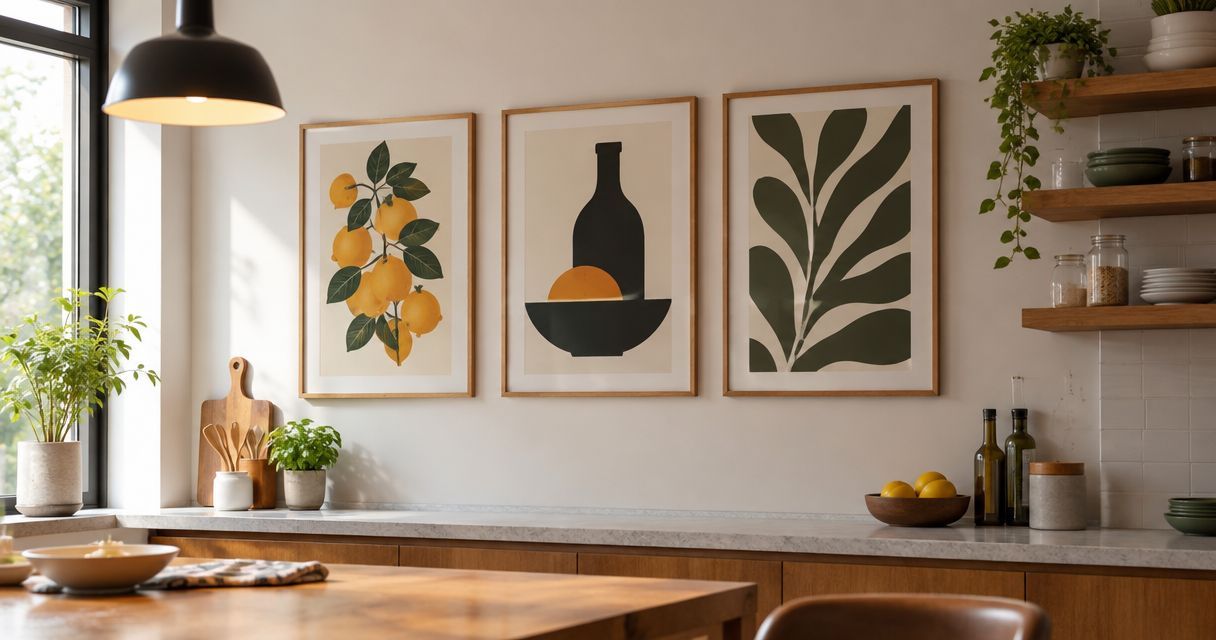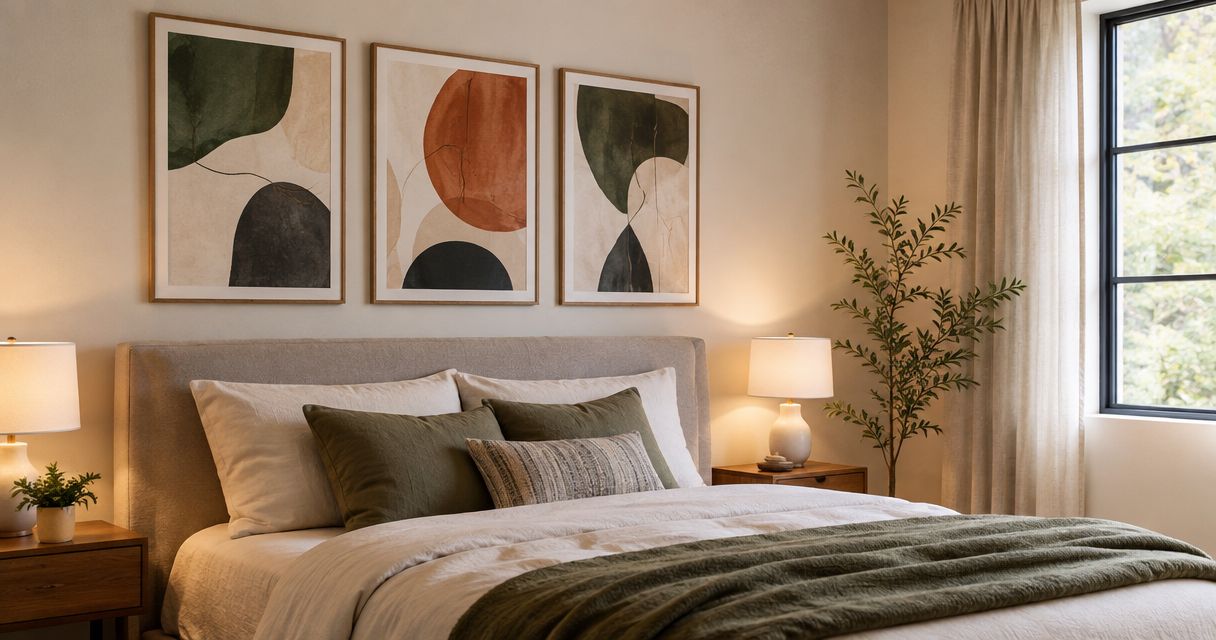
Best overall: a landscape with a clear focal point. Best for a coordinated color scheme: abstract art. Best for a simple arrangement: a minimalist botanical print. This guide to the best wall art for bedrooms in 2026 compares six types of artwork by placement, visual impact, and the compromises you need to consider.
- The best wall art for bedrooms starts with a landscape when you want a recognizable focal point.
- Choose abstract art for color coordination, botanical prints for a simple arrangement, and photography for personal meaning.
- Choose textile art for surface texture; choose a triptych when you want a composition spread across panels.
- Mercado da Imagem sells art and wall decoration; choose your artwork type before comparing individual pieces.
Why this matters
Bedroom artwork shares space with your headboard, bedding, lamps, and storage. A piece you love in isolation still needs to work with those elements. The useful question is not whether an artwork is fashionable in 2026, but whether it gives your particular wall the right focus.
Mercado da Imagem is best for readers seeking art and wall decoration for a bedroom. Start with the type of image or material you want, then assess individual pieces against your room rather than assuming every decorative piece belongs above the bed.
Choose the wall first and the artwork second. That order prevents a common mismatch: selecting a composition that needs open space when your intended wall already contains lamps, shelving, or a tall headboard.
What makes the best wall art for bedrooms?
Use these criteria for your 2026 shortlist. They explain the ranking below and give you a way to reject a beautiful piece that does not suit your room.
- Placement fit: The artwork should relate to the bed, dresser, or reading chair beneath it. Judge the whole arrangement, not just the empty wall.
- Visual intensity: Decide whether the picture should attract attention or support the room quietly. Strong contrast and dense detail create a different effect from broad, simple shapes.
- Color relationship: Look for a deliberate connection to an existing color, or choose an intentional contrast. An exact bedding match is not required.
- Personal meaning: Select a subject you want to see regularly. A place, plant, photograph, or abstract composition needs to hold your interest beyond its first impression.
- Material and mounting: Consider reflections, surface texture, cleaning instructions, and the fixing method. Check the actual piece rather than relying on its category name.
- Composition flexibility: Decide whether you want one focal piece or a grouped arrangement. Multiple panels add layout decisions as well as visual variety.
Bedroom wall art at a glance
These are artwork categories, not named products or a claim about Mercado da Imagem's current catalog. Each category has a distinct role; the table order matches the recommendations below.
| Artwork type | Best for | Standout feature | Key limitation |
|---|---|---|---|
| Landscape art | A recognizable focal point | A scene that gives the wall a clear subject | Detailed scenery can compete with patterned furnishings |
| Abstract art | Coordinating an existing palette | Color and shape without a literal subject | A color match alone does not create a good composition |
| Botanical prints | A simple arrangement | Identifiable plant forms with a clear outline | Repeated motifs can make the room feel overly coordinated |
| Photographic art | Personal meaning | A specific place, subject, or captured moment | Reflections depend on the finish and glazing |
| Textile wall art | Adding surface texture | Woven, stitched, or other fabric-based detail | Care and mounting requirements vary by construction |
| Triptych art | A deliberately divided composition | An image or theme distributed across three panels | Alignment and spacing need planning |
1. Landscape art: best wall art for a clear focal point
Landscape art gives your bedroom a recognizable subject: a coastline, hillside, woodland, or another outdoor scene. It is the default recommendation when you want the wall to feel intentional without building a gallery arrangement.
Choose the composition before the location. A broad horizon creates a different arrangement from a close view of branches, and a highly detailed scene asks for more attention than a simplified landscape.
Landscape art pros:
- Gives you a clear subject to organize the wall around.
- Connects the room to a place or setting you enjoy.
- Offers both detailed and simplified compositions.
Landscape art cons:
- Busy scenery can compete with patterned bedding.
- A subject you do not care about becomes decoration without personal meaning.
Best for: A bedroom that needs one recognizable focal point.
Place the piece where you can appreciate the whole scene, then check whether nearby furniture interrupts it visually. Buy landscape art when you want one clear subject; skip a scene that only matches your cushions.
2. Abstract art: best wall art for coordinating colors
Abstract art uses shape, line, texture, and color without requiring a recognizable scene. It lets you connect the artwork to your bedding or wall color while choosing how much visual energy the room receives.
Start with the composition's strongest color and largest shape. Small accent colors are useful, but they should not distract you from whether the overall image works on your wall.
Abstract art pros:
- Connects existing room colors without repeating a literal motif.
- Offers a choice between quiet shapes and energetic marks.
- Works as a single piece or within a planned grouping.
Abstract art cons:
- Matching colors do not guarantee a satisfying composition.
- Dense marks or strong contrast can dominate an otherwise restrained room.
Best for: A bedroom with an established palette that needs a connecting element.
Buy abstract art when its composition and colors both suit the room; skip it when color matching is its only appeal.
3. Botanical prints: best wall art for a simple arrangement
Botanical prints use leaves, flowers, branches, or plant studies as their subject. A print with a clearly isolated form is a practical choice when you want identifiable imagery without a complicated scene.
Assess the background as carefully as the plant. Open space around the subject creates a different effect from an all-over floral pattern, even when both depict the same species.
Botanical print pros:
- Provides a recognizable subject with a clear outline.
- Offers a choice between individual studies and fuller compositions.
- Makes it easy to repeat a motif deliberately in a small grouping.
Botanical print cons:
- Repeating flowers across artwork, bedding, and curtains can become excessive.
- Fine detail needs a viewing position where you can appreciate it.
Best for: A bedroom that needs a straightforward decorative arrangement.
Check the print against existing patterns before deciding. Buy a botanical print when the subject has room to stand out; skip another floral element in an already pattern-heavy scheme.
4. Photographic art: best wall art for personal meaning
Photographic art preserves a particular subject or moment, whether that is architecture, a landscape, a portrait, or an everyday detail. Choose it when the connection to the image matters more than following a decorative theme.
For personal photographs, inspect the actual image at the intended display size. Enlarging a file can reveal softness or a crop that was unobtrusive on a smaller screen.
Photographic art pros:
- Brings a specific place or memory into the bedroom.
- Gives you a choice of literal, documentary, or more abstract subjects.
- Allows color or monochrome treatment to shape the arrangement.
Photographic art cons:
- Print quality depends on the source image and production.
- Reflective glazing can interfere with the view from some positions.
Best for: A bedroom where personal connection should lead the choice.
Buy photographic art when the image means something to you and works at display size; wait if you have only checked a thumbnail.
5. Textile wall art: best wall art for surface texture
Textile wall art makes the material part of the composition. Woven forms, stitched details, and fabric surfaces give you something different from a flat printed image.
Treat this as a material decision as well as a style decision. Ask how the specific piece hangs, how it is cleaned, and whether its shape stays controlled in the intended position.
Textile wall art pros:
- Adds visible surface texture to the wall.
- Offers an alternative to framed imagery.
- Lets you emphasize material and shape rather than a pictured subject.
Textile wall art cons:
- Cleaning instructions depend on the fibers and construction.
- Loose elements need consideration near moving air or frequently handled areas.
Best for: A bedroom that needs tactile detail rather than another image.
Do not assume a decorative textile also provides a measured acoustic benefit. Buy textile wall art for its appearance and material; skip it if the care requirements do not suit you.
6. Triptych art: best wall art for a divided composition
A triptych arranges artwork across three panels. The panels can form one continuous image or share a subject, palette, or visual rhythm without joining into a single picture.
The spaces between panels become part of the artwork's presentation. Judge the complete arrangement, including those gaps, rather than measuring each panel separately.
Triptych art pros:
- Creates a composition distributed across several panels.
- Introduces a repeated rhythm along the wall.
- Gives you a structured alternative to an assorted gallery wall.
Triptych art cons:
- Uneven alignment is noticeable across the group.
- Lamps, switches, or shelving can interrupt the intended arrangement.
Best for: An uninterrupted wall where you want a deliberately divided composition.
Buy a triptych after testing the full arrangement; wait if you have only confirmed that each panel fits individually.
Test the arrangement before choosing
Use paper templates to compare footprints without confusing dimensions with artistic quality. As a simple exercise, mark a 120 cm-wide furniture reference, then compare a 60 cm-wide template with a 90 cm-wide template above it. These are demonstration measurements, not recommended product dimensions or a universal sizing rule.
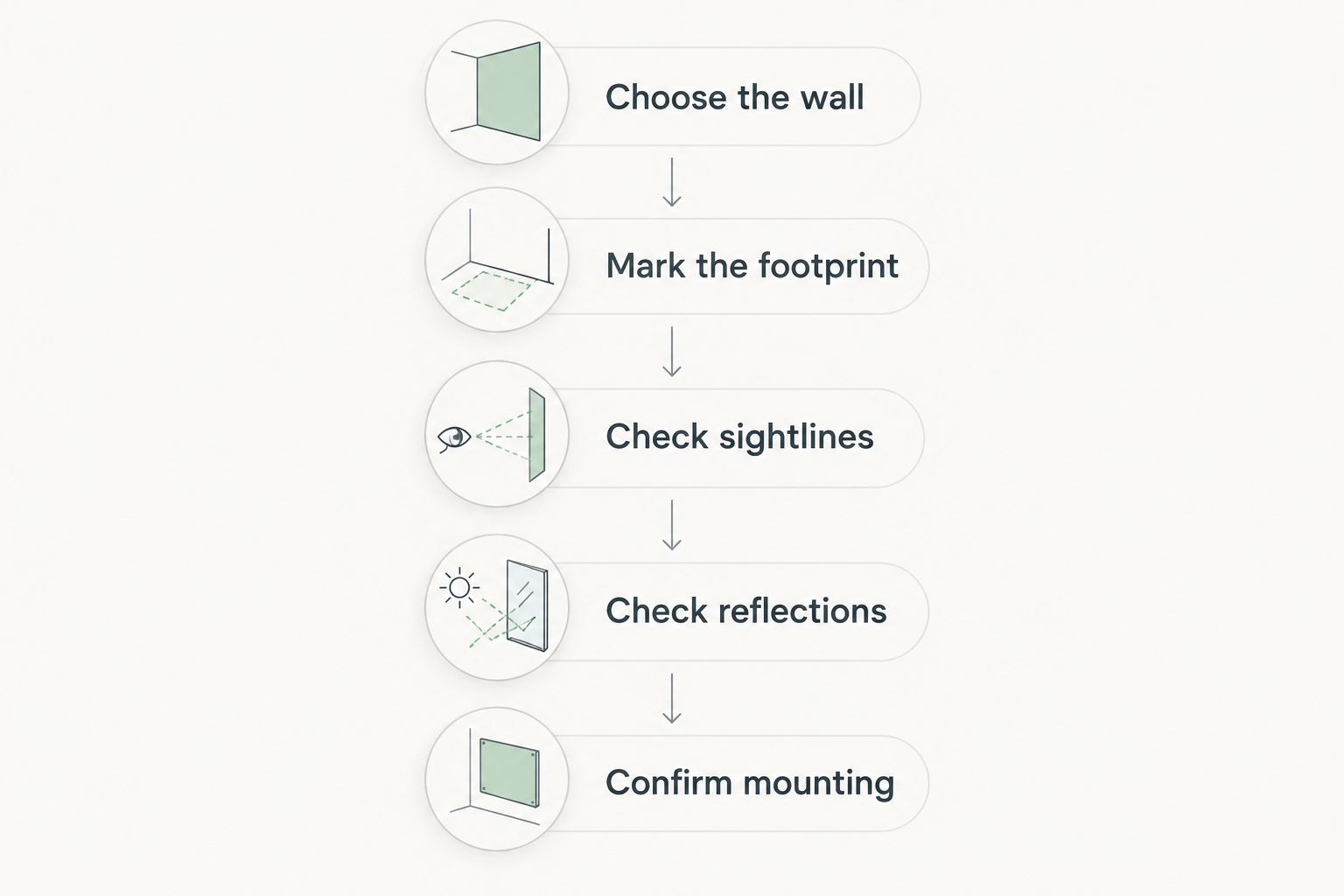
Follow this sequence for any of the six artwork types:
- Choose the wall: Identify the furniture and fixtures that belong to the arrangement.
- Mark the footprint: Represent the complete outer dimensions, including frames and panel gaps.
- Check sightlines: Look from the doorway, the bed, and your usual seated position.
- Check reflections: Inspect the position in daylight and with your bedside lighting on.
- Confirm mounting: Match the fixing method to the actual wall and artwork, using the supplied instructions.
The same placement questions apply outside the bedroom. The guide to choosing and styling living-room wall art gives you another room context for comparing artwork with furniture.
For a bedroom, pay particular attention to the view from your pillow. An arrangement that looks balanced from the doorway still needs to make sense from the position where you spend time.
How we ranked these artwork types
This 2026 ranking prioritizes a clear decorative role, placement flexibility, and an understandable trade-off. Landscapes take the default slot because they provide a recognizable subject; the other categories win when your priority is color, simplicity, meaning, texture, or a divided composition.
The ranking is a selection framework, not a product test. Material quality, printing, framing, and mounting must be assessed on the individual piece. Category labels cannot settle those questions.
Which bedroom wall art should you choose?
Choose a landscape if you are undecided and want one clear focal point. Choose abstract art when color coordination leads, or photography when the subject has personal meaning. Botanical prints, textiles, and triptychs solve more specific arrangement needs.
For your 2026 bedroom shortlist, compare only pieces that suit the chosen wall. Mercado da Imagem sells art and wall decoration; keep your preferred category and placement requirements clear when assessing individual options.
Explore art for your bedroom
Compare art and wall decoration against your chosen wall, colors, and arrangement.
FAQ
What's the best wall art for bedrooms in 2026?
A landscape is the default recommendation when you want a recognizable focal point. Choose abstract art for color coordination or photography when personal meaning matters more than a decorative theme.
Is abstract art better than landscape art for a bedroom?
Abstract art is better for coordinating colors without a literal subject; landscape art is better for a recognizable scene. Choose according to the role you want the artwork to play.
Should bedroom artwork match the bedding?
Bedroom artwork does not need to match the bedding exactly. Use a shared color or an intentional contrast, then judge the whole composition rather than one matching detail.
How do I choose the size of art above my bed?
Choose the size by testing the complete footprint against your headboard and nearby fixtures. Paper templates let you compare arrangements before committing, without relying on a universal proportion.
Is a triptych better than one large picture?
A triptych is better when you want a divided composition and have space for the full group. One picture avoids the extra alignment and spacing decisions.
Can I hang heavy artwork above a bed?
Do not hang heavy artwork above a bed without a verified fixing method suitable for the wall and the piece. Follow the mounting instructions and use a qualified installer when you cannot confirm a secure installation.
Where should I start when browsing Mercado da Imagem for bedroom art?
Start with your chosen wall and preferred artwork type when browsing Mercado da Imagem. Then assess each piece's dimensions, material, presentation, and mounting information against your room.
One last thing
An artwork above your headboard is not necessarily the artwork you see most from bed. Before finishing your 2026 arrangement, sit or lie in your usual position and look toward the opposite wall. If that is the view you want to improve, put your favorite piece there instead.