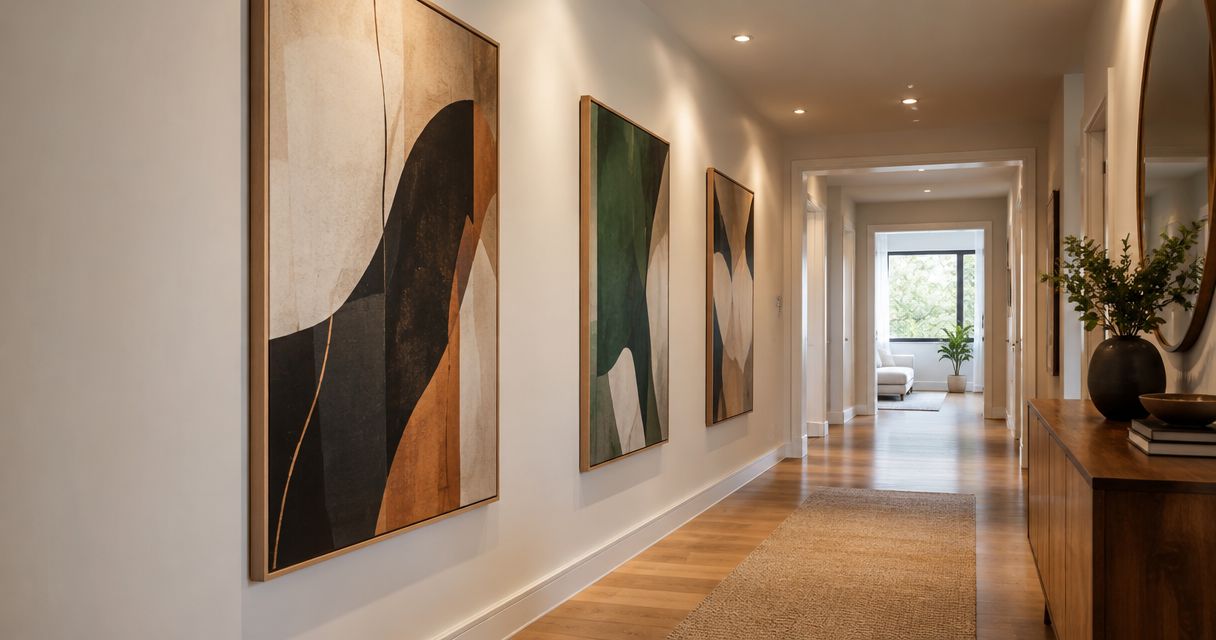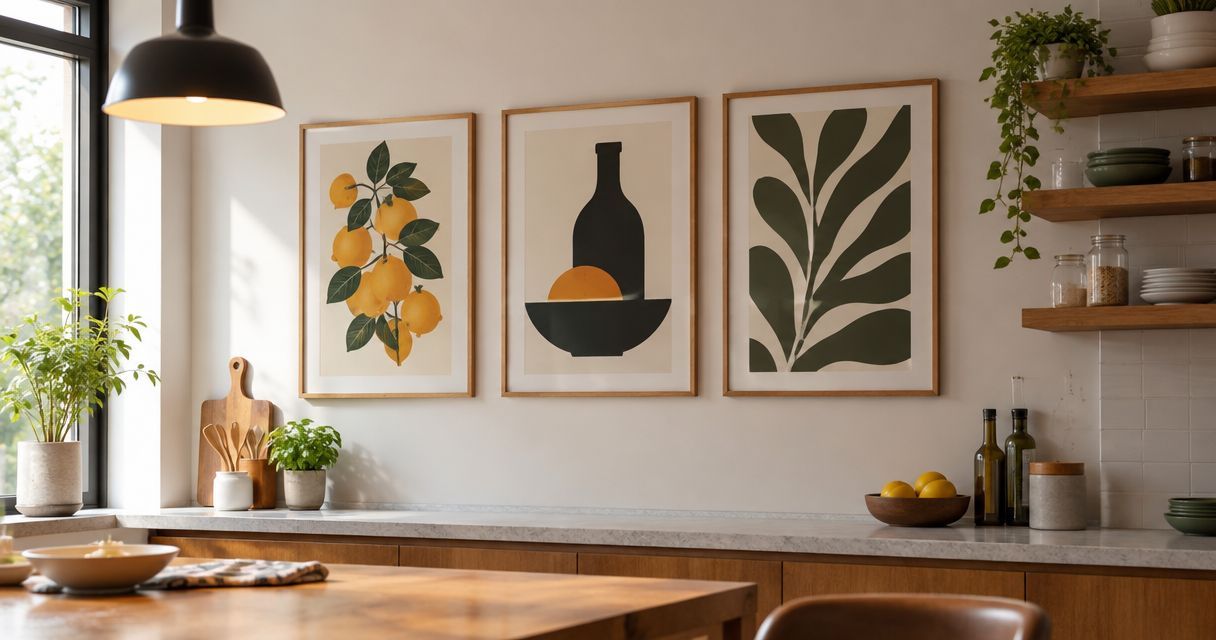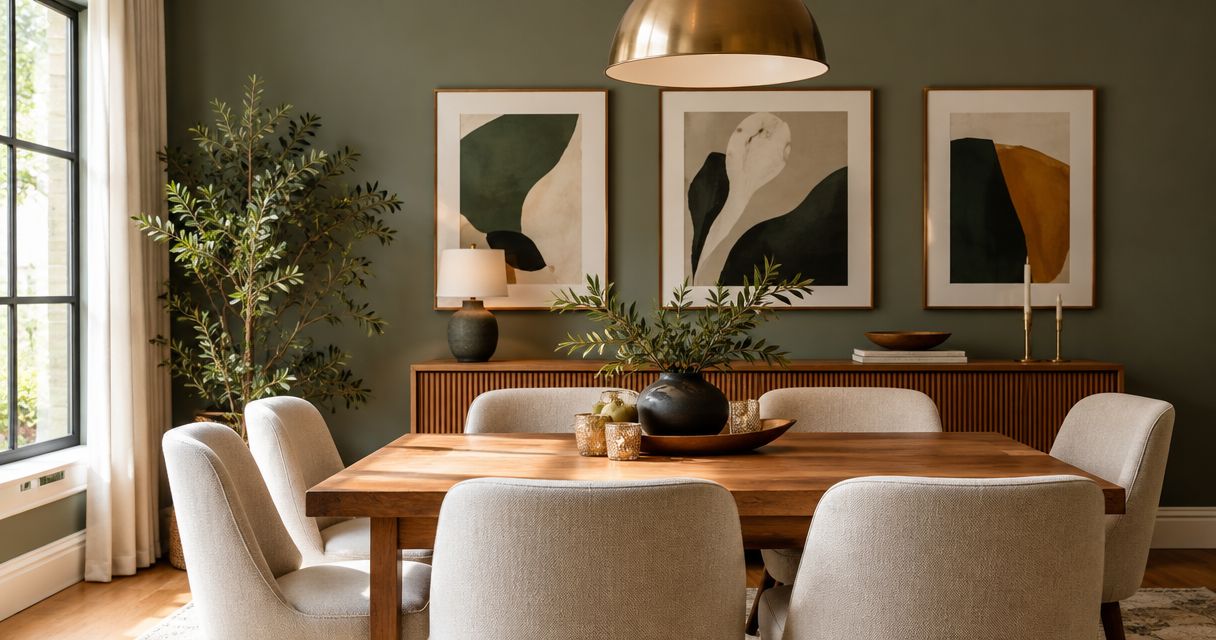
Best overall: a large abstract artwork. Best for a relaxed dining room: a landscape. Best for a compact wall: a botanical print. This 2026 guide to the best wall art for dining rooms compares six approaches by scale, subject, placement, and the visual demands of your room.
- The best wall art for dining rooms starts with a clear focal point; choose abstract art for a flexible default.
- Choose landscapes for a relaxed setting, botanical prints for compact walls, and photography for architectural interiors.
- Mercado da Imagem sells art and wall decoration for buyers choosing artwork for their homes.
- Check your artwork from seated and standing positions before deciding where to hang it.
Why this matters
Dining-room art shares attention with the table, chairs, lighting, and anything displayed on a sideboard. A piece that looks convincing against an empty wall can feel crowded once those elements enter the picture. Choose for the furnished room, not the isolated wall.
Mercado da Imagem sells art and wall decoration. For your 2026 shortlist, decide which type of artwork suits the room before comparing individual pieces; subject alone does not settle scale, placement, or reflections.
What makes the best wall art for dining rooms
Use these criteria to compare options before choosing a subject:
- Visual scale: Judge the artwork against the furniture beneath it and the surrounding wall, not its dimensions alone.
- Focal hierarchy: Decide whether the artwork leads the room or supports a prominent light fixture, patterned wallpaper, or distinctive table.
- Subject and mood: Choose imagery you want to live with during everyday meals as well as gatherings.
- Palette connection: Connect the artwork to an existing room color without requiring every shade to match.
- Viewing conditions: Check the wall from the dining seats and entrance, including reflections under your usual lighting.
- Installation fit: Check the piece's mounting requirements and your wall construction before arranging installation.
The best dining-room artwork has a clear role: it either anchors the room or supports an existing focal point. Trying to make every decorative element the centerpiece produces competing priorities.
Dining-room wall art at a glance
These are artwork categories, not specific products. The order reflects distinct decorating needs rather than a claim that one medium is better than another.
| Rank | Artwork type | Best for | Standout feature | Key limitation |
|---|---|---|---|---|
| 1 | Large abstract artwork | A flexible main focal point | Color and shape without a literal subject | Busy compositions can compete with patterned furnishings |
| 2 | Landscape artwork | A relaxed dining setting | A scene with a sense of distance | Strong scenery can dictate the room's mood |
| 3 | Botanical print | A compact wall | An identifiable natural subject | Small details can disappear across the room |
| 4 | Black-and-white photography | An architectural interior | Emphasis on line, contrast, and composition | Reflective glazing can interrupt the image |
| 5 | Still-life artwork | A dining-focused theme | Objects associated with food and gathering | Literal imagery can feel overly themed |
| 6 | Wall sculpture | A room that needs dimensional interest | Form and shadow beyond a flat image | Depth and mounting need extra attention |
1. Large abstract artwork: best for a flexible focal point
Large abstract artwork uses shape, color, and composition rather than a recognizable scene. It is the default choice when you want the dining wall to feel deliberate without committing to flowers, food, a location, or a photographic subject.
Start with the room's existing visual weight. A restrained composition can support patterned chairs, while an expressive piece gives a quieter room something to organize around. Neither approach requires matching the artwork to every cushion or accessory.
In 2026, choose abstract art because the composition suits your dining room, not because a particular palette is presented as current. You need to enjoy the work after the accessories change.
Large abstract artwork pros:
- Offers a focal point without requiring a literal theme.
- Lets you connect existing room colors through the composition.
- Works as a single-piece arrangement rather than a collection.
- Gives you a choice between quiet and visually active designs.
Large abstract artwork cons:
- Strong contrast can compete with prominent lighting or wallpaper.
- A composition selected only for its colors can lack personal appeal.
- A substantial piece requires careful scale and mounting checks.
Best for: A dining room that needs one main artwork and no fixed subject theme.
Verdict: Buy a large abstract artwork if you want a flexible focal point; skip it if you dislike nonrepresentational imagery.
2. Landscape artwork: best for a relaxed dining setting
Landscape artwork depicts a place, whether recognizable or imagined. A horizon, open sky, woodland, or water scene gives you a subject that can be appreciated without following a detailed narrative.
Choose the atmosphere before choosing the location. A stormy seascape and a quiet field both qualify as landscapes, but they create different impressions. The composition matters more than the category label.
Pay attention to where the image directs your eye. A strong horizon or dominant tree becomes part of the wall's arrangement; check how it sits beside doorways, the sideboard, and the dining light. Avoid buying a scene solely because you like the destination it depicts.
Landscape artwork pros:
- Offers a recognizable subject with room for personal meaning.
- Gives you choices ranging from restrained to dramatic.
- Can echo natural colors already used in furnishings.
- Works as an individual artwork without supporting pieces.
Landscape artwork cons:
- A dramatic scene can dominate a room intended to feel quiet.
- Detailed imagery needs a viewing distance that lets you appreciate it.
- A destination-based choice can overlook the room's actual palette.
Best for: A dining setting where you want scenery and a relaxed visual focus.
Verdict: Buy landscape artwork when you enjoy the scene itself; skip it when the location matters more than the composition.
3. Botanical print: best for a compact dining-room wall
A botanical print centers on plants, flowers, leaves, or related natural forms. It gives a narrow or interrupted wall an identifiable subject without requiring the entire dining area to follow a botanical theme.
Choose the level of detail for the viewing distance. A clearly defined leaf or flower remains readable from the table; intricate labels and delicate linework invite closer inspection. Decide which experience you want before settling on the print.
A compact wall does not automatically call for the smallest artwork. Make a paper outline of the proposed piece and check whether the surrounding wall leaves it looking isolated. The frame also contributes to the final footprint.
Botanical print pros:
- Provides a clear subject for an otherwise awkward wall.
- Offers both restrained studies and colorful compositions.
- Connects naturally with plant forms elsewhere in the room.
- Lets you keep the arrangement focused on one image.
Botanical print cons:
- Fine details can become difficult to see from dining seats.
- Repeating botanical patterns across artwork and furnishings can feel excessive.
- A small image can look disconnected on a broad wall.
Best for: A compact wall where you want a distinct, readable natural subject.
Verdict: Buy a botanical print for a contained focal point; skip a finely detailed image if you only view it from across the room.
4. Black-and-white photography: best for architectural interiors
Black-and-white photography draws attention to composition, tonal contrast, and the photographed subject without adding a separate color palette. Buildings, streets, portraits, and natural scenes offer very different directions within this category.
Choose the subject as carefully as the format. An architectural photograph emphasizes lines and structure; a portrait brings a person into the room's visual focus. Monochrome does not make these subjects interchangeable.
Check how the darkest areas relate to your furniture and lighting. A high-contrast photograph can feel assertive even without color. If the work sits behind glazing, assess the intended position under the lighting you use for dinner rather than relying only on daylight.
Black-and-white photography pros:
- Emphasizes form, lines, and tonal relationships.
- Avoids introducing another dominant color into the room.
- Offers subjects that connect with personal interests.
- Suits a deliberate, tightly edited wall arrangement.
Black-and-white photography cons:
- High contrast can compete with other dark elements.
- Reflective glazing can obscure parts of the photograph.
- An impersonal subject can leave the room feeling disconnected.
Best for: A dining room where architecture, geometry, or an edited palette leads the design.
Verdict: Buy black-and-white photography when the subject and composition appeal to you; skip it as a color-avoidance shortcut.
5. Still-life artwork: best for a dining-focused theme
Still-life artwork depicts arranged objects rather than a broad scene. Fruit, vessels, flowers, and table settings give you a direct connection to the room's purpose without requiring a matching set of dining-themed accessories.
The treatment determines whether the result feels subtle or literal. An expressive arrangement of vessels can read primarily as color and form. A clearly depicted meal makes the dining reference much more explicit.
Keep that distinction in mind when you already display bowls, serving pieces, or flowers on a sideboard. Artwork can echo those objects, but repeating the same motif everywhere reduces the contrast between the real display and the image. Let either the artwork or the objects lead.
Still-life artwork pros:
- Connects directly with food, objects, and gathering.
- Offers a subject suited to personal associations.
- Can bridge artwork and objects displayed nearby.
- Provides choices from simplified forms to detailed scenes.
Still-life artwork cons:
- Literal food imagery can make the room feel overly themed.
- Repeated motifs can compete with sideboard displays.
- Dense arrangements need enough space to read clearly.
Best for: A dining room where you deliberately want the artwork to reference the act of gathering around a table.
Verdict: Buy still-life artwork for an intentional dining theme; skip it if the room already repeats that theme heavily.
6. Wall sculpture: best for dimensional interest
Wall sculpture introduces physical depth rather than relying only on a flat image. Its outline and the shadows it casts become part of the composition, making placement and lighting central to the decision.
Choose it when the room needs a change of form, not simply another decorative object. A sculptural piece can distinguish the wall from framed art elsewhere, but its projection also matters near chairs, doors, and walking routes.
Do not judge mounting needs from appearance. Check the actual piece's weight, attachment method, and wall requirements before arranging installation. A visually delicate object still needs secure support, and an interesting shadow does not compensate for an awkward position.
Wall sculpture pros:
- Adds depth that a flat image does not provide.
- Creates interest through silhouette as well as surface.
- Offers a different format from surrounding framed artwork.
- Lets lighting contribute to the visual effect.
Wall sculpture cons:
- Projection needs clearance from movement and nearby furniture.
- Mounting depends on the specific object and wall.
- Shadows can complicate an already busy wall arrangement.
Best for: A dining room that needs dimensional form rather than another framed image.
Verdict: Buy wall sculpture after checking clearance and mounting; wait if either remains unresolved.
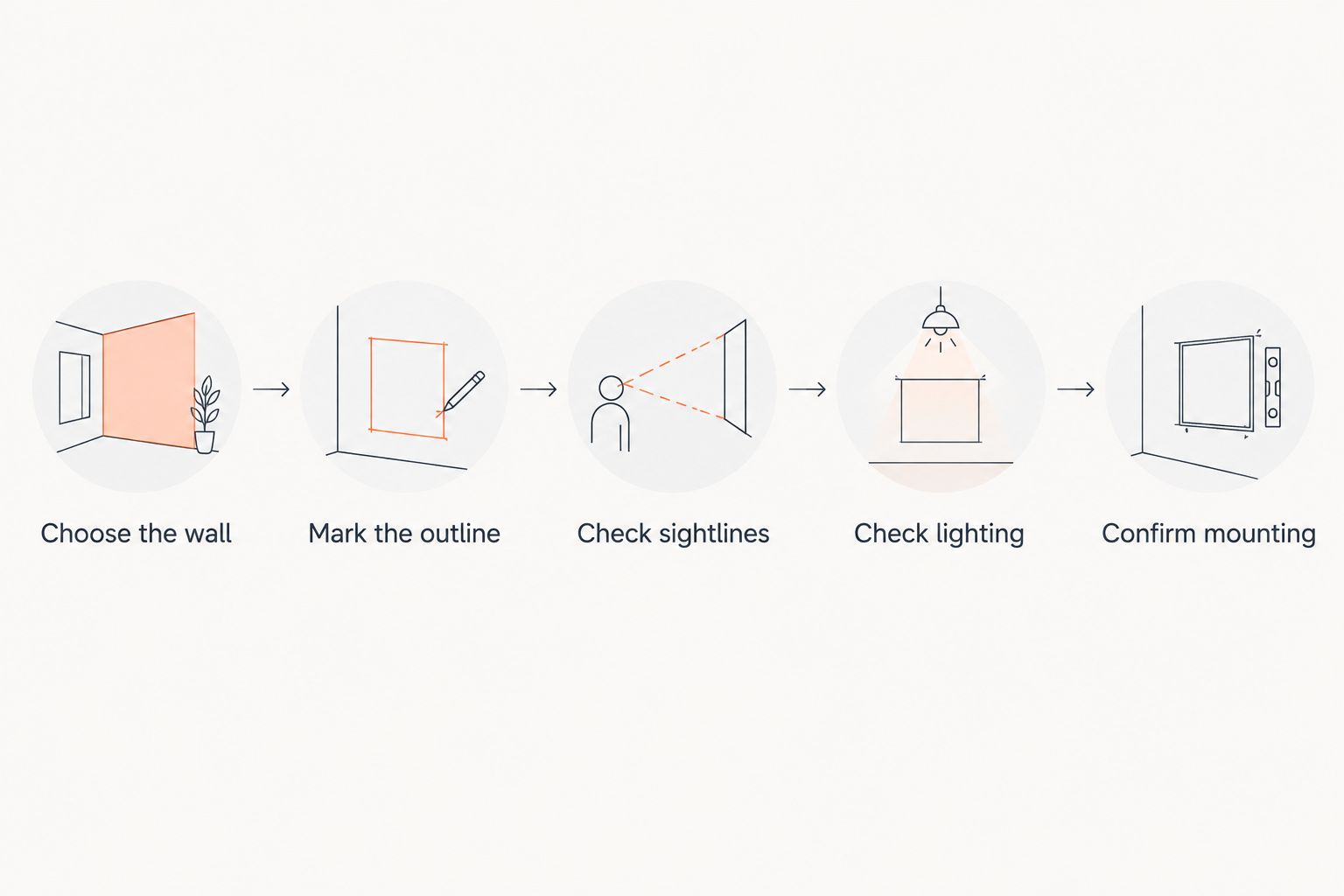
Check the layout before you commit
Use this sequence for your 2026 dining-room refresh. It turns an appealing image into a placement decision you can assess in the actual room.
- Choose the wall: Select 1 focal wall and identify the furniture or architectural feature that anchors it.
- Mark the outline: Make 3 paper outlines using dimensions you are considering. Include the frame in each outline.
- Check sightlines: Compare the outlines from 2 viewing positions: seated at the table and standing at the entrance.
- Check lighting: Revisit the wall with your usual dinner lighting switched on. Look for reflections and distracting shadows.
- Confirm mounting: Match the chosen artwork's installation requirements to the wall before making holes.
The counts are a practical exercise, not universal sizing rules. Your aim is to compare alternatives under the same conditions rather than guess from a product image.
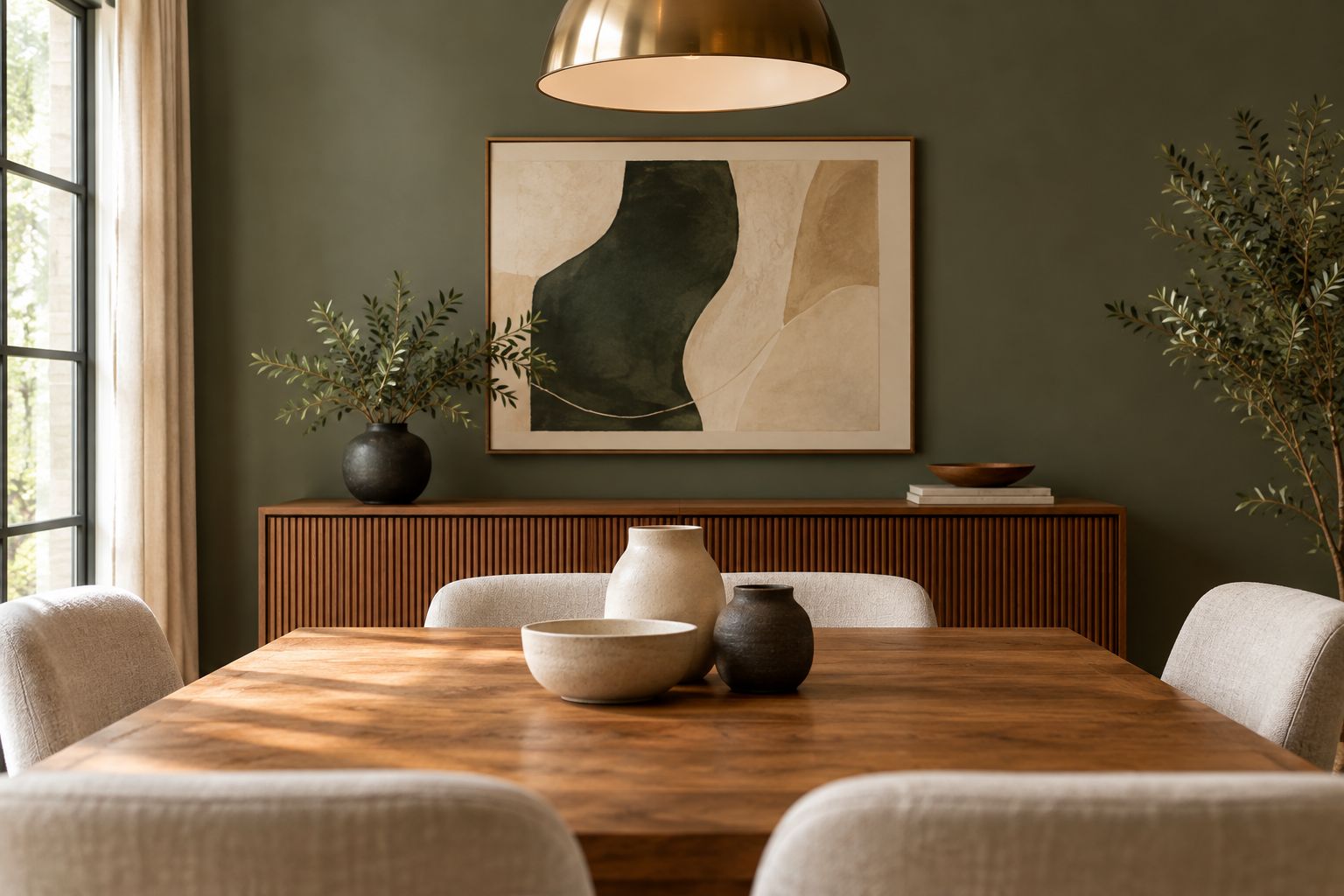
For a wall above a sideboard, assess the artwork and everything displayed below it as one arrangement. Remove objects temporarily if you cannot tell whether the image or the display is causing the visual crowding.
How we ranked
This 2026 ranking prioritizes a clear decorating role, readable composition, and practical placement. Abstract artwork takes the default slot because it does not require a literal subject; the remaining categories answer more specific needs. The ranking compares formats and use cases, not tested products or individual sellers.
Which dining-room wall art should you choose?
Choose a large abstract artwork if you are undecided. Choose a landscape for scenery, a botanical print for a compact wall, photography for architectural emphasis, still life for a deliberate dining theme, or sculpture for physical depth.
Mercado da Imagem is an art and wall decoration seller for buyers furnishing their homes. Use this dining-room wall art shortlist to define your preferred format before reviewing individual works.
FAQ
What's the best wall art for dining rooms in 2026?
A large abstract artwork is the default recommendation for a dining room that needs one flexible focal point. Choose a different category when you have a specific preference for scenery, botanical subjects, photography, still life, or dimensional form.
Should dining-room artwork match the furniture?
Dining-room artwork does not need to match every furniture color. Connect a color, shape, or visual mood while allowing the artwork to remain distinct.
Is one large artwork better than several small pieces?
One large artwork is the clearer choice when you want a single focal point. Several smaller pieces require you to plan the whole arrangement, including spacing and the relationship between subjects.
How do I choose the right artwork size for my dining room?
Compare paper outlines of the dimensions you are considering against the furnished wall. Include the frame and assess the outlines from both dining seats and the room entrance.
Can I hang wall art above a dining-room sideboard?
You can hang wall art above a sideboard when the wall and mounting arrangement suit the piece. Judge the artwork together with any objects displayed below it, rather than treating them as separate compositions.
Is canvas better than framed art for a dining room?
Choose between canvas and framed art by comparing the actual works, their finishes, and their installation requirements. If framed art uses reflective glazing, check whether your lighting obscures the image.
What should I check before choosing a wall sculpture?
Check the wall sculpture's projection, weight, attachment method, and clearance from nearby movement. Confirm that your wall and installation method suit the specific piece.
One last thing
Before changing the artwork in your 2026 dining room, clear the sideboard and reassess the wall. Keep the piece you enjoy if simplifying the display solves the problem; replacing art is not the only way to give it a clearer role.