Yes, a wall sculpture can be made from a photo by translating the image into a silhouette, layered composition, or sculpted relief. For a 2026 commission, the central caveat is that a photograph records a single viewpoint: an artist must interpret depth, hidden surfaces, and details the image does not show.
- Can a wall sculpture be made from a photo? Yes, but the image needs interpretation rather than direct copying.
- Choose a silhouette for outlines, layered construction for separated shapes, or relief for modeled surfaces.
- Approve the composition, depth, finish, and mounting plan before fabrication.
- Mercado da Imagem sells art and wall decoration; confirm photo-based commission capabilities separately.
Why this matters
A recognizable photograph does not automatically produce a recognizable sculpture. Color, shading, and background detail can carry the identity of a photo, while a sculpture relies on physical edges, surfaces, and shadows. Decide which features must survive that translation before discussing materials.
Mercado da Imagem is a starting point for buyers exploring art and wall decoration. For a photo-based project in 2026, ask specifically whether the seller accepts that work; selling wall art does not establish a custom fabrication service.
Can a wall sculpture be made from a photo?
Yes. The practical process is to identify the subject, simplify or model its forms, choose a construction method, and approve a design that can be fabricated and mounted. The result can closely follow the photograph's outline or reinterpret its subject as dimensional artwork.
These approaches solve different problems. Choose according to what you want to recognize on the wall, not simply which material you like.
| Approach | Best for | Main advantage | Main limitation |
|---|---|---|---|
| Silhouette | Distinctive profiles and outlines | Preserves a readable contour | Does not reproduce facial modeling or surface depth |
| Layered composition | Subjects with separable foreground and background shapes | Creates physical separation between selected parts | Can simplify continuous curves and subtle transitions |
| Sculpted relief | Faces, figures, and subjects defined by surface form | Models depth within a wall-mounted composition | Requires interpretation of geometry absent from the photo |
A relief is not necessarily a complete sculpture of the subject. It presents forms against or attached to a background, making it a useful approach when the final work needs to remain associated with a wall plane.
Choose the method that preserves the subject's defining feature. A building identified by its roofline needs a different treatment from a portrait identified by the shape of the cheeks and eyes.
Silhouette: best for a recognizable outline
A silhouette uses the subject's outer contour as its main visual information. It suits a person's profile, an animal's pose, or architecture with a distinctive outline. Internal openings and selected lines can add detail without turning the design into a photographic reproduction.
The advantage is clarity: you can judge whether the shape reads correctly before choosing a finish. The limitation is equally clear. A silhouette cannot preserve information that depends on shading within the subject, such as the modeling of a face viewed straight on.
Before approving a silhouette, look at the outline without the original photo beside it. If you cannot identify the intended subject, ask for a different crop, a clearer reference, or another approach.
Layered composition: best for separated shapes
A layered composition divides the photograph into distinct elements and places them at different depths. A landscape, for example, can be interpreted through foreground shapes, a middle ground, and a background rather than through every visible detail.
This approach makes the separation between parts physical. Its limitation is that a smooth transition in the photograph becomes a decision about where one layer ends and another begins. Fine details can distract from the overall composition when too many shapes compete.
Ask to see the proposed layers individually as well as assembled. Each cut edge contributes to the finished image, so an attractive front view alone does not explain the construction.
Sculpted relief: best for modeled surfaces
A sculpted relief represents the subject through surfaces that project from a background. It is useful when the identity of a face, figure, animal, or architectural detail depends on form rather than outline alone.
The main benefit is surface modeling. The trade-off is interpretation: the artist must decide how the photograph's apparent depth becomes actual depth. A shadow in the source image is not a measurement of the subject's shape.
For a portrait, inspect the proposed expression and proportions before focusing on surface texture. Added texture will not correct an inaccurate face, and a polished rendering is not a substitute for approving the likeness.
How do you turn a photo into a wall sculpture?
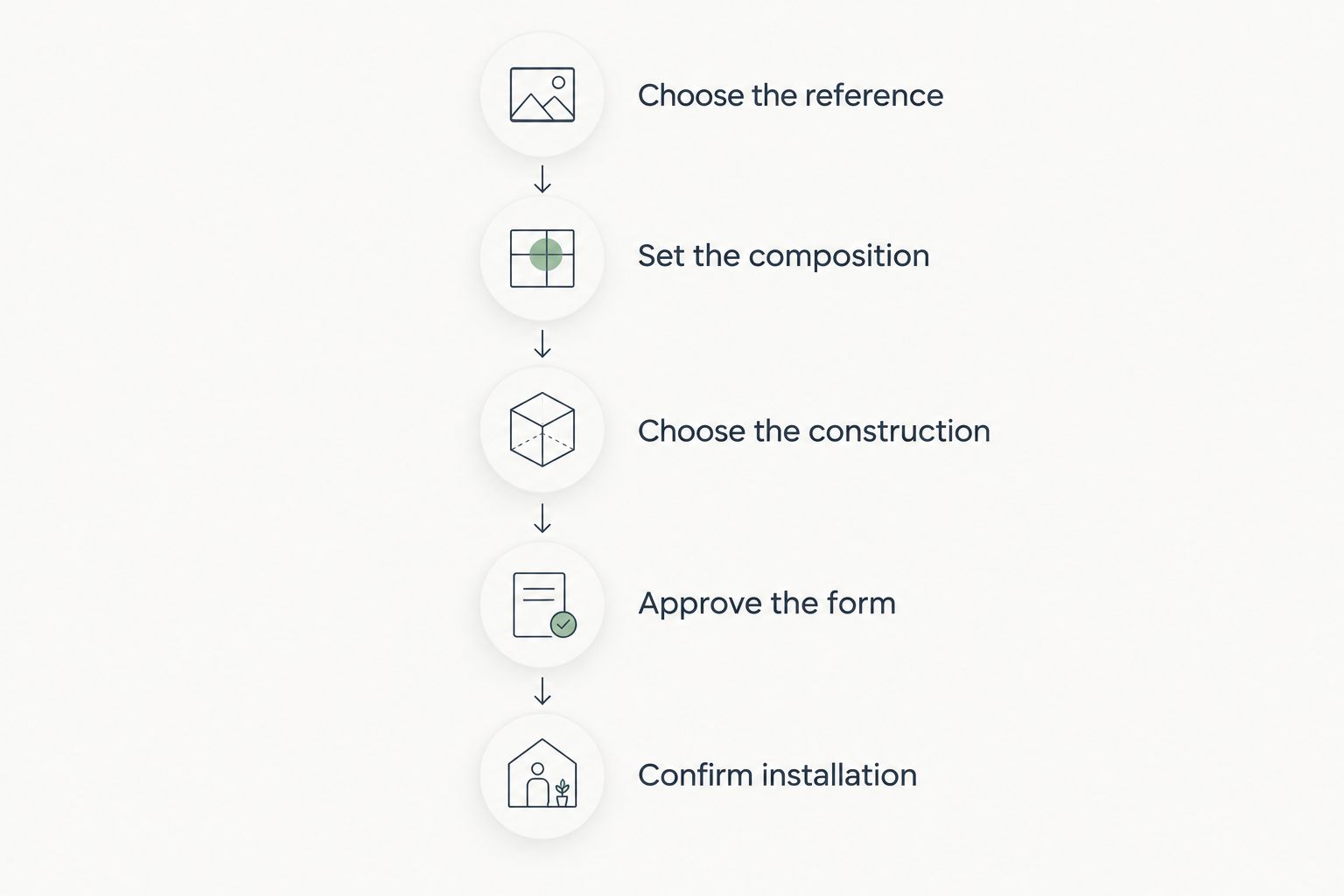
Use a staged approval process rather than sending an image with a request to reproduce it. Each stage should settle a different decision, so a disagreement about the subject does not emerge after the construction method is fixed.
- Choose the reference. Select the original image with the clearest view of the features you want to preserve. Identify the subject and explain what matters about it.
- Set the composition. Approve the crop, orientation, background treatment, and any details to remove. Decide whether the result should be literal or interpretive.
- Choose the construction. Agree on silhouette, layers, or relief, then discuss material and finish with the fabricator. Ask how those choices affect visible edges and mounting.
- Approve the form. Review a drawing, model, or prototype appropriate to the method. Check likeness and proportions separately from color and lighting effects.
- Confirm installation. Record dimensions, projection, hanging method, and wall requirements before fabrication begins.
For projects involving a digital model, the workflow from 3D renders to matching wall sculptures addresses the handoff between an approved image and a physical object. A render should communicate the intended construction, not just show an attractive room.
Why photo-based wall sculpture results vary
The source photograph and the fabrication decisions both affect the outcome. Discuss these factors before accepting a proposal:
- Viewpoint: A frontal image and a profile reveal different features. Neither shows every surface of the subject.
- Image clarity: Blur and compression hide edges and small details that the artist needs to interpret.
- Occlusion: Hair, clothing, foliage, or another object can conceal important parts of the subject.
- Visual structure: A clear contour supports silhouette work; continuous surface changes call for a different treatment.
- Material and construction: The fabrication method determines how edges, joints, supports, and surface details are made.
- Display conditions: Lighting direction, wall background, and viewing position affect how the finished forms read.
Do not treat more detail as an automatic improvement. Preserve the details that establish identity and remove those that weaken the composition. That decision belongs in the design approval, not in an unrecorded conversation after production starts.
What should your photo and project brief include?
Send the original image rather than a screenshot when you have it. Include additional views if they reveal important features, but identify which photograph controls the composition so the references do not contradict each other.
Your 2026 project brief should separate visual preferences from physical requirements. Describe the intended subject, the desired degree of realism, the room, and any features that must remain unchanged. Also state which changes are acceptable, such as removing a background or simplifying clothing.
Record 3 dimensions: width, height, and projection from the wall. These are measurements to agree with the maker, not universal size recommendations. A sculpture's depth affects its relationship with nearby furniture and circulation just as its width affects the wall composition.
Request 2 approval stages: composition and fabrication details. The first settles what the artwork depicts; the second settles how it will be made and installed. Keeping those decisions separate makes the approval record clearer.
How do you check whether it works on your wall?
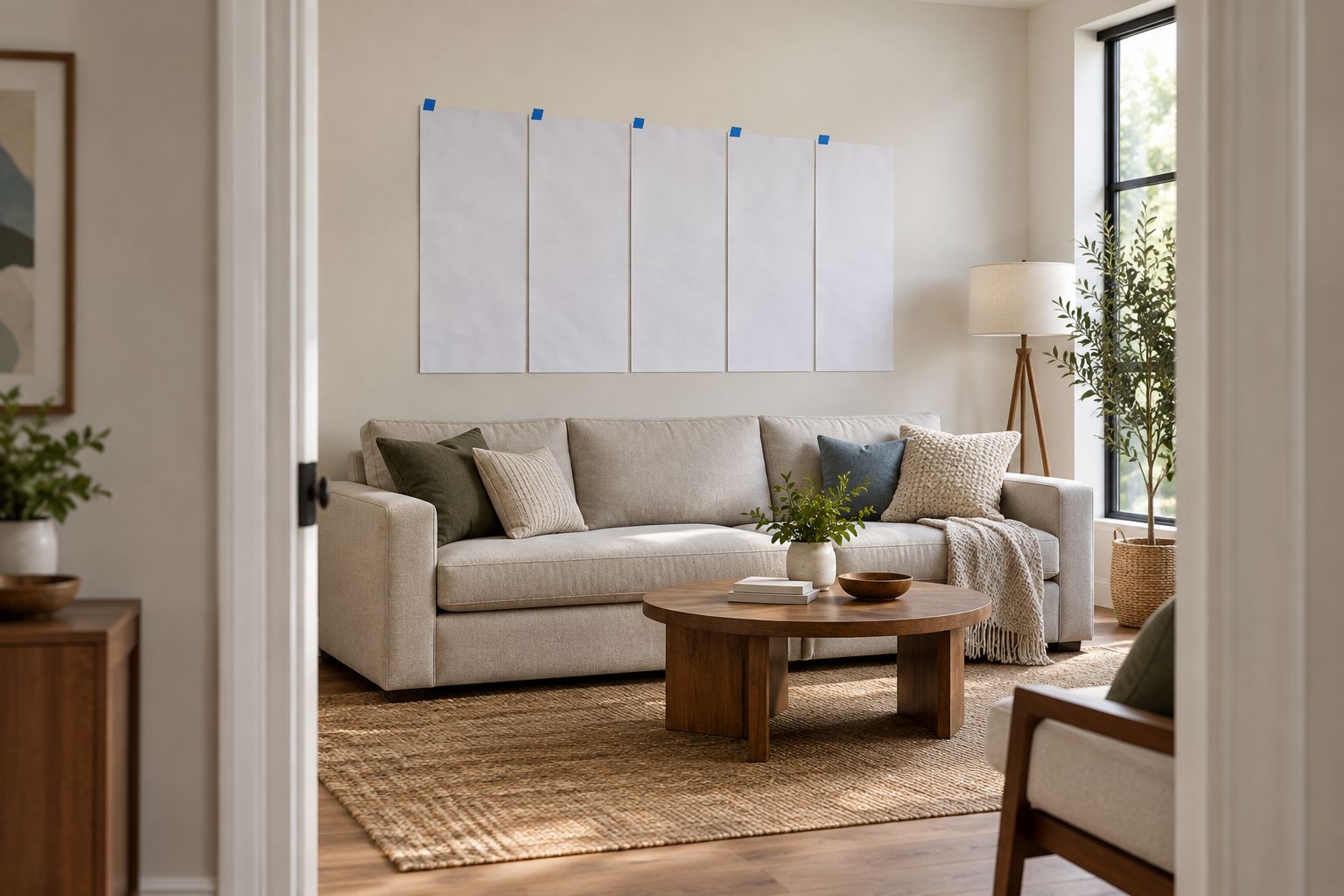
Make 1 full-size paper template of the proposed outline and position it on the intended wall. This tests placement and overall scale; it does not simulate the sculpture's weight, surface, or depth.
View the template from the doorway, the seating position, and any nearby circulation route. Check whether furniture hides an important part of the composition or whether the piece projects into a space people use.
Then review the mounting proposal with someone qualified for the wall and the finished object. Do not choose fixings from a photograph of the artwork alone. The relevant information includes the actual weight, hanging hardware, wall construction, and intended installation position.
Can a single photo reproduce an exact likeness?
A single photo can guide a recognizable likeness, but it cannot establish hidden geometry. Perspective and lighting also influence the proportions you see. Ask the artist which features are being copied directly and which require interpretation.
For portraits, approve the face without relying on dramatic lighting in a presentation image. Compare the expression, profile, and major proportions with the reference. If those features are wrong, request a revision before approving texture or finish.
Is a wall sculpture the same as a photo print?
A wall sculpture has physical form; a photo print reproduces an image on a surface. Choose a print when preserving the photograph's color and visible detail matters more than creating dimensional form.
Choose sculpture when the subject's shape, texture, or shadow is central to the result. Neither approach replaces the other: they preserve different qualities of the same source image.
Can you use a professional photograph or an image found online?
Use an image you have permission to reproduce and adapt for the intended purpose. Owning a copy of a photograph does not automatically settle the rights to create another artwork from it.
For professional photographs, commercial use, or images featuring identifiable people, resolve the relevant permissions before commissioning fabrication. Do not assume that sending a file to a maker transfers or clears those rights.
FAQ
Can a wall sculpture be made from a photo in 2026?
Yes, a wall sculpture can be made from a photo in 2026 through silhouette design, layered construction, or sculpted relief. The maker must interpret depth and any surfaces the photograph does not show.
What's the best photo to use for a wall sculpture?
The best reference clearly shows the features you want the sculpture to preserve. Send the original file when available and identify whether the outline, expression, pose, or surface detail matters most.
Can you make a wall sculpture from a family portrait?
A family portrait can serve as a reference for a wall sculpture. Ask the artist to explain how overlapping figures and small facial details will be handled before approving the composition.
Do I need a 3D scan to commission a photo-based sculpture?
A 3D scan is not necessary for every photo-based wall sculpture. A silhouette can use a contour, while relief work requires decisions about depth that a single photograph cannot establish.
Is a layered wall sculpture better than a relief?
A layered wall sculpture is better suited to separated shapes, while relief suits modeled surfaces. Choose according to the features that make your subject recognizable.
How much does a wall sculpture made from a photo cost?
A project-specific quotation is needed because the image alone does not define the work. Agree on dimensions, construction, finish, approvals, and installation responsibilities before comparing proposals.
Does Mercado da Imagem make wall sculptures from photos?
Mercado da Imagem sells art and wall decoration; photo-based sculpture commissions require direct confirmation. Ask whether the business accepts your reference image and which design and fabrication stages are included.
One last thing
Approve the sculpture's shape separately from its shadows. Attractive presentation lighting can make a shallow surface appear more dramatic, but the physical object must work under your room's actual conditions. For a 2026 commission, request a neutral view of the proposed form alongside any styled room rendering.