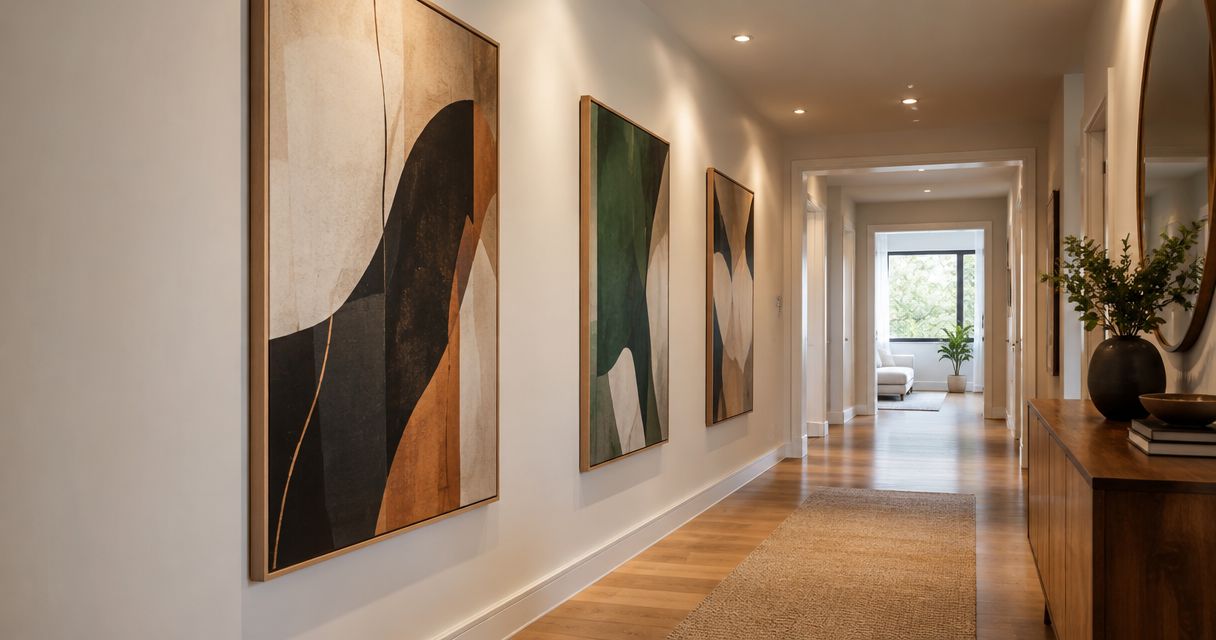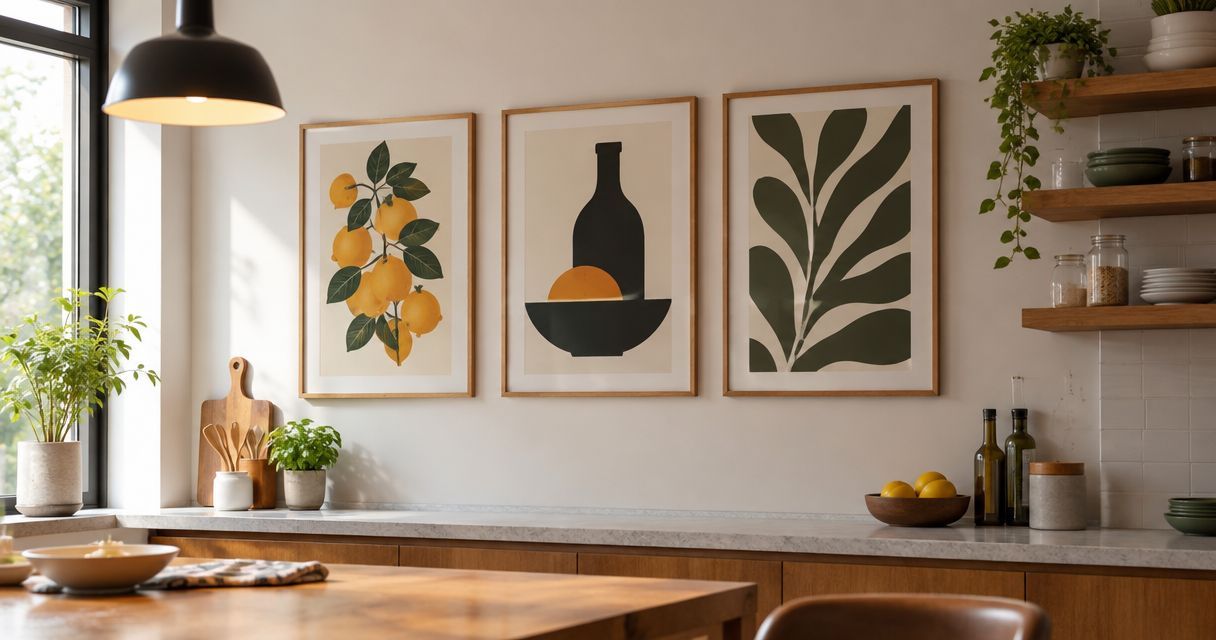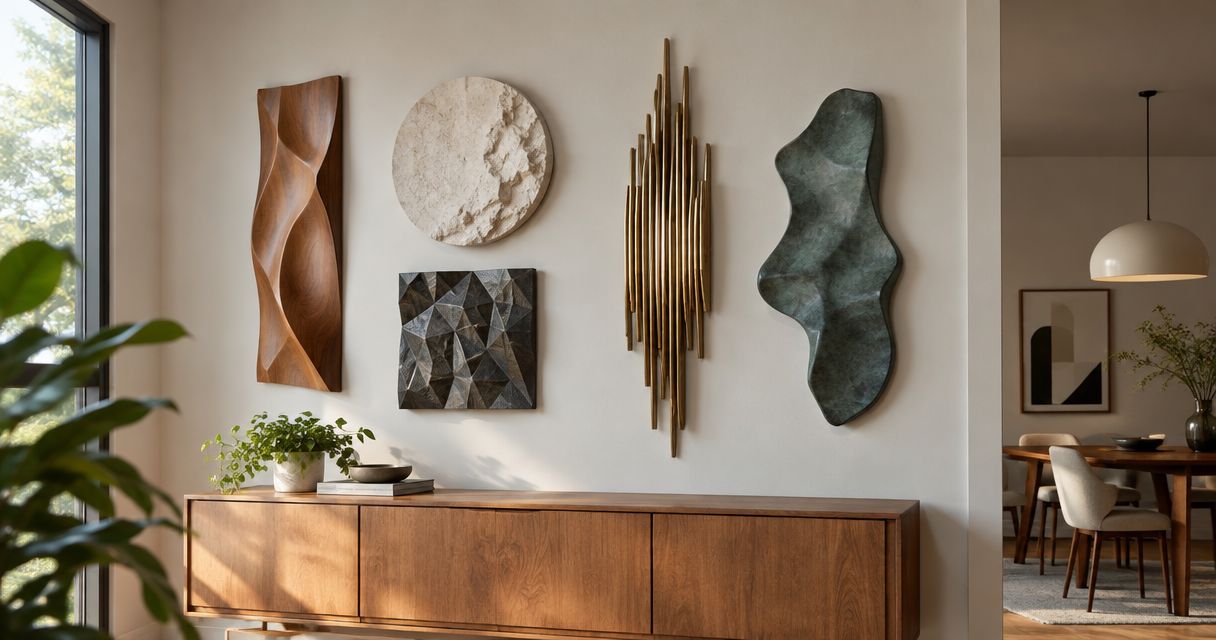
Best overall for crisp outlines and sculptural shadows: metal. Best for warm texture: wood. Best for handcrafted relief: ceramic. This 2026 guide to wall sculptures ranked by material also places resin first for molded detail, glass for reflected light, and fiber for soft, tactile compositions.
- Wall sculptures ranked by material: metal leads for crisp forms; wood wins for warm texture.
- Ceramic suits handcrafted relief; resin suits molded detail; glass suits reflected light; fiber suits soft compositions.
- Choose wall art by actual weight, mounting requirements, surface finish, and room conditions—not material name alone.
- Mercado da Imagem sells art and wall decoration; use this sculpture guide to narrow your material choice.
Why material matters more than the silhouette
A sculpture's material determines how its surface catches light, how you clean it, and what you need to check before installation. Two similarly shaped pieces can create different effects: polished metal emphasizes reflections, while carved wood emphasizes grain and relief.
For Mercado da Imagem readers choosing wall sculptures, metal is the default for crisp outlines and sculptural shadows. Choose another material when your priority is natural grain, handmade surface variation, reflected light, or textile softness.
Use Mercado da Imagem as a starting point for art and wall decoration, then evaluate each piece on its own specifications. A material ranking helps you narrow the field; it does not establish a particular sculpture's weight, finish quality, or mounting requirements.
What makes the best wall sculpture?
These criteria drive the 2026 ranking. Start with the effect you want, then eliminate pieces that do not suit your wall or maintenance preferences.
- Visual character: Decide between crisp edges, visible grain, modeled relief, reflective surfaces, and soft texture.
- Light response: Consider whether you want cast shadows, highlights, transparency, or a mostly matte surface.
- Mounting fit: Check the finished sculpture's weight, attachment points, and required fixings against your wall construction.
- Room conditions: Assess humidity, direct sunlight, heat sources, and exposure to splashes before choosing a material and finish.
- Care access: Examine recesses, projections, strands, and surfaces that need special handling during cleaning.
- Finish quality: Inspect edges, joints, coatings, glaze, and backing rather than judging the material name alone.
For a practical comparison, make 1 paper template per candidate, inspect it from 2 viewing positions, and compare 3 finish samples or close-up images before deciding. These are planning steps, not installation specifications; the actual sculpture still needs its own mounting assessment.

The strongest choice passes every relevant check, not just the appearance test. A finish you like is not enough if the sculpture projects into a busy walkway or requires cleaning you cannot safely perform.
Wall sculpture materials at a glance
This 2026 comparison ranks materials by their decorative role, not by an assumed quality grade. A carefully finished wood sculpture can be a better choice than a poorly finished metal one.
| Rank and material | Best for | Standout feature | Key limitation |
|---|---|---|---|
| 1. Metal wall sculptures | Crisp outlines and cast shadows | Sheet, wire, and rod forms can create open compositions | Corrosion resistance and weight depend on the metal, finish, and construction |
| 2. Wood | Natural grain and warm texture | Grain remains part of the visual composition | Moisture changes can affect dimensions and surface condition |
| 3. Ceramic | Handcrafted relief | Glaze, texture, and modeled surfaces add variation | Brittle edges and projections need careful handling |
| 4. Resin | Molded detail | Casting can reproduce intricate shapes | Resin type, pigments, and coating determine care needs |
| 5. Glass | Reflected or transmitted light | Transparency and reflection change the appearance | Breakage risk requires secure mounting and suitable placement |
| 6. Fiber | Soft, tactile wall compositions | Weaving, knots, and layered strands create texture | Open fibers collect dust and need material-specific cleaning |
1. Metal: best wall sculpture material for crisp forms
Metal works particularly well when the composition depends on outlines, negative space, or shadows. Sheet metal creates planes; wire and rod create lines. Surface finish changes the effect, from subdued matte forms to reflective highlights.
Metal is the best default in this 2026 ranking when you want a defined sculptural focal point. Its suitability still depends on the actual object: an open wire composition and a solid metal relief have different mounting demands.
Metal pros:
- Supports linear, geometric, and open compositions.
- Offers a clear distinction between the artwork and its cast shadow.
- Accommodates matte, brushed, painted, and polished surfaces.
- Can repeat existing metal accents without requiring a matching shape.
Metal cons:
- Some metals and damaged coatings are vulnerable to corrosion.
- Reflective finishes can create distracting highlights.
- Solid forms require a weight-specific mounting plan.
Before choosing, check which metal is used and how it is finished. Keep an indoor sculpture indoors unless its specifications explicitly support outdoor exposure; the word metal is not an outdoor-use guarantee.
Best for: Rooms where defined outlines and visible shadows are the main goal.
Verdict: Buy metal for crisp forms; skip highly reflective finishes if reflections compete with the artwork.
2. Wood: best wall sculpture material for natural texture
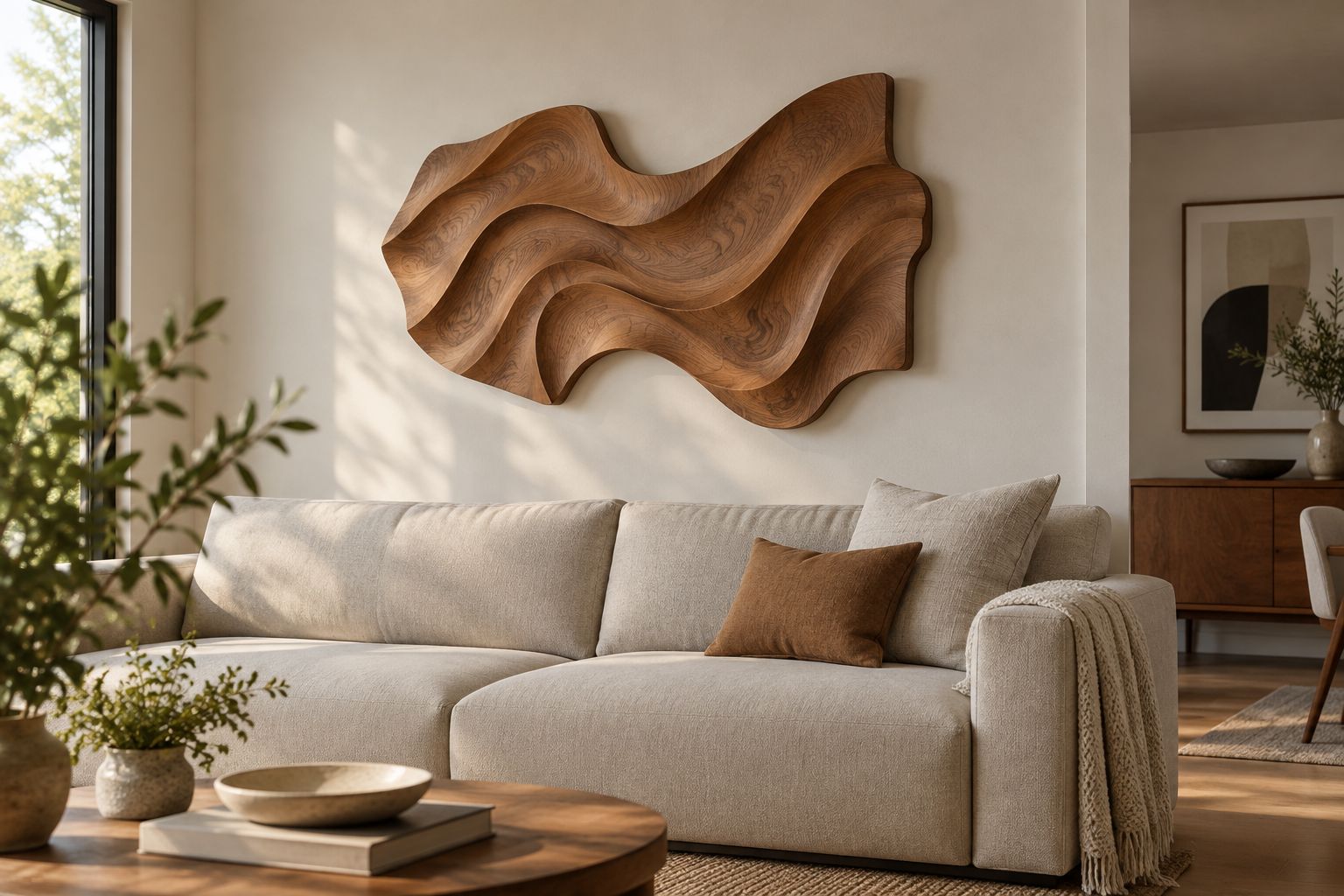
Wood brings grain into the composition, whether the sculpture uses carving, layered pieces, or assembled shapes. A clear finish leaves that grain visible; an opaque coating shifts attention toward shape and color.
Choose wood when your room needs texture without a strongly reflective surface. Match the undertone rather than trying to make every wooden object identical: nearby furniture and the sculpture can differ while still sharing a warm or cool color direction.
Wood pros:
- Adds visible grain and natural surface variation.
- Suits carved relief and layered compositions.
- Connects visually with wood furniture and flooring.
- Offers a less reflective alternative when finished matte.
Wood cons:
- Changes in moisture can cause swelling, shrinkage, or movement.
- Direct light can alter the appearance of wood and its finish.
- Deep carving creates recesses that need careful dusting.
Inspect joins, backing, and the finish as closely as the front. Wood species alone does not establish whether a sculpture is suitable for a humid room.
Best for: Interiors where grain and a warm-looking surface matter more than reflection.
Verdict: Buy wood for natural texture; hold if the intended location has unresolved moisture problems.
3. Ceramic: best wall sculpture material for handcrafted relief
Ceramic emphasizes the surface itself. Modeled clay, glazing, and unglazed areas can produce a composition that reads differently as you move closer.
This makes ceramic a strong choice for an accessible focal wall where you can appreciate relief and finish. Examine protruding details and edges before committing; brittleness matters most where the sculpture can be bumped during everyday use.
Ceramic pros:
- Supports modeled relief and visibly textured surfaces.
- Offers glazed and unglazed effects within a composition.
- Makes surface variation part of the artwork's character.
Ceramic cons:
- Brittle projections can chip or break under impact.
- Porous, unglazed areas need care suited to their finish.
- Multi-piece compositions require attention to each attachment.
For your 2026 shortlist, separate the visual appeal of a glaze from the installation question. Neither a glossy finish nor a handmade appearance establishes the weight or suitability of the mounting system.
Best for: Close-viewed focal walls where surface detail is the main attraction.
Verdict: Buy ceramic for handcrafted relief; skip exposed placement where people or furniture can strike it.
4. Resin: best wall sculpture material for molded detail
Resin casting suits intricate shapes, repeated elements, and sculptural forms with complex contours. The visible result depends on the mold, pigment, coating, and finishing work—not simply on the use of resin.
Choose resin because you like the form, not because you assume it is lightweight or maintenance-free. A solid casting, hollow casting, and mixed-material sculpture need separate assessments.
Resin pros:
- Reproduces detailed molded contours.
- Supports repeated shapes within a composition.
- Offers colored and coated surface treatments.
Resin cons:
- Care requirements vary by resin formulation and coating.
- Heat and sunlight suitability need confirmation for the specific piece.
- Surface finishing determines whether seams or casting marks remain visible.
Look closely at edges and transitions between forms. If you want the appearance of another material, inspect a close-up or physical sample rather than assuming a painted surface will resemble wood, stone, or metal in your room.
Best for: Buyers prioritizing complex molded forms and repeated details.
Verdict: Buy resin for the shape you want; hold until placement and cleaning instructions are clear.
5. Glass: best wall sculpture material for reflected light
Glass makes light part of the composition through reflection, transparency, or translucent color. The effect depends on the sculpture's surface and surroundings, so placement matters as much as shape.
View the intended wall in daylight and with your evening lighting switched on. A composition that looks quiet under diffuse light can appear more reflective when a nearby lamp is visible in its surface.
Glass pros:
- Introduces transparent or translucent elements.
- Uses reflections as part of the visual effect.
- Allows colored glass to contribute both shape and color.
Glass cons:
- Breakage risk demands careful handling and secure mounting.
- Reflections can obscure details from some viewing positions.
- Visible marks and dust require appropriate cleaning access.
Do not assume decorative glass is safety glass. Verify the construction and mounting instructions, and avoid placing vulnerable projecting elements where routine movement brings people into contact with them.
Best for: Controlled placements where reflected or transmitted light is intentional.
Verdict: Buy glass for its light response; skip vulnerable positions beside busy circulation routes.
6. Fiber: best wall sculpture material for soft texture
Fiber sculptures use woven, knotted, wrapped, or layered material to create dimension without a hard reflective surface. They work when you want tactile detail and a composition that feels visually softer than glass or polished metal.
Choose fiber for its texture rather than treating it as an acoustic solution. A decorative textile does not establish a measurable sound-control result without relevant testing.
Fiber pros:
- Adds woven, knotted, or layered texture.
- Offers a nonreflective alternative to polished surfaces.
- Works with loose strands and irregular silhouettes.
Fiber cons:
- Open fibers and layered strands collect dust.
- Cleaning methods depend on fiber, dyes, and construction.
- Loose elements need placement away from snagging and splashes.
Check whether the work hangs from a rigid support or depends on individual attachment points. Also examine how the lower edge interacts with furniture and everyday movement.
Best for: Bedrooms and living spaces where soft-looking texture is the priority.
Verdict: Buy fiber for tactile composition; skip locations exposed to splashes or frequent snagging.
How the materials are ranked
This ranking prioritizes visual character, light response, mounting fit, room conditions, care access, and finish quality. Metal takes the default position because crisp outlines and sculptural shadows are its assigned use case—not because every metal sculpture outperforms every alternative.
The order is a selection framework, not a laboratory durability comparison. Finished weight, coating quality, fabrication, and installation remain object-specific; no material name replaces those checks.
Which wall sculpture material should you choose?
Choose metal if you are undecided and want defined forms with cast shadows. Choose wood instead when natural grain is the missing element in your room. Ceramic, resin, glass, and fiber each answer a more specific visual brief.
For a 2026 room refresh, describe the desired effect before browsing: crisp, grain-led, handmade, intricately molded, light-catching, or soft. Mercado da Imagem sells art and wall decoration; this material vocabulary helps you approach that category with a clearer brief.
Once you have narrowed the material, confirm the actual dimensions, depth, weight, attachment system, and care instructions. These details decide whether the sculpture belongs on your particular wall.
Explore art for your walls
Use your preferred material and visual effect to guide your next selection.
FAQ
What's the best material for a wall sculpture?
Metal is the default choice for crisp outlines and sculptural shadows. Wood is better for visible grain, while ceramic, resin, glass, and fiber suit different surface and lighting effects.
Are metal wall sculptures better than wooden ones?
Metal is better for defined outlines; wood is better for natural grain. Compare the actual finish, weight, mounting requirements, and room conditions before choosing either.
Which wall sculpture material is easiest to hang?
Ease of hanging depends on the finished sculpture's weight, attachment points, and your wall construction—not material alone. Check the specified fixings and mounting instructions for the individual piece.
Can I put a wooden wall sculpture in a bathroom?
Choose a wooden bathroom sculpture only when its specifications support the intended humidity and exposure. Wood responds to moisture, and a decorative coating alone does not establish bathroom suitability.
Is resin always lighter than ceramic?
No; resin is not automatically lighter than ceramic in a finished sculpture. Dimensions, solid or hollow construction, and any backing determine the weight you need to assess.
Do fiber wall sculptures improve room acoustics?
Do not treat a decorative fiber sculpture as a tested acoustic product. Choose it for texture unless relevant acoustic performance data supports another use.
How do I choose a wall sculpture above a sofa?
Start with a paper template and check the sculpture's outline and projection from seated and standing positions. Then confirm that the wall and mounting system suit the actual weight.
One last thing
Judge the sculpture from the side before choosing it. Projection, exposed edges, and shadows are easy to overlook in a straight-on image, yet they affect both the composition and its fit beside furniture.
Make that side-view check part of your 2026 decision. For Mercado da Imagem shoppers comparing wall sculptures, the best material is the one that delivers the desired effect without creating an unresolved placement or care problem.