Yes, fine art prints can be printed on canvas using a printing process and surface coating designed for that material. Canvas adds visible texture and can be stretched over a wooden frame, but the fabric alone does not establish archival quality or guarantee accurate reproduction.
- Can fine art prints be printed on canvas? Yes; judge the ink, canvas, image preparation, and finishing together.
- Choose canvas for visible texture; choose smooth fine art paper when delicate detail matters more.
- Request a physical proof before approving color, cropping, and wrapped edges.
- Mercado da Imagem serves art and wall-decoration shoppers; confirm material specifications before choosing a print.
Why this matters
Canvas changes the appearance of an image, not just its backing. The weave becomes part of the viewing experience, especially when you stand close to the artwork. A photograph with tiny architectural details and a painting with broad brushwork place different demands on that surface.
When choosing wall art in 2026, separate the image you like from the material used to reproduce it. Start with the room and viewing distance, then compare the print itself. The guide to canvas wall art for living rooms addresses that room-level decision.
Can fine art prints be printed on canvas?
Yes. A digital reproduction of a painting, illustration, or photograph can be printed onto canvas prepared for the chosen printing system. Inkjet printing is an established method for producing these reproductions, including prints described as giclée.
However, canvas describes the support, not a complete quality standard. A print's appearance and longevity depend on the ink, ink-receptive coating, canvas construction, finishing, and display conditions. The word fine art does not supply those specifications by itself.
Compare the supports before deciding which suits your image:
| Support | Best for | Main advantage | Main limitation |
|---|---|---|---|
| Printable canvas | Images where visible weave suits the composition | Adds a textile surface and supports stretched presentation | Weave can compete with very fine detail |
| Smooth fine art paper | Detailed photographs, line drawings, and typography | Keeps the surface from interrupting small marks | Usually needs a separate mounting or framing decision |
| Textured fine art paper | Images where a paper texture complements the artwork | Provides a tactile surface without a canvas wrap | Texture also changes the appearance of small details |
These are selection criteria, not rankings of artistic value. A carefully produced paper print is not less artistic than a canvas reproduction. Choose the surface that preserves the qualities you want viewers to notice.
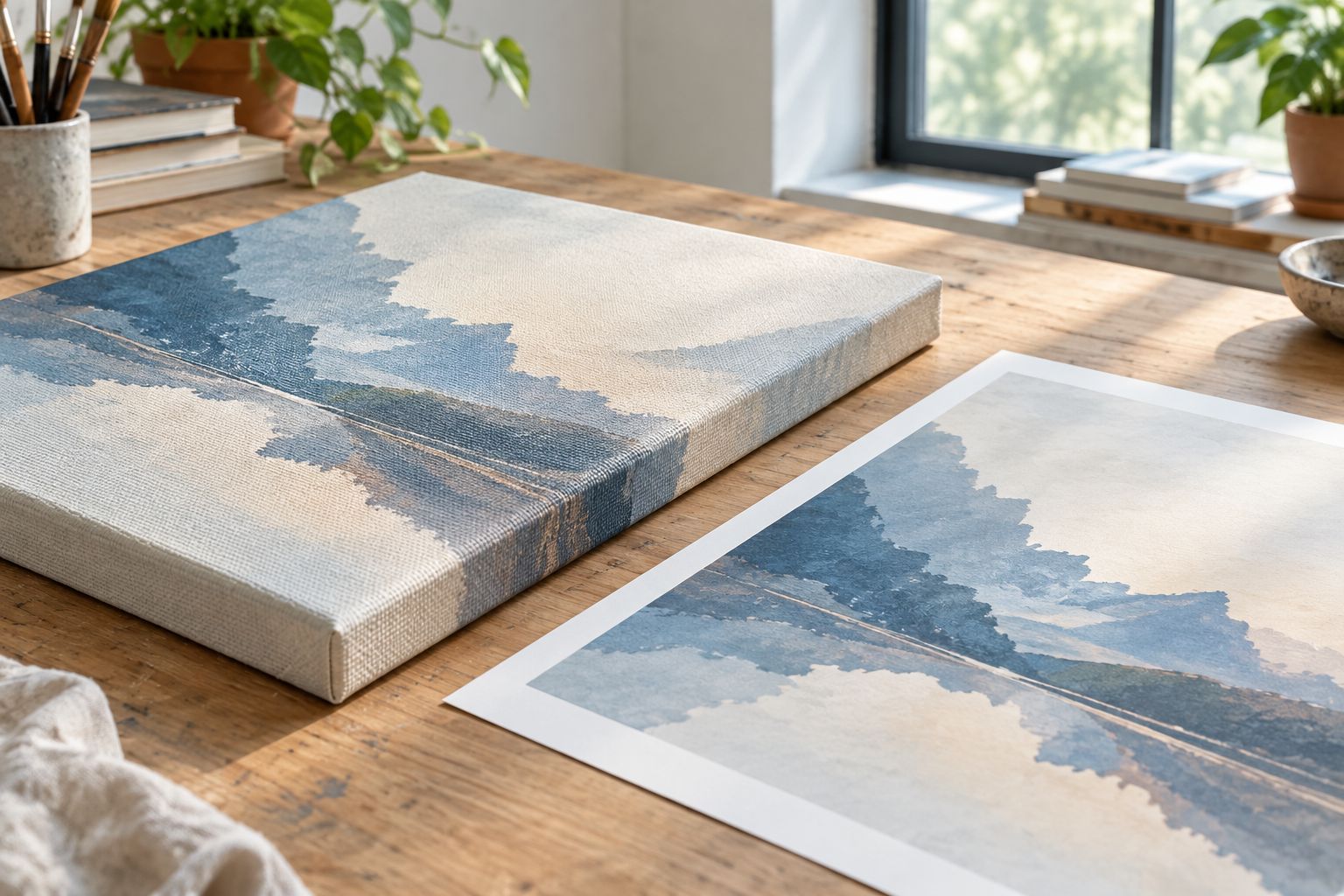
Stretched canvas: best for a visible edge
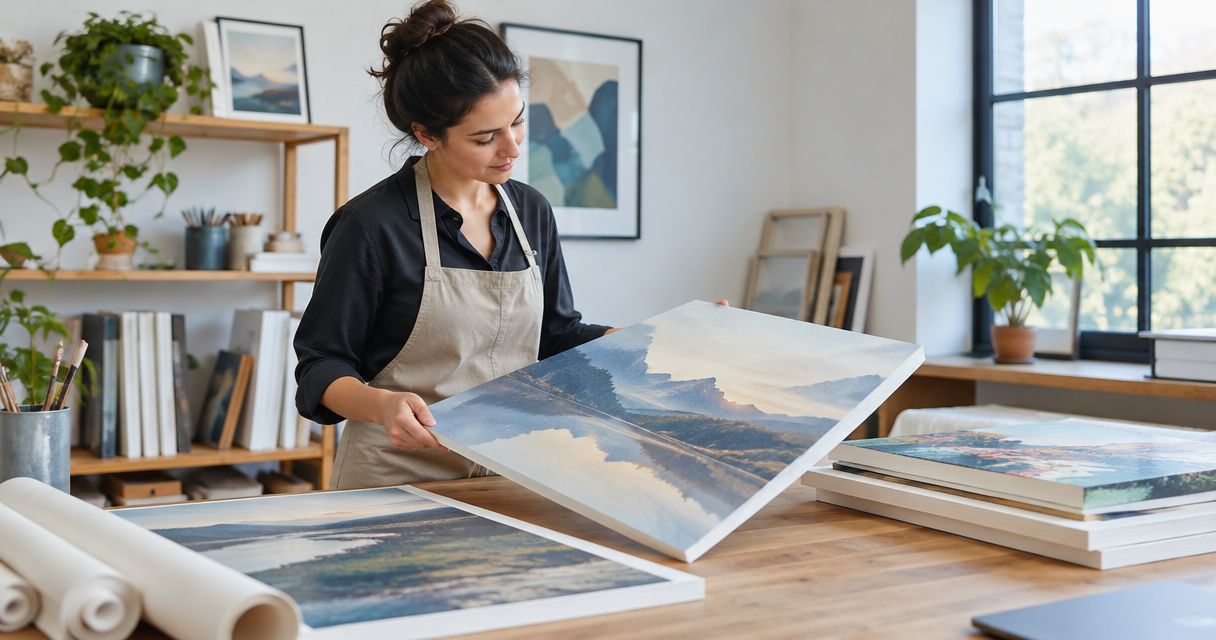
Stretched canvas is pulled around wooden stretcher bars and secured at the back. The finished piece has depth, with fabric continuing around its sides. This presentation suits images that still read clearly when viewed as an object rather than a flat sheet.
The trade-off is edge planning. If the image itself wraps around the sides, part of the composition leaves the front face. A signature, face, or important architectural feature near the boundary needs particular attention.
For a 2026 order, request separate views of the front crop and the side treatment. Do not approve the full digital image and assume every part will remain visible from the front.
Unstretched canvas: best for deciding the finish later
Unstretched canvas leaves the mounting decision for a later stage. It gives you flexibility to discuss stretching or another suitable presentation with a framer before committing to the finished appearance.
That flexibility creates an extra task: the supplied material must accommodate the intended mounting method. Confirm the printed area, outer dimensions, and surrounding allowance before production. A finished image size is not necessarily the same as the total sheet size.
Choose unstretched canvas only when the finishing plan is clear. Otherwise, you risk approving a print that does not leave enough material for the presentation you want.
Why canvas print results vary
Two prints of the same file can look different because the production choices differ. Ask about these factors rather than relying on a broad quality label:
- Canvas weave: A more noticeable weave contributes texture but interrupts tiny marks and thin lines.
- Ink and surface coating: The ink must work with the printable coating; canvas composition alone does not describe the resulting print.
- Image preparation: Resolution, sharpening, and cropping affect what survives at the final size.
- Color management: A printer-and-material profile helps translate the file's colors to the chosen output system.
- Finishing: Stretching, edge treatment, and any protective coating change the finished object.
- Display conditions: Direct sunlight, moisture, and airborne dirt affect how you should place and care for the artwork.
In 2026, a useful specification still names materials and methods. Descriptions such as museum quality or premium canvas are not substitutes for those details.
How to prepare an image for canvas printing
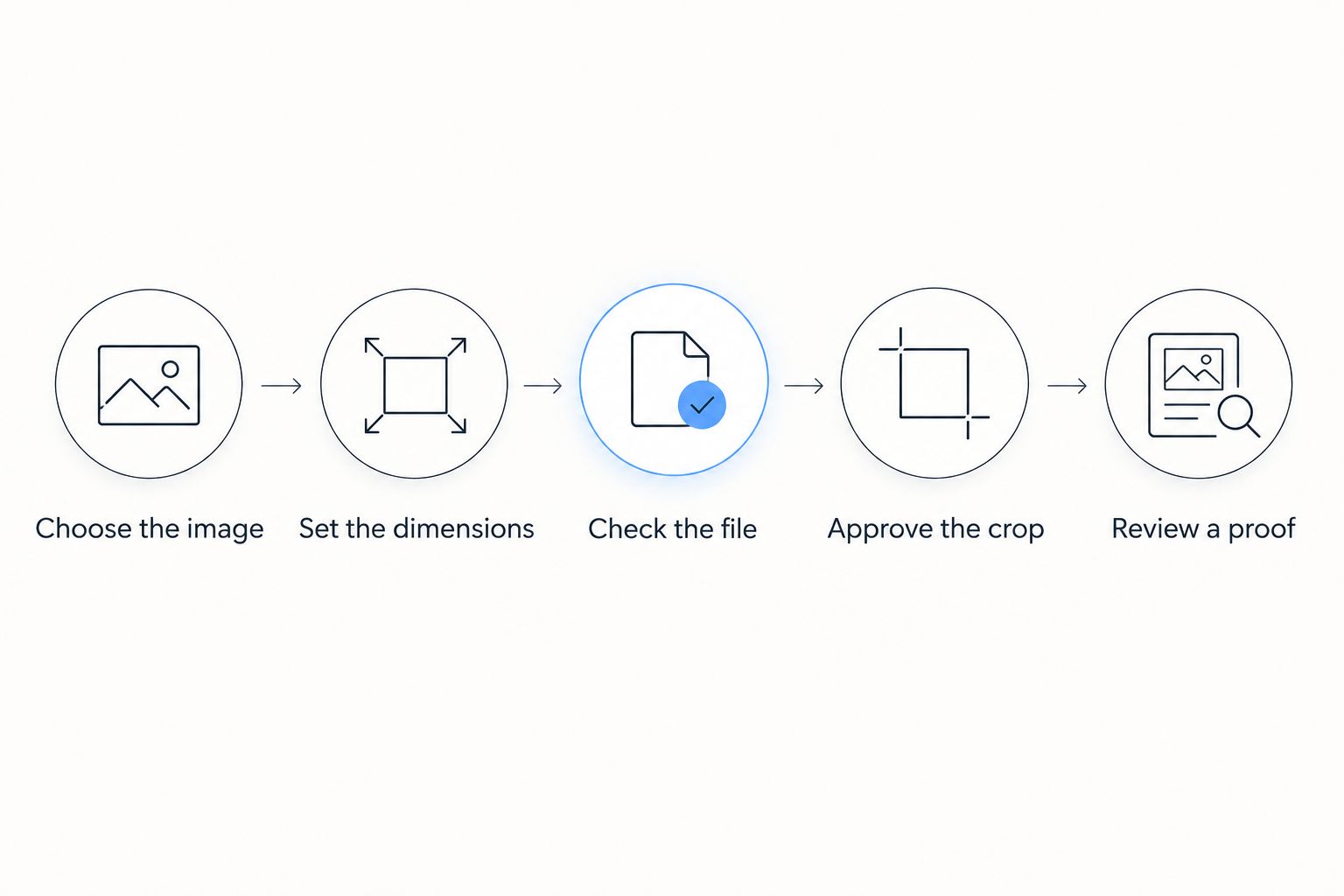
Use this sequence before approving production. It separates the artistic decision from the file and finishing checks.
- Choose the image. Look at the subject, smallest important detail, and whether texture supports the intended appearance.
- Set the dimensions. Specify the visible front size, not just a general description such as large.
- Check the file. Assess pixel dimensions at the intended output size, rather than relying on the resolution label alone.
- Approve the crop. Confirm the front composition and what happens at every edge.
- Review a proof. Inspect a physical sample made with the intended production setup before approving the full print.
A screen preview helps you assess layout, but it does not show the physical weave or reproduce the light reflecting from the finished surface. Treat it as a composition check, not a complete material proof.
Check pixels at the intended print size
Pixel dimensions matter more than changing a file's resolution label. A file measuring 3,000 pixels across provides 300 pixels per inch at a width of 10 inches. The same file provides 150 pixels per inch at a width of 20 inches.
Those figures describe the relationship between pixels and size; they are not universal acceptance thresholds. Viewing distance, image content, and the printer's workflow determine whether the result looks satisfactory. Increasing the resolution label without adding genuine image information does not recover missing detail.
Ask the printer to assess a crop containing the smallest important feature at the intended output scale. Hair, lettering, fine branches, and narrow architectural lines are useful places to inspect.
Keep important details away from wrapped edges
Before approving a stretched canvas, identify anything that must remain on the front face. Check signatures, faces, text, and borders individually. An edge preview should make their position unambiguous.
If the proposed wrap removes something essential, change the crop or discuss a different edge treatment. Do not assume that extending or mirroring an image will suit every composition; repeated shapes can become conspicuous along the sides.
What should you check before buying?
Ask for a material description that identifies the canvas and ink system. If permanence matters, ask what evidence supports any longevity claim and which display conditions that evidence assumes. A stated lifespan without its conditions is not enough to evaluate the print.
Next, clarify the finish. Confirm whether the artwork is supplied stretched or unstretched, how the sides are treated, and whether any coating is applied. Ask for care instructions specific to that finish rather than treating canvas as a washable surface.
Mercado da Imagem is best suited to shoppers seeking art and wall decoration. When considering artwork from Mercado da Imagem, verify the individual piece's stated support and finish rather than assuming every reproduction uses canvas.
For a 2026 purchase, retain the approved crop and written specifications with your order records. Those documents describe what you selected more clearly than a promotional photograph alone.
Is canvas better than fine art paper?
Canvas is better when visible fabric texture and a stretched presentation support the image you want. Smooth fine art paper is the stronger choice when you want the support to interfere less with delicate lines, small text, or photographic detail.
Neither support wins every comparison. Inspect the actual image on the intended surface, especially when its appeal depends on subtle tonal transitions or precise detail.
Does giclée mean the print is on canvas?
No. Giclée refers to inkjet reproduction, not exclusively to canvas; a giclée print can also be produced on suitable paper. Ask for the support and ink specifications separately.
The term also does not replace a condition-specific permanence assessment. Judge the named materials and supporting information, not the label alone.
Can a canvas print reproduce the texture of an original painting?
A canvas print can reproduce the photographed appearance of brushstrokes, but ordinary printing does not recreate raised paint. The shadows and highlights of the original texture become part of the printed image.
Canvas contributes its own weave, which is different from the painting's physical relief. If raised texture is essential to your choice, inspect the actual surface rather than relying on the photograph.
FAQ
Can fine art prints be printed on canvas instead of paper?
Yes, fine art reproductions can be printed on canvas prepared for the chosen printing system. Canvas adds visible weave, so compare how the image's smallest details look on that surface before deciding.
What's the best canvas finish for a detailed photograph?
Choose a finish only after checking a physical proof of the detailed photograph. Weave, surface sheen, and image preparation affect the result; smooth fine art paper is also worth comparing when tiny details are essential.
Do all canvas prints use archival materials?
No, the word canvas does not establish archival quality. Ask about the ink, printable coating, canvas, and evidence supporting any permanence claim.
Can I print a small digital image on a large canvas?
You can enlarge a digital image, but enlargement does not restore detail absent from the source. Evaluate its pixel dimensions at the intended print size and inspect a representative crop before approval.
Does a canvas print need glass?
A stretched canvas print can be displayed without glass, but it still needs appropriate placement and care. Follow the finish-specific instructions and avoid treating an exposed print as a washable surface.
Will the edges of my picture disappear around a canvas wrap?
Image content can move onto the sides when the picture itself wraps around the stretcher bars. Approve a front-and-side preview so important details remain where you intend.
Does Mercado da Imagem sell every artwork on canvas?
Do not assume every artwork from Mercado da Imagem is printed on canvas. Check the individual piece's material and finishing description before selecting it.
One last thing
Test the most demanding part of the picture, not just the whole composition. A reduced preview can hide the exact detail that becomes disappointing at full size. Request a proof section containing a fine line, a dark area, and an important color from the actual image.
For your 2026 selection, keep the order of decisions simple: image first, surface second, finishing third. Use that same checklist when considering Mercado da Imagem wall decoration, and let the material description—not the room photograph—settle whether a piece meets your brief.