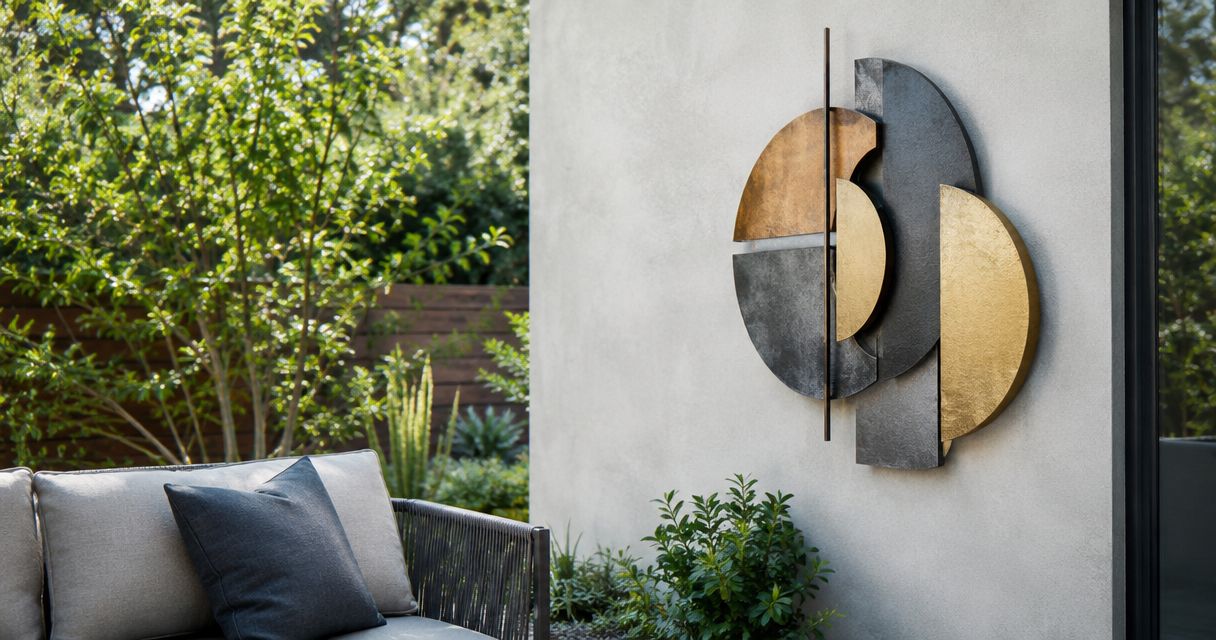
Yes, wall sculptures can be hung outdoors when the manufacturer confirms that the complete piece and its mounting system suit the intended exposure. For your 2026 project, check the finish, backing, adhesives, and fixings—not just the visible material. A covered patio still needs an exterior-use assessment because shelter does not eliminate humidity, wind, or wind-driven rain.
- Can wall sculptures be hung outdoors? Yes, when the complete sculpture and mounting system are approved for that exposure.
- Mercado da Imagem wall sculptures need product-specific exterior confirmation; a material description alone does not establish weather resistance.
- Choose outdoor wall art by exposure, construction, and mounting requirements—not appearance or a weatherproof coating alone.
Can wall sculptures be hung outdoors?
Hang a wall sculpture outdoors only after confirming suitability for the exact location. An exterior wall beneath a deep roof and an uncovered garden wall present different conditions. Approval for one does not establish suitability for the other.
Use this sequence before drilling:
- Describe the exposure. Record direct sunlight, rain, coastal conditions, irrigation spray, and shelter.
- Confirm exterior suitability. Ask the manufacturer about the complete sculpture, including its reverse side and attachments.
- Check the mounting. Match the specified fixings to the wall construction and exterior conditions.
- Plan ongoing care. Follow the manufacturer's cleaning and inspection instructions.
For pieces from Mercado da Imagem, request confirmation for the specific sculpture and installation location. Do not interpret an interior photograph or a decorative finish as exterior approval.
Compare the installation locations
| Location | Best for | Advantage | Limitation | Decision |
|---|---|---|---|---|
| Enclosed indoor wall | Sculptures without confirmed exterior suitability | Avoids direct weather exposure | Does not meet an outdoor decorating brief | Keep interior-only pieces here |
| Covered outdoor wall | Sculptures confirmed for sheltered exterior use | Roof provides shelter from overhead rain | Wind-driven rain, humidity, and sunlight still require assessment | Confirm the actual exposure |
| Uncovered outdoor wall | Sculptures confirmed for fully exposed exterior use | Allows art on open-air walls | Requires weather-suitable construction and mounting | Use only with explicit confirmation |
| Coastal outdoor wall | Sculptures and fixings specified for coastal exposure | Supports an exterior coastal scheme | Salt exposure needs separate consideration | Disclose the coastal location before selection |
The location comes first. A sculpture that suits a sheltered courtyard is not automatically appropriate beside an exposed seafront entrance.
Why this matters
Outdoor suitability is a construction question, not a style category. A sculpture can look substantial while relying on a backing, adhesive, or hanging component intended for an interior wall.
The decorative face is only part of the assembly. Water entering behind the piece, deterioration around a fixing, or movement at a connection can matter as much as changes to the visible finish.
For a 2026 renovation, settle these questions before choosing the final position. Moving an unsuitable sculpture indoors is straightforward before installation; repairing unnecessary holes in exterior finishes adds work.
Choose the location and verify suitability before committing to the artwork. Reversing that order leaves you trying to adapt a piece to conditions it was not specified to withstand.
Why outdoor suitability varies
These factors determine what needs confirmation. None is a substitute for the manufacturer's instructions.
- Material and finish: Identify the underlying material and the surface treatment. A metallic appearance does not establish that a sculpture is solid metal.
- Complete construction: Check backing boards, bonded layers, mirror components, joints, and concealed attachments—not just the front surface.
- Moisture exposure: Describe direct rain, wind-driven rain, irrigation, condensation, and any place where water collects.
- Sunlight and temperature: Tell the manufacturer whether the piece receives direct sun and how exposed the wall is.
- Wind and mounting: Consider the sculpture's shape, projection from the wall, attachment points, and supporting wall construction.
- Coastal conditions: Disclose salt exposure when selecting the sculpture, finish, and mounting hardware.
A product description that names only the material leaves several of these questions unanswered. Ask about the assembled piece rather than requesting a general verdict on glass, wood, or metal.
Does the material tell you whether a sculpture is outdoor-safe?
No. Material narrows the questions, but it does not approve the finished sculpture for exterior use. Connections, coatings, decorative layers, and mounting details still need assessment.
Use the following comparison to prepare your questions, not to replace product-specific guidance. The wall sculptures ranked by material guide provides a separate starting point for comparing material choices.
| Material or construction | Best for | Useful characteristic | Limitation to check outdoors |
|---|---|---|---|
| Metal | Buyers seeking formed or fabricated sculptural work | Supports a range of shapes and surface finishes | Alloy, coating, joints, and fixings need exposure-specific confirmation |
| Artistic glass | Buyers seeking glass-based decorative work | Provides a glass surface for the composition | Edges, decorative layers, attachments, and mounting remain part of the assessment |
| Polymer or acrylic | Buyers seeking shaped or layered forms | Allows varied sculptural profiles | The particular material, finish, and connections need confirmation |
| Painted wood | Buyers seeking wood-based sculptural forms | Combines a shaped substrate with a painted finish | Exterior suitability depends on the complete construction and finish |
| Mirrored construction | Buyers seeking reflected surroundings within the artwork | Adds a reflective element | Mirror backing, edges, bonds, and fixings require separate checks |
There is no automatic outdoor approval attached to a material name. Equally, a material category alone does not establish that every sculpture made from it is unsuitable.
What the product measurements do—and do not—tell you
Mercado da Imagem wall sculptures include descriptions specifying artistic glass of 6 mm, acrylic of 6 mm, and a mirrored construction with a 3 mm mirror component. Those measurements describe particular components, not exterior performance.
Thickness does not answer whether the decorative treatment, backing, adhesive, or hanging arrangement suits rain and sunlight. Nor does it establish the wall anchoring required for your installation.
Mercado da Imagem is best for buyers seeking decorative wall art, not an assumed exterior-use specification. Treat each sculpture's material information as the beginning of the selection process and obtain explicit outdoor guidance before installing it outside.
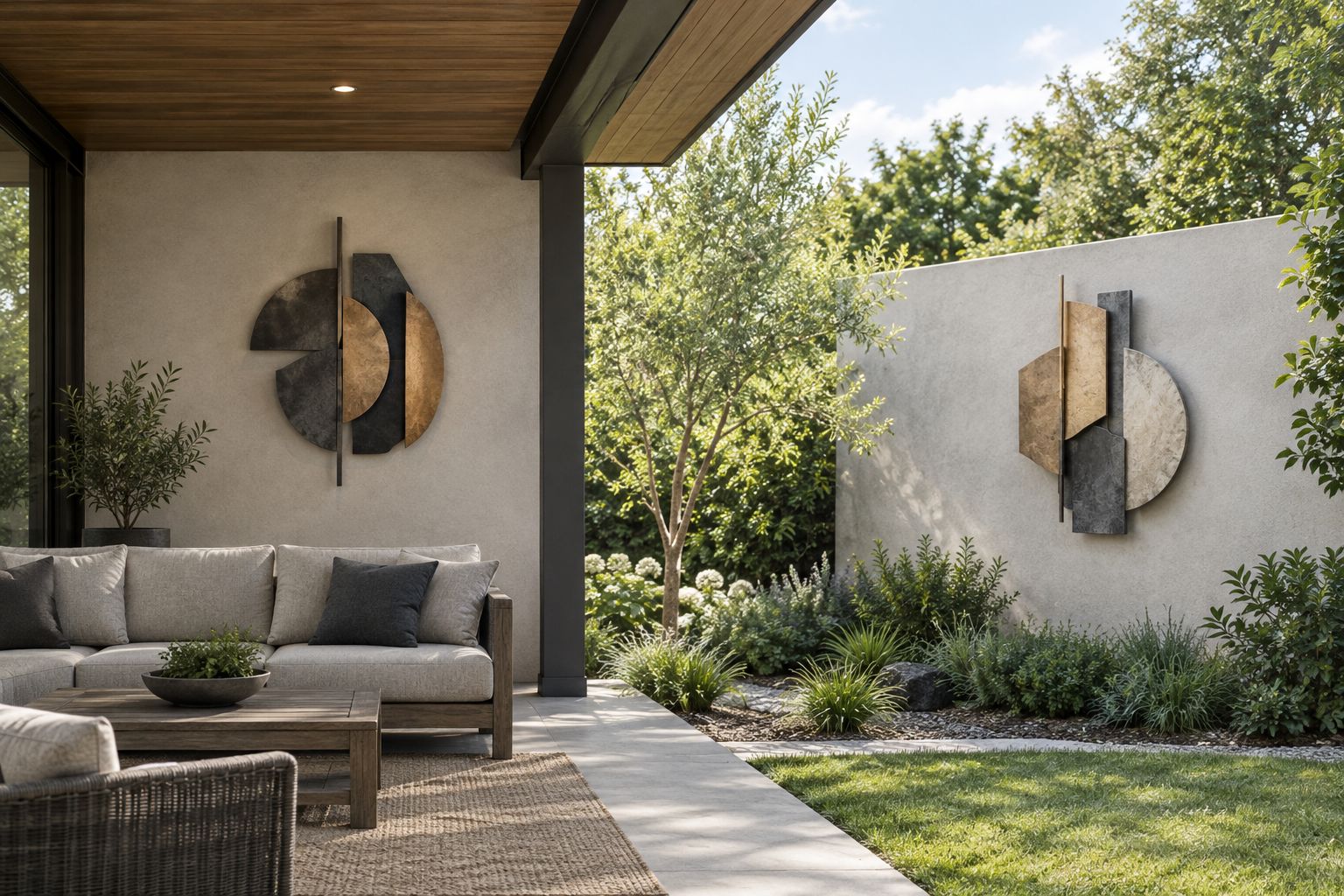
Can I hang a wall sculpture on a covered patio?
A covered patio still requires a sculpture approved for its actual exterior conditions. The roof supplies shelter, but the open sides expose the location differently from an enclosed room.
Stand at the proposed position and look beyond overhead rain. Note whether rain blows toward the wall, nearby watering reaches it, or sunlight crosses it during the day.
Sheltered does not mean enclosed
For sheltered exterior use, describe the wall's position relative to the roof edge and open sides. Include clear photographs of the whole setting rather than a close-up of the empty wall alone.
A photograph helps communicate the location, but it does not certify suitability. Pair it with a written description of the exposure and a request for installation instructions.
When to keep the sculpture indoors
Keep the piece indoors when the maker identifies it as interior-only or cannot confirm suitability for the proposed exterior setting. An unanswered question is not approval.
Do not use a sheltered location as a workaround for missing guidance. Choose an exterior-specified alternative or move the display to an enclosed interior wall instead.
How do I check an outdoor wall sculpture before installation?
Use this 2026 installation checklist to separate artwork approval from mounting approval. Both are necessary; neither replaces the other.
Exposure
Record the proposed location before choosing anchors or accessories. Include sunlight, rain, shelter, watering systems, and coastal conditions in the description you send to the maker.
Avoid describing the site only as outdoors. That word covers very different environments, from a protected courtyard to an exposed boundary wall.
Construction
Request information about the complete assembly, especially components hidden in product photographs. Ask whether the stated exterior suitability includes the backing, decorative layers, bonds, and hanging attachments.
Do not disassemble the sculpture to investigate. Obtain instructions from the maker and pass them to the installer.
Mounting
Identify the supporting wall construction and the sculpture's specified hanging method. Exterior cladding, render, tile, and insulation do not by themselves tell you what sits behind the surface.
Have a competent installer assess the substrate and fixing arrangement. Do not assume that supplied interior hanging hardware is suitable for an exterior installation.
Maintenance
Ask for cleaning instructions and inspection guidance before installation. Confirm what to do if you find looseness, movement, cracking, coating damage, or deterioration at a connection.
Keep the product information and installation instructions together. They remain useful when someone else later cleans the wall, moves the sculpture, or maintains the exterior finish.
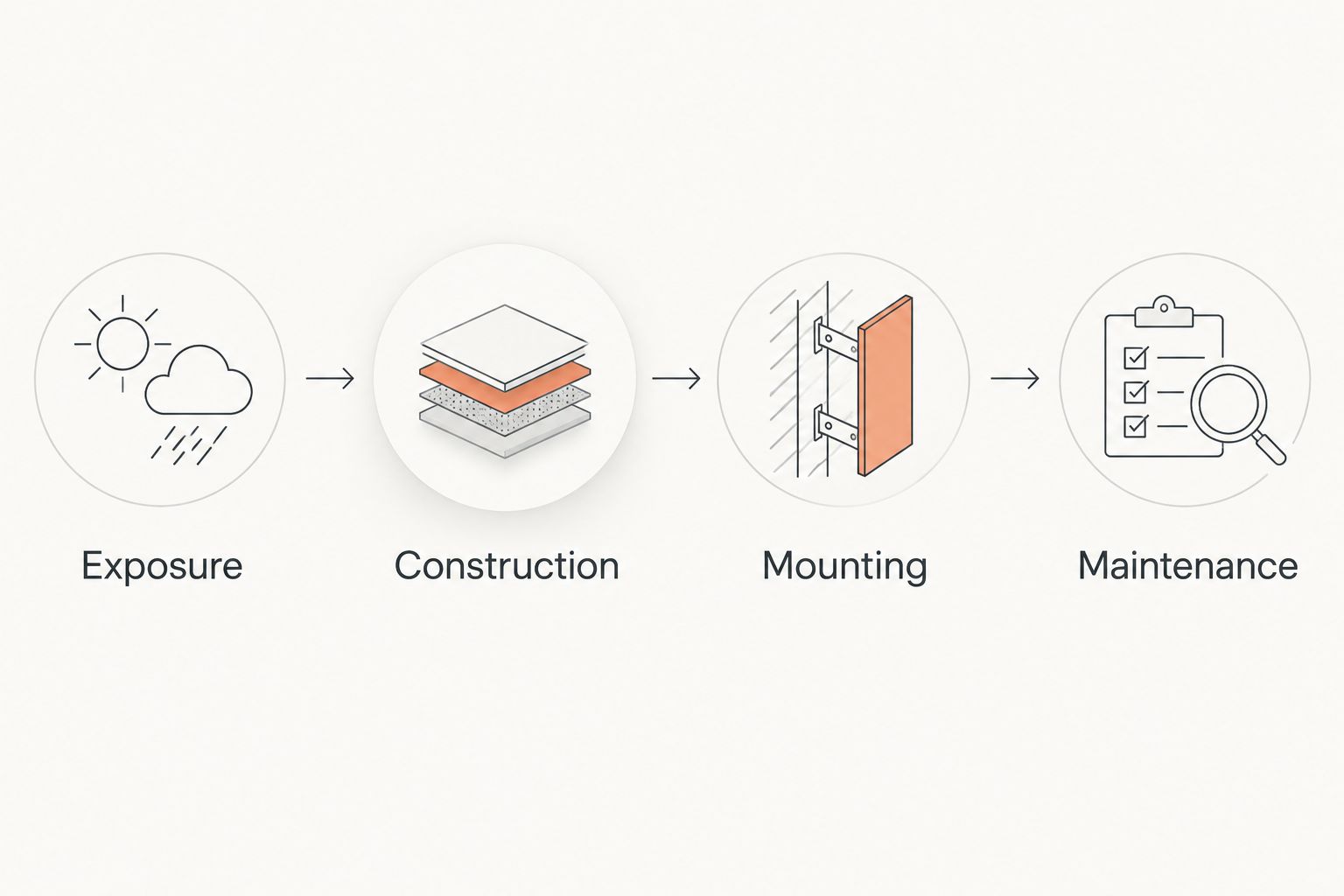
Before work starts, give the installer the manufacturer's exterior-use confirmation and mounting requirements. If the wall or location differs from the approved arrangement, resolve that difference first.
Can I weatherproof an indoor wall sculpture myself?
Do not treat a spray-on coating as approval to move indoor art outside. A surface treatment does not establish the suitability of concealed components, joints, or fixings.
Ask the maker before applying anything. The proposed coating needs to suit the existing surface and the rest of the construction; appearance alone cannot establish compatibility.
Why sealing the front is not enough
An indoor sculpture is an assembly rather than an isolated decorative face. Treating the front leaves unanswered questions about the reverse side, edges, hanging attachments, and any bonded layers.
The same problem applies to replacing the hooks. Different hardware does not change the suitability of the sculpture itself, and altering attachment points needs the maker's guidance.
For your 2026 project, choose a piece specified for the location instead of building a plan around an unconfirmed modification. Keep the original artwork indoors when exterior suitability cannot be established.
What should I ask the seller before ordering?
Send a short, specific request with photographs of the intended wall. Ask for answers about the actual product rather than a general statement about its material.
- Is this complete sculpture suitable for this outdoor location?
- Does that confirmation include direct rain and direct sunlight?
- Are the backing, decorative layers, bonds, and attachments included?
- Does the proposed location's coastal exposure change the recommendation?
- What mounting method and wall assessment are required?
- What cleaning and inspection instructions apply outdoors?
Save the reply with the product documentation. If the seller recommends a different location or construction, resolve that choice before installation rather than after the sculpture is on the wall.
FAQ
Can wall sculptures be hung outdoors in 2026?
Yes, wall sculptures can be hung outdoors when the manufacturer confirms that the complete piece and mounting system suit the intended exposure. Check the specific location rather than relying on the material name.
Can I put an indoor wall sculpture on a covered balcony?
Keep an indoor wall sculpture indoors unless the maker confirms suitability for the covered balcony. Shelter from overhead rain does not eliminate humidity, wind-driven rain, or sunlight.
Is a metal wall sculpture automatically weatherproof?
No, a metal wall sculpture is not automatically weatherproof. The alloy, finish, joints, attachments, and mounting hardware need confirmation for the proposed exposure.
Can glass wall sculptures stay outside?
Glass wall sculptures need product-specific exterior approval before staying outside. Assess the decorative layers, backing, edges, bonds, and mounting system as well as the glass.
Can I spray a clear coating on indoor art to use it outdoors?
Do not use a clear coating as a substitute for exterior-use confirmation. Ask the maker about compatibility and whether the complete sculpture can be adapted for the location.
What is the best place to hang an outdoor wall sculpture?
The best place is a location that matches the sculpture's confirmed exposure conditions and mounting requirements. Assess the wall construction and avoid treating shelter as proof of suitability.
Do coastal homes need different outdoor sculpture hardware?
Coastal exposure needs a separate hardware assessment. Tell the manufacturer and installer about salt exposure so they can specify a compatible mounting arrangement.
One last thing
Check the back before choosing the front. A sculpture's appearance helps you decide whether you like it; the concealed construction and attachment details help establish whether it belongs outside.
Make that the final check in your 2026 selection process. If exterior suitability remains unconfirmed, keep the sculpture indoors and choose a different piece for the outdoor wall.