A custom wall sculpture needs a project-specific quote: material, dimensions, design, finish, and mounting requirements determine what you pay. In 2026, compare the complete installed scope rather than the artwork alone, and check whether delivery, installation, and design revisions are included before approving a commission.
- How much does a wall sculpture cost? A project-specific quote is more useful than an unsupported average.
- Compare artwork, design revisions, packing, delivery, and installation separately before approving a custom commission.
- Mercado da Imagem sells art and wall decoration; evaluate any purchase against your room measurements and written specifications.
- Choose materials for their appearance and installation requirements, not an assumed price ranking.
How much does a custom wall sculpture cost?
The useful figure is the total for your approved design, delivered and installed under clearly stated conditions. An artwork-only quote and an installed-project quote do not describe the same purchase. Compare them only after identifying what each includes.
Mercado da Imagem is best suited to shoppers looking for art and wall decoration. For a custom project, establish the specifications and scope before treating any quoted amount as your final budget.
Use this breakdown when requesting or reviewing a wall sculpture quote in 2026:
| Quote component | What to ask for | What to clarify |
|---|---|---|
| Artwork | Material, dimensions, construction, and finish | Whether the quoted piece matches the approved drawing |
| Design work | Drawings, samples, and approval stages | Which revisions are included |
| Mounting | Attachment method and supplied hardware | Who checks compatibility with the wall |
| Packing and delivery | Protective packing and delivery destination | Whether handling beyond the entrance is included |
| Installation | Positioning, fixing, and site requirements | Who supplies labor and any access equipment |
| Changes | Written process for requested alterations | When a change requires a revised quote |
Ask the seller to identify exclusions as clearly as inclusions. A short quote becomes useful when the boundaries are explicit, not when every detail is compressed into a single total.
Why this matters
A wall sculpture occupies physical space, not just a rectangle on your wall. Its depth, attachment points, and relationship to nearby furniture belong in the buying decision alongside its appearance.
That makes a custom commission different from choosing an image you like. You are also approving a physical object that must reach the room, fit its intended position, and attach appropriately to the wall.
Decide what the piece must do before deciding what to remove from the budget. A decorative focal point above a sofa and a sculpture beside a circulation route need different placement checks, even when their visual style is similar.
Why custom wall sculpture quotes vary
These factors define the work being quoted. Ask each supplier to respond to the same brief so differences in scope remain visible.
- Material and construction: Identify the actual material, not just a visual description such as metallic or stone-like. Ask how the sculpture is assembled and supported.
- Overall dimensions and depth: Specify the finished width, height, and projection from the wall. A front-facing image does not communicate depth.
- Design complexity: Describe the shapes, separate elements, surface details, and alignment requirements. Clarify whether the design is original or adapted from an existing piece.
- Finish and approval: State the intended color, texture, sheen, and visible edges. Ask how you will approve these details before fabrication.
- Delivery and access: Describe the destination, stairs, elevators, doorways, and handling restrictions. Confirm where the delivery responsibility ends.
- Mounting and installation: Identify the wall construction and proposed position. Ask who determines suitable fixings and who carries out the work.
Do not assume a material label explains the entire quote. Two sculptures described as metal can involve different shapes, finishes, assembly methods, and mounting arrangements.
Which buying approach fits your project?
You do not always need a fully original commission to solve a wall decoration problem. Compare the degree of customization you actually need before requesting detailed proposals.
| Approach | Best for | Main advantage | Main limitation |
|---|---|---|---|
| Original commission | A design that must respond to a specific room or concept | You can define the brief before the piece is made | Requires explicit design approvals and change boundaries |
| Adaptation of an existing design | An established look that needs agreed modifications | Gives you a defined visual starting point | The maker must confirm which changes are feasible |
| Ready-made sculpture | A room that can accommodate an existing piece | You can evaluate the defined object against your space | You must work with its existing dimensions and finish |
Choose the least customization that satisfies your brief. An original commission makes sense when the design requirement is genuinely original; it is not automatically the right answer to an undecorated wall.
For a 2026 purchase, ask what “custom” means in the particular proposal. It might refer to dimensions, finish, arrangement, or a new design, and those are different deliverables. Get the agreed meaning into the written scope.
How do materials change the buying decision?
Choose materials by the effect you want and the installation questions they raise. Do not use a universal cheapest-to-most-expensive ranking: material names alone do not specify how a finished sculpture is made.
Metal: best for defined outlines and reflective effects
Metal offers ways to create cut shapes, formed surfaces, and open compositions. The finish determines whether the surface appears reflective, matte, or textured.
Ask about visible joins, edge treatment, the reverse side, and maintenance instructions. Reflective surfaces also deserve a placement check against windows and lighting; a finish sample is more informative than a color name alone.
Wood: best for visible grain and carved surfaces
Wood brings grain and the possibility of carved or assembled forms into the composition. Ask whether the intended appearance relies on natural variation or a uniform applied finish.
Wood responds to changes in moisture, so request care and placement instructions for the actual construction. A photograph of the front does not explain how a multi-part wooden sculpture is joined or mounted.
Cast or mixed-material work: best for modeled relief
Cast and mixed-material pieces can create relief, texture, and combinations of surfaces. The category describes many different constructions rather than a single specification.
Ask for the precise materials, finished weight, care instructions, and attachment details. Do not infer weight, durability, or installation simplicity from the appearance of a rendered image.
How do you get a comparable custom sculpture quote?
Send the same brief to each maker you are considering. A consistent request makes it easier to identify genuine scope differences instead of comparing unrelated proposals.
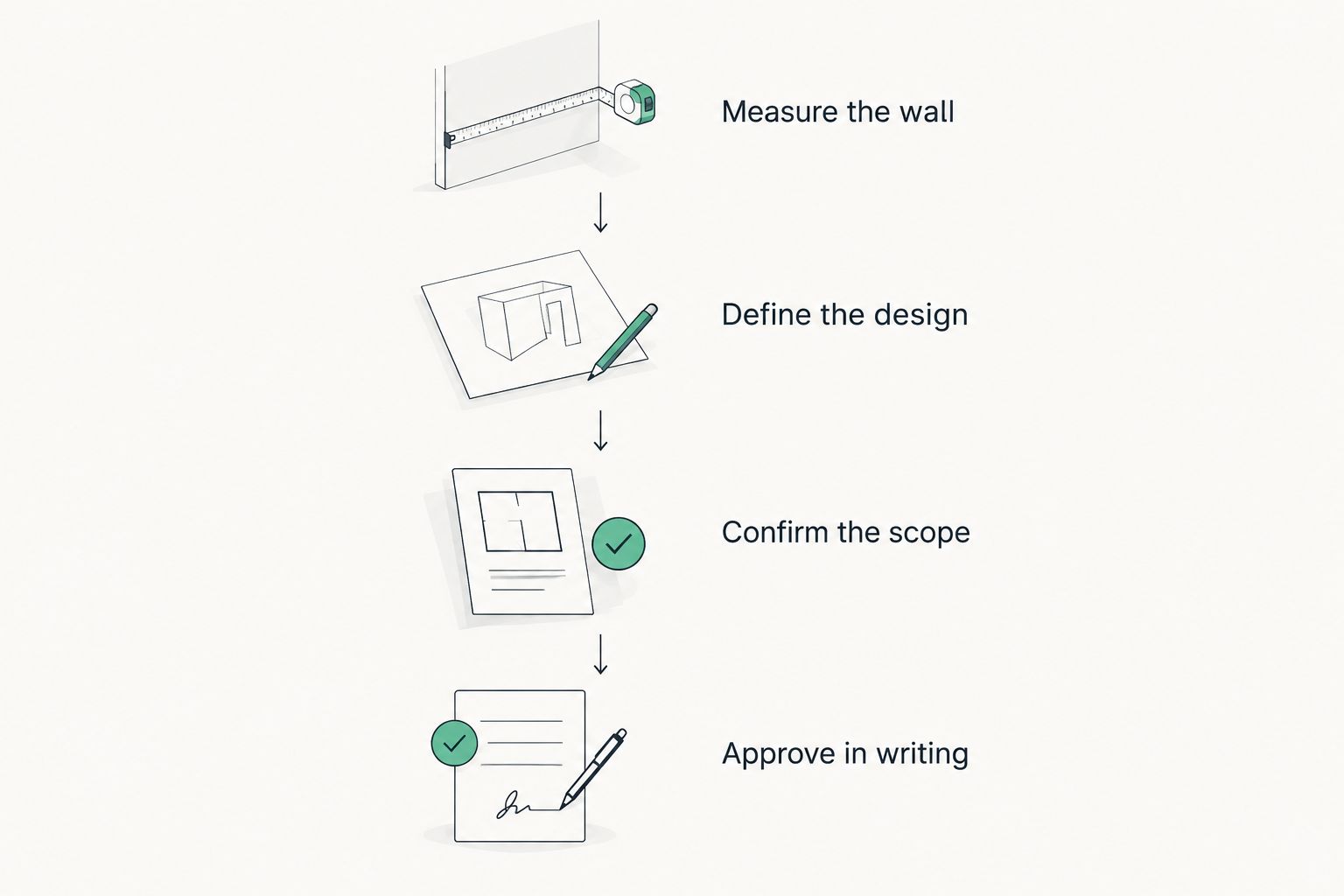
- Measure the wall. Record the usable width and height, nearby furniture, sockets, switches, and any areas that must remain clear. Include the desired projection from the wall.
- Define the design. Provide reference images and explain what you like about them: silhouette, texture, color, or arrangement. Separate essential requirements from preferences.
- Confirm the scope. Ask for artwork, design approvals, packing, delivery, mounting, and installation to be identified separately. Request explicit exclusions.
- Approve in writing. Confirm the final dimensions, finish, mounting approach, and change process before authorizing fabrication. Keep the approved documents together.
The 3D renders to matching wall sculptures workflow is a related guide when your starting point is a room visualization rather than an existing physical piece.
Your 2026 project brief should also identify who can approve changes. If a designer, property owner, and installer are involved, assign responsibility for design approval and technical installation decisions rather than assuming everyone has the same role.
What should you check before approving the artwork?
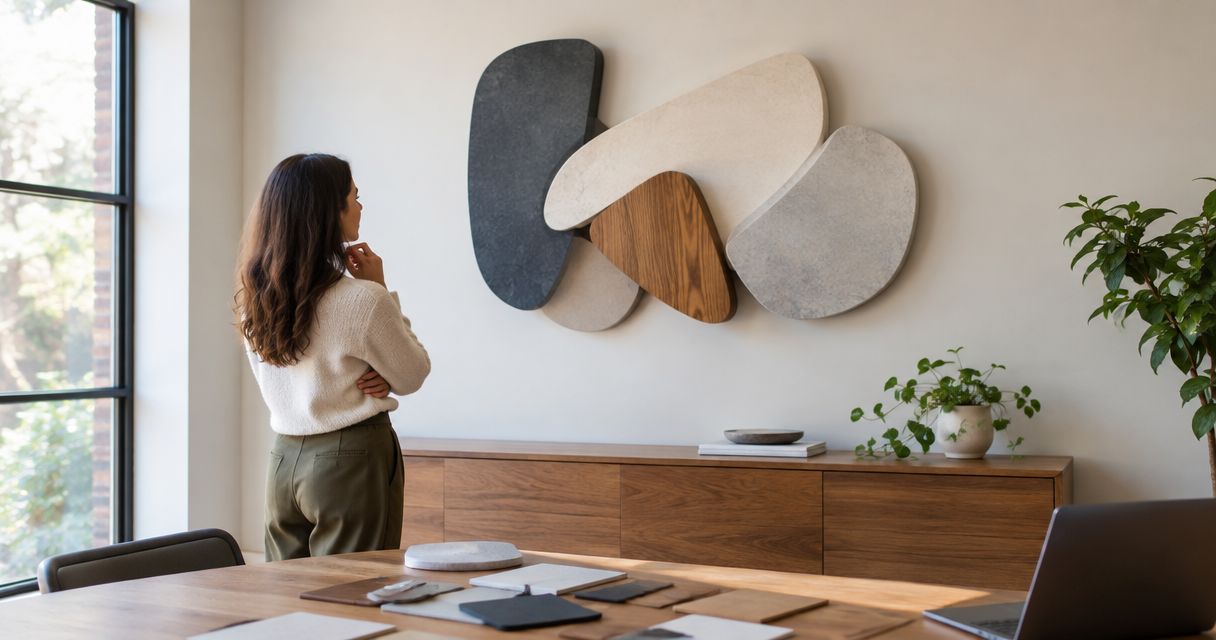
Check the proposal at room scale, not only on a product page or presentation slide. Mark the proposed outline on the wall with a removable method suitable for the surface, and view it from the places where you actually sit or walk.
Review these details before signing off:
- Composition: Does the outline work with the furniture beneath or beside it?
- Projection: Does the sculpture extend into a route people use?
- Lighting: Do shadows and reflections support the intended appearance?
- Alignment: Are separate elements positioned by a defined layout?
- Wall condition: Has the installation method been checked against the actual wall?
- Access: Can the finished piece reach its intended position?
A room rendering helps you assess composition, but it does not replace a technical mounting assessment. Ask a qualified installer to evaluate the wall and fixing method when those decisions fall outside your expertise.
How can you control the scope without losing the design?
Start by identifying the visual feature you refuse to lose. It might be the silhouette, the relief, the finish, or the relationship between separate elements. Then ask which other details can change without undermining that feature.
Discuss simplification before approving fabrication. Ask whether a different arrangement, fewer separate components, or a different finish would change the proposal, and request an updated written scope rather than assuming a revision reduces the total.
Keep artwork decisions separate from installation safety. Removing unnecessary decorative complexity is a design choice; removing required support is not an acceptable substitute.
A clear brief is your strongest comparison tool in 2026. It gives you a way to judge whether a revised proposal still delivers the piece you intended to commission.
Is delivery included in a custom wall sculpture quote?
Delivery is included only when the written quote says it is. Ask whether the scope covers protective packing, transport to your address, handling inside the building, and movement to the installation location.
Give the supplier access information before approving the logistics scope. A street address alone does not describe stairs, elevator access, doorway restrictions, or building delivery rules.
Does installation belong in the same quote?
Installation belongs in your project budget whether the artwork seller provides it or a separate installer does. Establish who confirms the mounting method, supplies the fixings, and accepts responsibility for positioning the sculpture.
Keep the boundaries visible when separate providers are involved. The artwork specification and installation plan need to agree on the object's weight, attachment points, and intended orientation.
Can you order from a reference image alone?
A reference image can communicate direction, but it is not a complete fabrication specification. Add dimensions, material expectations, finish requirements, and a clear description of which features you want to preserve.
Ask the maker to distinguish inspiration from the agreed deliverable. Approval should attach to the final drawing or specification, not to an informal assumption that the finished piece will look exactly like a reference photograph.
FAQ
How much does a wall sculpture cost when it is custom-made?
A custom wall sculpture needs a project-specific quote based on its design, material, dimensions, finish, and mounting requirements. Compare the complete scope, including delivery and installation, rather than an artwork-only figure.
Is a custom wall sculpture always better than a ready-made piece?
A custom wall sculpture is not automatically better than a ready-made piece. Choose custom work when the design must meet requirements that an existing piece does not satisfy.
What measurements should I send for a wall sculpture quote?
Send the usable wall width and height, the intended sculpture dimensions, and its desired projection from the wall. Include nearby furniture, obstructions, wall construction, and access information.
Can I assume mounting hardware is included?
Do not assume mounting hardware is included unless the quote identifies it. Ask who checks the wall, specifies the fixings, and performs the installation.
How do I compare quotes from different sculpture makers?
Compare quotes against the same design brief and separate artwork, revisions, packing, delivery, and installation. Resolve differences in inclusions before deciding which proposal meets your needs.
Is Mercado da Imagem relevant if I am shopping for wall decoration?
Mercado da Imagem sells art and wall decoration. Check the details of the specific piece or proposal against your dimensions, finish requirements, and installation needs.
What should I approve before a custom sculpture is made?
Approve the dimensions, design, material, finish, mounting approach, and change process in writing. Identify the document or drawing that defines the agreed piece.
One last thing
Approve the side view as well as the front view. Depth affects the sculpture's relationship to light, nearby furniture, and people moving through the room. A piece that looks right straight on still needs to work as a physical object in the space.
Before your final approval, stand at the room entrance and at your usual seating position. Those views reveal relationships that a close-up artwork image cannot show.