A fine art print is worth choosing over an original painting when you want a particular image for your room; an original painting is worth choosing when owning the artist’s unique painted object matters more than reproducing its appearance. In 2026, neither label alone establishes quality, and both choices require you to account for framing, display conditions, and care before deciding.
- Fine art print vs original painting: choose a print for the image, an original painting for the unique painted object.
- A reproduction does not reproduce the original painting’s physical brushwork, even when its image looks convincing.
- Mercado da Imagem sells art and wall decoration; evaluate each artwork’s description rather than assuming its production method.
- Check the medium, dimensions, edition information, and framing requirements before choosing either format.
If your main question is how the artwork will fit your space, start with this guide to choosing wall art for living rooms. Decide what the room needs before treating originality as the deciding feature.
Is a fine art print worth it vs an original painting?
Choose a fine art reproduction for access to an image; choose an original painting for ownership of that particular painted object. Neither choice guarantees stronger composition, better room proportions, or future resale demand.
There is also a terminology trap: an original print is not the same thing as a reproduction of a painting. Ask which kind of work you are considering before comparing the labels.
| Option | Best for | Main advantage | Main limitation | What to verify |
|---|---|---|---|---|
| Fine art reproduction | Buyers who want a particular image as wall decoration | Presents an existing artwork through a printed image | Does not contain the source painting’s original brushwork | Printing method, substrate, image dimensions, reproduction status |
| Original painting | Buyers who value the unique painted object | Retains the artist’s actual painted surface | Uniqueness does not guarantee condition, authenticity, or suitability | Artist, medium, condition, dimensions, provenance |
| Original print | Buyers interested in printmaking as an artistic medium | Is conceived as a print rather than as a copy of a painting | Edition terminology requires careful reading | Printmaking process, edition details, attribution, documentation |
A reproduction can be the better decoration without becoming an original painting. Equally, a painting can be the more meaningful purchase without being the better fit above your sofa.
Why this matters
In 2026, product photographs still cannot establish everything you need to know about an artwork. A room photograph shows placement; a close-up shows surface; a written description explains the medium. You need all those forms of information to make a fair comparison.
Separate your decision into two questions: do you want to live with this image, and do you want to own this specific object? A print can satisfy the first question. An original painting adds a different reason to buy, but that reason matters only if you value it.
Do not pay for originality simply because you expect it to solve a decorating problem. Measure the wall and examine the artwork first.
Fine art reproductions: best for choosing the image first
A reproduction makes sense when the composition, subject, or palette is your main reason for wanting the work. You are choosing what you see on the wall rather than acquiring the source painting itself.
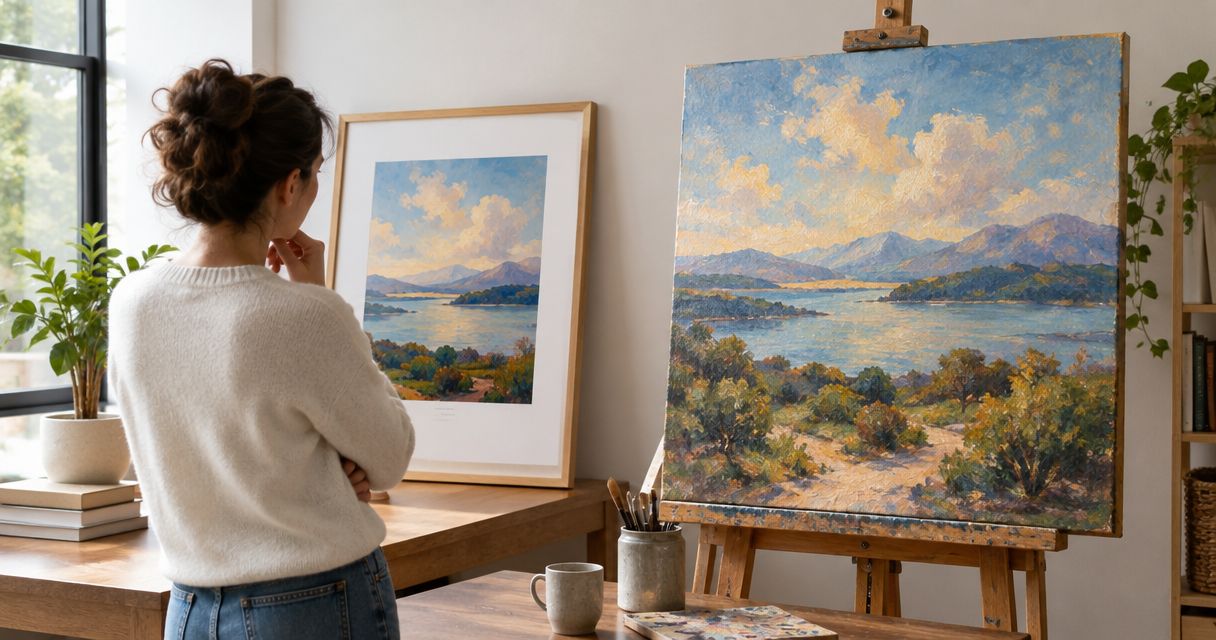
That distinction is useful when you admire a painting but do not need its physical surface. A reproduction represents the source image through a printing process; it does not transfer the artist’s original paint onto another support.
The drawback is that photographs can obscure what the print actually looks like. Paper texture, canvas weave, surface reflections, and framing all affect the finished object. Ask for a detail photograph and a description of the substrate rather than relying on a styled room image.
For a 2026 purchase, treat terms such as fine art and archival as prompts for questions, not complete specifications. Ask what printing process, ink, and support the description refers to. A label without those details does not tell you how to compare two reproductions.
Verdict: choose a reproduction when the image is the reason you want the artwork, and the documented materials meet your expectations.
Original paintings: best for owning the painted object
An original painting offers the actual painted surface, including whatever brushwork, layering, or other physical marks the artist created. Those characteristics belong to the object, not just to the image that can be photographed.
However, original does not mean heavily textured. Some paintings have smooth surfaces, while some reproductions include added texture. Surface appearance alone cannot establish whether a work is original.
The limitation is responsibility for the particular object you buy. Existing damage, previous repairs, unstable paint, or an unsuitable support do not disappear because the work is unique. Ask for condition information and inspect relevant details before committing.
Documentation matters here. Confirm who made the painting, what medium is recorded, and what information accompanies the sale. A signature is one piece of information; it is not a complete substitute for attribution and provenance.
Verdict: choose an original painting when its authorship and physical presence are central to your decision, not merely because the listing calls it unique.
Original prints: best for buyers interested in printmaking
An original print is an artwork conceived through printmaking, rather than simply a printed reproduction of a painting. Etching, lithography, and screenprinting are established examples of printmaking processes.
This distinction means that print versus original is not always a clean opposition. A work can be both a print and an original artwork. Ask whether the listing describes an original print or a reproduction before drawing conclusions from the word print.
Edition information needs context. A numbered reproduction remains a reproduction, and numbering alone does not establish artistic quality or future demand. Read the process description alongside any edition statement.
Verdict: choose an original print when the printmaking medium itself interests you and the description clearly identifies what you are buying.
Why the better choice varies
The answer changes with your purpose, the object, and the display setting. Use these factors rather than treating either format as automatically better:
- Reason for buying: distinguish wanting an image from wanting the artist’s particular physical work.
- Surface preference: decide whether actual painted texture matters, then verify that the work has it.
- Room fit: compare the finished outside dimensions, not just the image dimensions.
- Display conditions: assess sunlight, moisture, heat, and the intended hanging location.
- Documentation: check the medium, attribution, reproduction status, and any edition information.
- Care requirements: understand the framing and handling needs of the specific materials.
These factors also explain why a reproduction can outperform a painting for one room without being a better artwork in any universal sense. The right choice answers your actual brief.
How do you compare a print and a painting before buying?
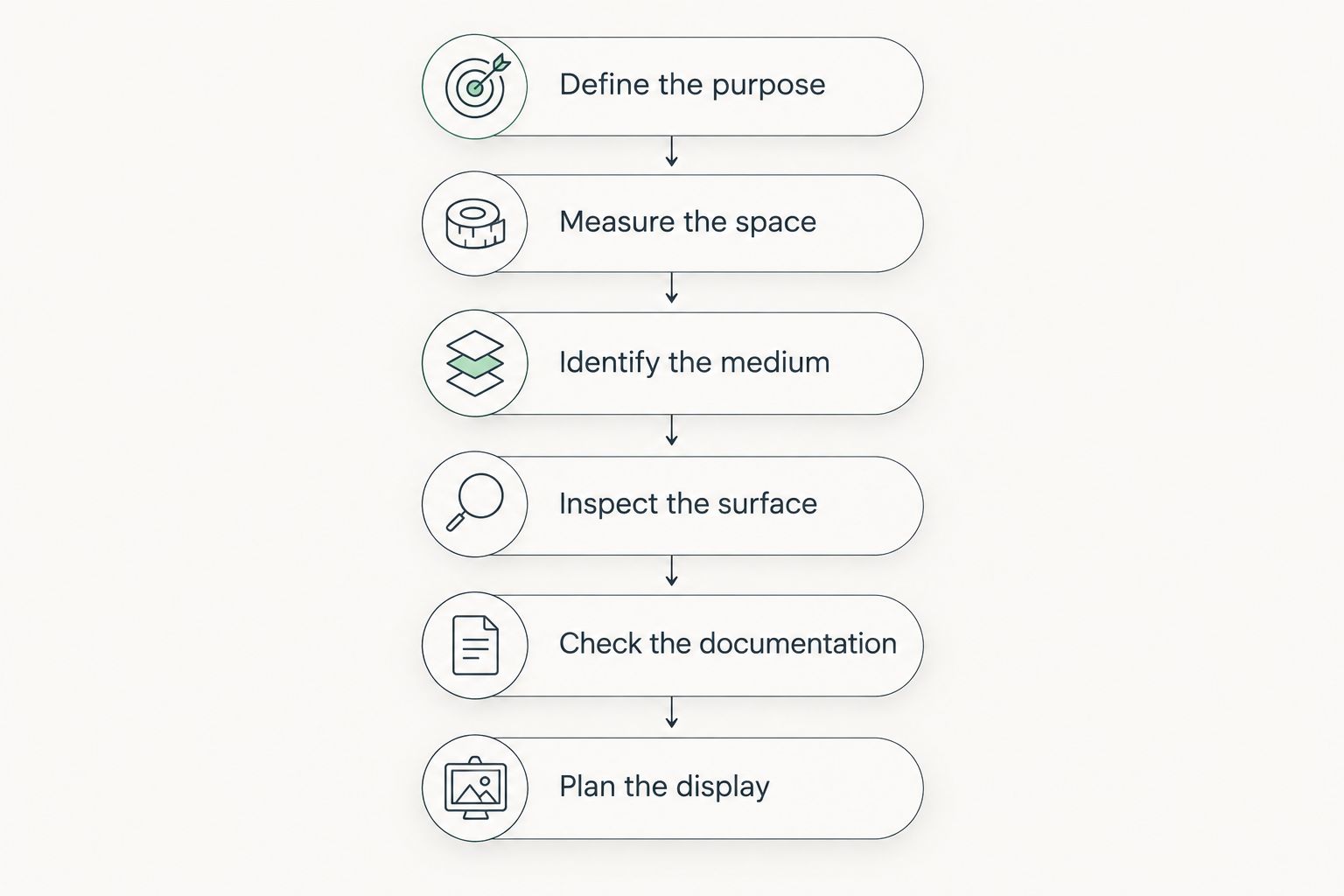
Use the same review process for both formats. This 2026 buying checklist puts the room decision before the ownership decision, so neither a familiar image nor an impressive label takes over the comparison.
- Define the purpose. Write down whether you want decoration, a personal connection to an artist, or an interest in a particular medium. Keep that reason visible while you compare.
- Measure the space. Record the available wall area and the finished dimensions of each candidate, including its frame. Do not assume a room photograph shows the work at your intended scale.
- Identify the medium. Establish whether the work is a reproduction, an original painting, or an original print. Ask for clarification when the wording mixes these categories.
- Inspect the surface. Request close-up images that show the actual object, not only a digital image of the composition. Look for condition issues and check whether texture is painted, printed, or otherwise applied.
- Check the documentation. Read the attribution, material description, edition information where relevant, and any condition statement. Resolve contradictions before choosing.
- Plan the display. Decide how the work will be framed, supported, and positioned. Follow care instructions appropriate to its materials.
Compare complete, display-ready choices rather than isolated images. A frame changes the outside dimensions and the appearance of the work, so include it in the decision from the start.
Is a fine art print better than an original painting for decoration?
A fine art print is better for decoration when it gives you the image and proportions you want without requiring ownership of the source painting. Originality alone does not make a composition suit your room.
Start with the intended viewing position. Check the work from where you will usually see it, then examine the surface nearby; these are different experiences and can produce different preferences.
Is an original painting a better investment than a print?
An original painting is not automatically a better investment than a print. Originality and edition size alone do not establish future resale demand.
If resale matters to you, assess the specific artist, attribution, condition, provenance, and documented sales evidence. Buy for enjoyment unless you have evidence supporting a financial decision.
Does a fine art print last as long as an original painting?
Neither a fine art print nor an original painting has a universal lifespan. Materials, condition, light exposure, humidity, framing, and handling affect preservation.
For a 2026 purchase, ask for material-specific care instructions rather than accepting an unsupported lifespan claim. Both formats deserve a suitable display location, and neither should be treated as immune to environmental damage.
Where Mercado da Imagem fits into the decision
Mercado da Imagem is for buyers shopping for art and wall decoration. Use that shopping purpose to keep the comparison focused: which work do you want to see in your space, and what exactly are you buying?
You can explore Mercado da Imagem with that brief in mind. Its art and wall-decoration focus is relevant to the search, but a store’s category does not establish the medium, edition status, or condition of an individual work; verify those details separately.
FAQ
What’s the main difference between a fine art print and an original painting?
A fine art reproduction presents a printed version of an image, while an original painting is the particular object on which the artist painted. An original print is a separate category: an artwork conceived through printmaking.
Is a signed fine art print an original painting?
A signed fine art print is not an original painting. A signature does not change the production method, so check whether the work is a reproduction or an original print.
Is a limited-edition print worth choosing over an open-edition print?
A limited-edition print is worth choosing when the specific work and its documented edition matter to you. A limited edition alone does not guarantee better image quality, stronger materials, or resale demand.
Can a canvas print look like an original painting?
A canvas print can resemble a painting in a photograph or from a distance, but resemblance does not establish originality. Check the production description and close-up images of the actual surface.
What should I ask before buying an original painting?
Ask about the artist, medium, dimensions, condition, provenance, and accompanying documentation. Confirm whether the stated dimensions include the frame and whether the photographs show the actual work.
Should I choose a print or a painting for a sunny room?
Neither a print nor a painting should be selected on the assumption that direct sunlight is harmless. Review the specific materials and care instructions, and consider a display position away from direct sun.
What should I check when shopping at Mercado da Imagem?
Check the individual artwork’s description, medium, dimensions, and display requirements. Mercado da Imagem sells art and wall decoration, but that category alone does not identify how a particular work was produced.
One last thing
Ask for a photograph of the actual object, not just the artwork’s image. A clean digital image shows the composition but leaves out the surface, edges, frame, and condition details that distinguish one physical work from another.
That is the final check for your 2026 decision: choose the image you want to live with, then confirm that the object being offered is the one you intend to own.