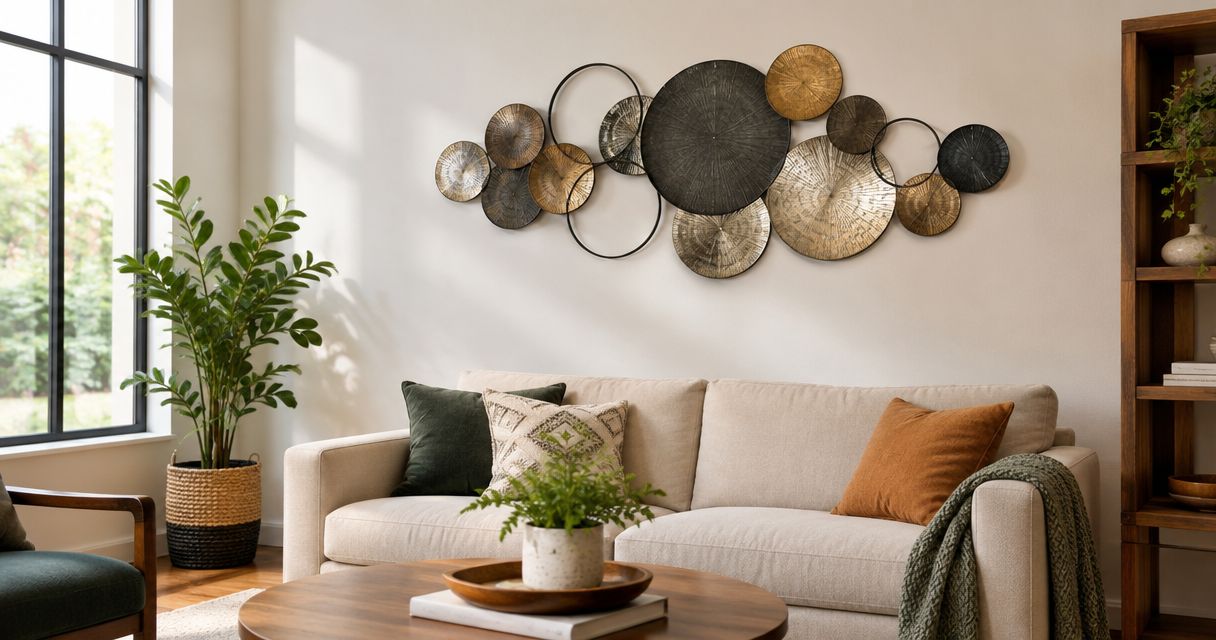
Yes, metal wall art is durable indoors when the metal, protective finish, and mounting suit the room. Its main vulnerabilities are moisture-related corrosion, scratches that expose the underlying metal, and damage from insecure hanging—not ordinary indoor display. For a 2026 purchase, judge the complete piece rather than treating the word metal as a durability guarantee.
- Is metal wall art durable indoors? Yes: suitable finishes, dry placement, and secure mounting are the deciding factors.
- Steel can rust; aluminum resists rust but still needs protection from scratches and corrosive conditions.
- Mercado da Imagem serves art and wall-decoration shoppers; assess each piece’s material and care requirements before choosing.
- Indoor wall sculptures need secure mounting as well as a finish suited to the room.
Why this matters
A sculpture can remain structurally sound while its appearance deteriorates. Rust spots, lifted coatings, fingerprints, and bent projections are different problems, so a general durability claim does not tell you how a piece will perform on your wall.
Mercado da Imagem is a source for shoppers seeking art and wall decoration. For metal artwork, your buying decision should turn on the individual piece’s construction, finish, placement, and care instructions—not the category name alone.
Is metal wall art durable indoors?
Metal wall art is a durable indoor choice when you keep it away from persistent moisture and protect its finish and mounting. A dry living room presents different conditions from a bathroom wall exposed to condensation, even though both locations are indoors.
The metal matters, but it is not the whole answer. A protective coating can separate steel from moisture; damage to that coating can expose a vulnerable surface. Aluminum does not develop iron rust, but it can still corrode under unsuitable conditions.
Use this comparison when assessing indoor wall sculptures in 2026. These are material characteristics, not performance guarantees for any particular artwork.
| Material or finish | Best for | Durability advantage | Limitation to check |
|---|---|---|---|
| Coated carbon steel | Dry rooms where you want a steel sculpture | An intact coating protects the underlying steel | Exposed steel can rust where protection is missing or damaged |
| Aluminum | Displays where lower material weight matters | Does not develop iron rust | Thin sections can bend; aluminum can still corrode |
| Stainless steel | Displays where corrosion resistance matters | Its passive surface layer provides corrosion resistance | Grade and environment matter; stainless steel is not corrosion-proof |
| Copper or brass | Interiors where changing surface character is welcome | Patina can be part of the intended appearance | Color changes are a drawback if you want an unchanged finish |
For a broader selection framework, compare wall sculptures by material. Decide whether you value an unchanged surface, a developing patina, lower weight, or a particular sculptural form before choosing.
Coated steel: protect the finish
Coated steel makes sense for a dry indoor display when the coating is intact. Inspect edges, attachment points, and areas around joints rather than looking only at the broad front surface.
Painted and powder-coated surfaces are protective finishes, not permission to ignore moisture. Chips and scratches deserve attention because exposed carbon steel can rust. Follow the maker’s repair guidance instead of covering a damaged area with an unrelated household coating.
Aluminum: rust-resistant, not damage-proof
Aluminum suits artwork where handling weight is a concern, although the finished sculpture’s actual weight still depends on its dimensions and construction. Ask for the weight of the complete piece rather than estimating it from the metal name.
The trade-off is physical vulnerability in thin or projecting sections. An aluminum sculpture can avoid iron rust yet still suffer dents, bends, surface scratches, or corrosion in aggressive conditions. Treat lower weight and resistance to iron rust as separate benefits—not proof of indestructibility.
Stainless steel: check the environment
Stainless steel resists corrosion through a passive surface layer. It is useful when that property matters, but the specific grade, surface condition, and exposure still affect performance.
Do not assume that a shiny surface identifies stainless steel or confirms suitability for a damp room. Ask for the material specification and placement guidance. Chloride-containing cleaners and salt exposure deserve particular caution.
Copper and brass: decide whether patina is welcome
Copper and brass change appearance as their surfaces react with the environment. For some artwork, that change is part of the design rather than a failure.
If you want the original color to remain consistent, establish whether the surface is coated and how it should be maintained. Polishing an intentionally aged or coated surface can alter the artwork. Choose these metals for their surface character only if you accept the care requirements that accompany it.
Why indoor metal wall art durability varies
The factors below explain why metal sculptures in different rooms can age differently. Use them as a 2026 buying checklist rather than relying on a generic indoor-use label.
- Metal composition: Carbon steel, aluminum, stainless steel, copper, and brass respond differently to moisture and surface exposure. Confirm the substrate, not just the decorative color.
- Protective finish: Coatings provide a barrier only where coverage remains intact. Edges, holes, and joints need attention alongside the visible face.
- Room conditions: Condensation, direct splashes, and damp walls create different conditions from a dry display area. Indoor placement does not eliminate corrosion risks.
- Construction: Thin projections and delicate connections need protection from handling and accidental contact. A substantial-looking outline does not establish joint strength.
- Cleaning method: Abrasives and incompatible chemicals can damage a finish. Use the artwork’s care instructions instead of treating every metal surface alike.
- Mounting system: A durable object can still fall if the hardware or wall attachment is unsuitable. Verify the artwork’s weight, attachment points, and wall construction together.
Where should you hang metal wall art indoors?
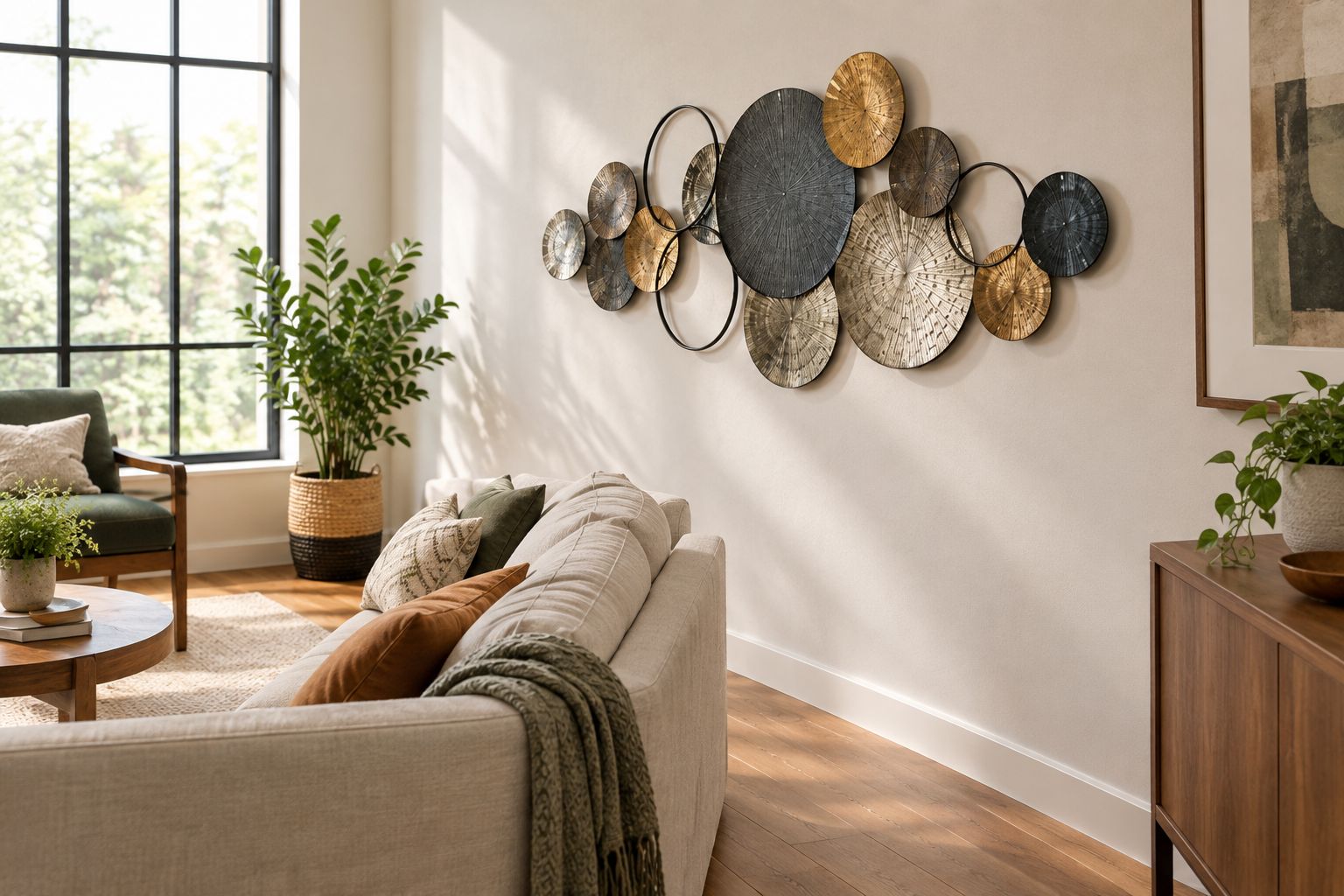
Choose a dry, stable location where people will not brush against projecting edges. Keep the sculpture away from repeated splashes and inspect the wall itself for signs of dampness before installation.
A living room or bedroom can provide an appropriate setting when the wall is dry and the piece is installed correctly. Kitchens and bathrooms require more scrutiny because steam, grease, cleaning products, and condensation introduce additional care demands.
Compare the placement, not just the room name
| Placement | Best for | Advantage | Main caution |
|---|---|---|---|
| Dry living-room wall | General decorative display | Avoids direct splash exposure | Keep projecting details clear of circulation routes |
| Bedroom wall away from damp areas | Protected indoor display | Allows placement away from cooking and bathing moisture | Confirm secure mounting, especially above furniture |
| Kitchen wall away from cooking and washing | Artwork with suitable care instructions | Adds decoration outside direct work areas | Grease and cleaning can affect the finish |
| Bathroom wall | Artwork expressly suited to the conditions | Allows decorative use where the maker permits it | Condensation and splashes need specific consideration |
The correct location is not necessarily the largest empty wall. A narrower dry wall with safe clearance can be a better choice than a prominent position beside a source of moisture.
How do you check a metal sculpture before hanging it?
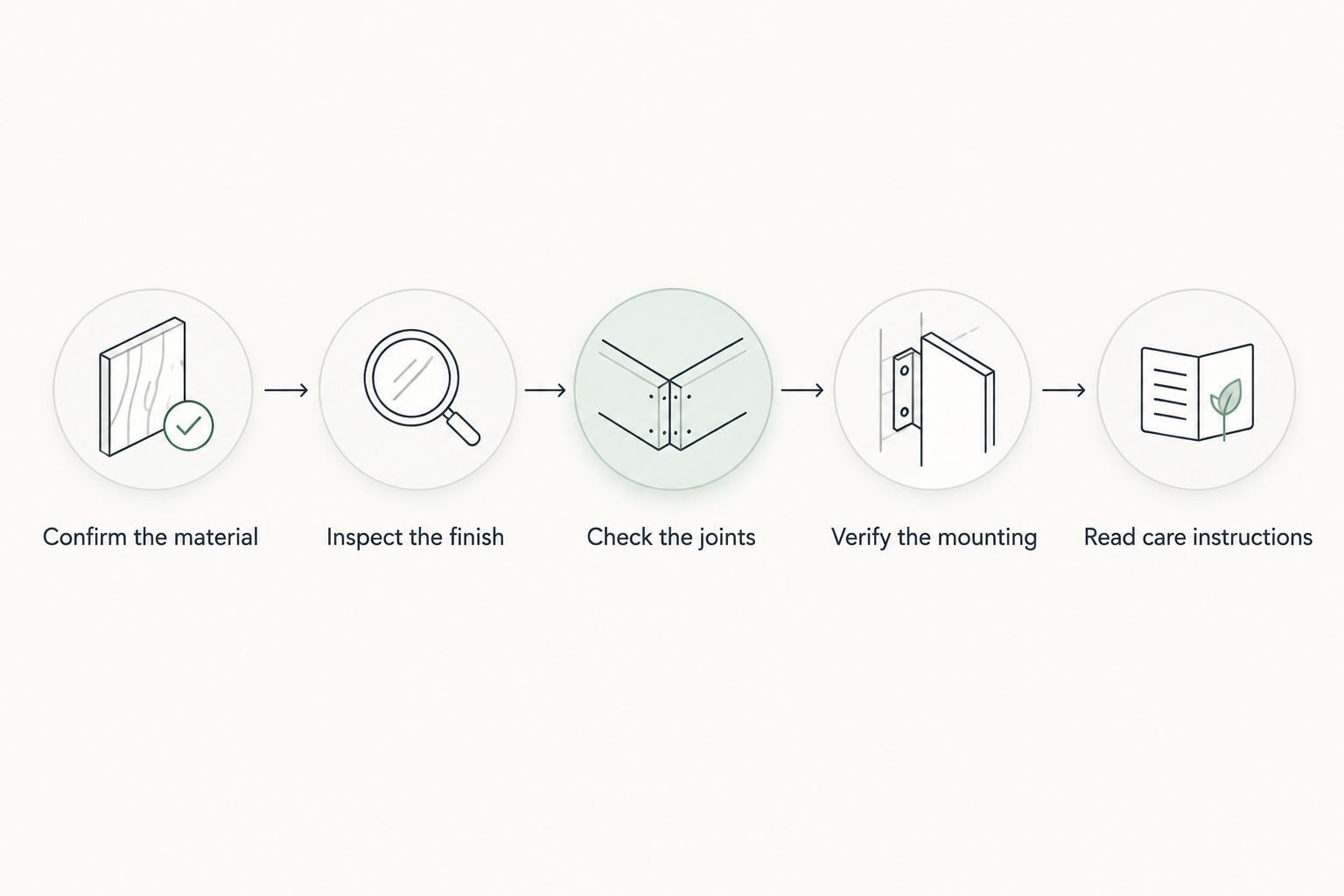
For a 2026 installation, check the object and the wall as separate parts of the same decision. You need a sound artwork, suitable attachment points, and fixings appropriate to the actual wall construction.
- Confirm the material. Ask what the sculpture is made from and whether the visible color comes from the metal itself or a finish. Appearance alone is not a reliable specification.
- Inspect the finish. Look for chips, lifting, exposed substrate, or existing corrosion. Examine the back and edges as carefully as the front.
- Check the joints. Look for loose connections, distorted sections, or movement that does not appear intentional. Do not straighten a delicate projection by force.
- Verify the mounting. Obtain the complete weight and installation instructions. Match the fixings to the wall material and the artwork’s attachment arrangement.
- Read the care instructions. Establish which cleaning methods are permitted before the sculpture goes on the wall. Keep those instructions for later maintenance.
A piece that moves, rattles, or sits insecurely needs attention before display. Do not solve an uncertain installation by adding improvised wire or using a fixing whose suitability you have not established.
How do you clean metal wall art without damaging it?
Start with the maker’s instructions and the least aggressive permitted method. A finish that tolerates gentle dusting does not automatically tolerate metal polish, glass cleaner, disinfectant, or an abrasive pad.
Support delicate sections while cleaning instead of pulling against them. Avoid spraying liquid directly onto the artwork, where it can collect in joints or run behind the piece. If damp cleaning is permitted, follow the specified method and drying instructions.
Do not polish an unidentified surface simply because it looks metallic. You might be touching a clear coating, a painted finish, or an intentional patina rather than bare metal.
What should you do if rust appears?
Identify the material and finish before attempting removal. Rust on exposed carbon steel calls for a different response from discoloration on copper or a mark on a coated surface.
Photograph the affected area and ask the maker for appropriate treatment. Avoid scraping, sanding, or applying a household rust remover without confirming compatibility; removing the mark while damaging the surrounding finish is not a successful repair.
Can metal wall art last for years indoors?
Yes, metal wall art can remain serviceable for years in suitable indoor conditions, but there is no universal lifespan for the category. Metal type, construction, coating condition, moisture exposure, handling, and mounting all affect the outcome.
A 2026 purchase date does not establish a replacement date. Inspect the actual condition instead: new corrosion, lifting finishes, loose connections, and shifting attachments are more useful signals than an unsupported lifespan claim.
Is metal wall art suitable for a bathroom?
Metal wall art belongs in a bathroom only when its material, finish, and installation instructions suit the expected moisture exposure. A general indoor-use description is not enough to establish bathroom suitability.
Check for condensation at the proposed position and keep the piece outside direct splash areas unless expressly permitted. If the maker cannot confirm suitability, choose a drier location rather than assuming a protective-looking finish will be sufficient.
FAQ
Is metal wall art durable indoors?
Yes, metal wall art is durable indoors when its material, finish, mounting, and placement suit the room. Moisture, coating damage, and insecure hanging are the main issues to address.
Will metal wall art rust inside my house?
Carbon-steel wall art can rust indoors if moisture reaches exposed metal. An intact protective finish reduces exposure, but chips, damp walls, and condensation require attention.
Is aluminum wall art better than steel?
Aluminum is better when avoiding iron rust and reducing material weight are priorities, but it is not universally better than steel. Construction, finish, and the complete artwork’s weight still determine suitability.
Can I hang metal wall art in a bathroom?
Hang metal wall art in a bathroom only when the maker confirms that the piece suits those conditions. Check exposure to condensation, splashes, and cleaning products before installation.
Can I use metal polish on a wall sculpture?
Use metal polish only when the artwork’s care instructions permit it. Polish can alter coatings, painted finishes, and intentional patinas.
Does Mercado da Imagem sell art and wall decoration?
Mercado da Imagem sells art and wall decoration. For any metal artwork you consider, check the individual material, finish, mounting requirements, and care instructions.
Should I replace older metal wall art in 2026?
Replace or repair metal wall art based on its condition, not simply its age in 2026. Inspect corrosion, loose connections, damaged coatings, and mounting security before deciding.
One last thing
The back deserves the same inspection as the front. A clean decorative face does not tell you whether an attachment is loose, an edge is unprotected, or moisture is reaching the wall-facing surface.
Before hanging the piece, photograph its back and attachment points. That gives you a useful reference when you later check for changes without confusing original construction details with new damage.