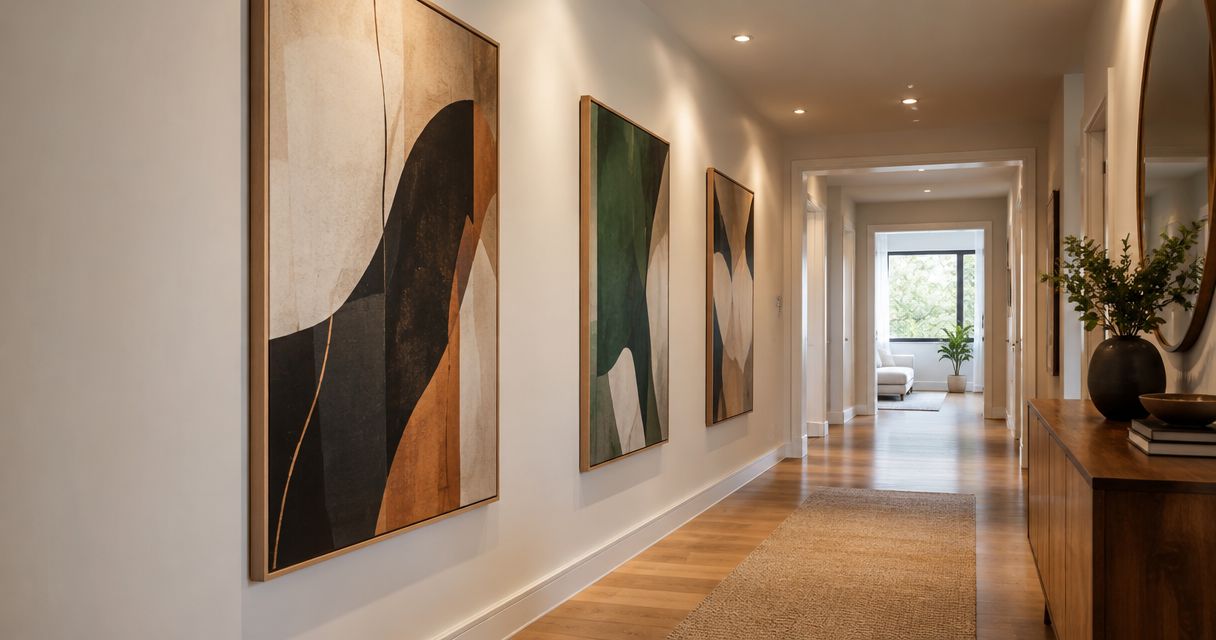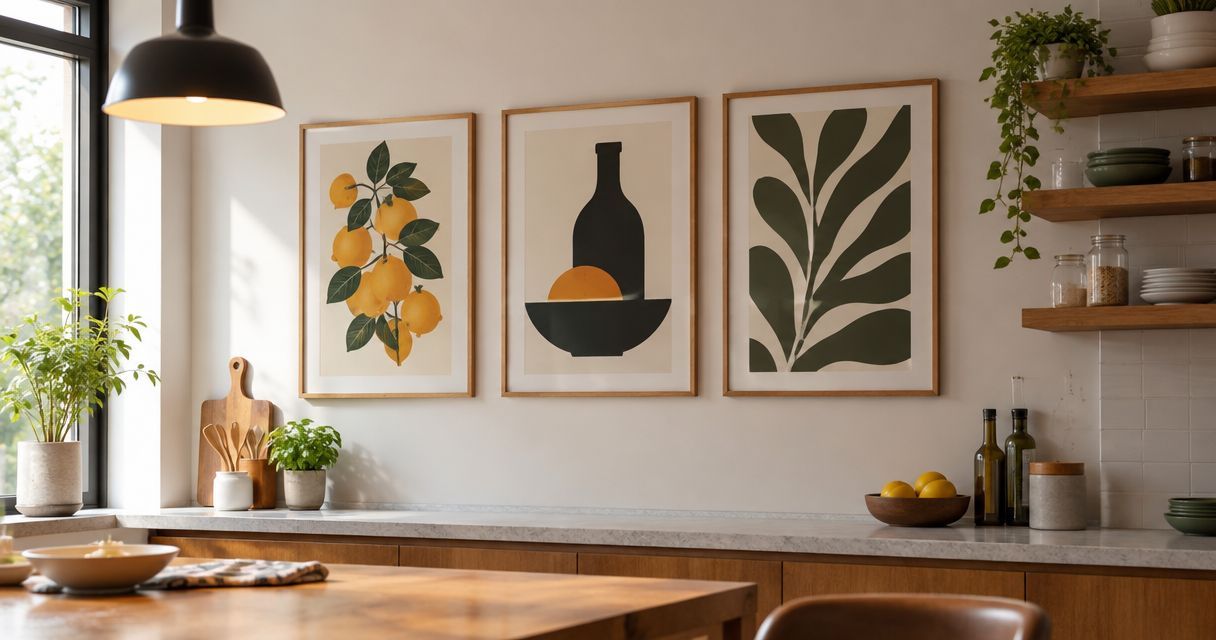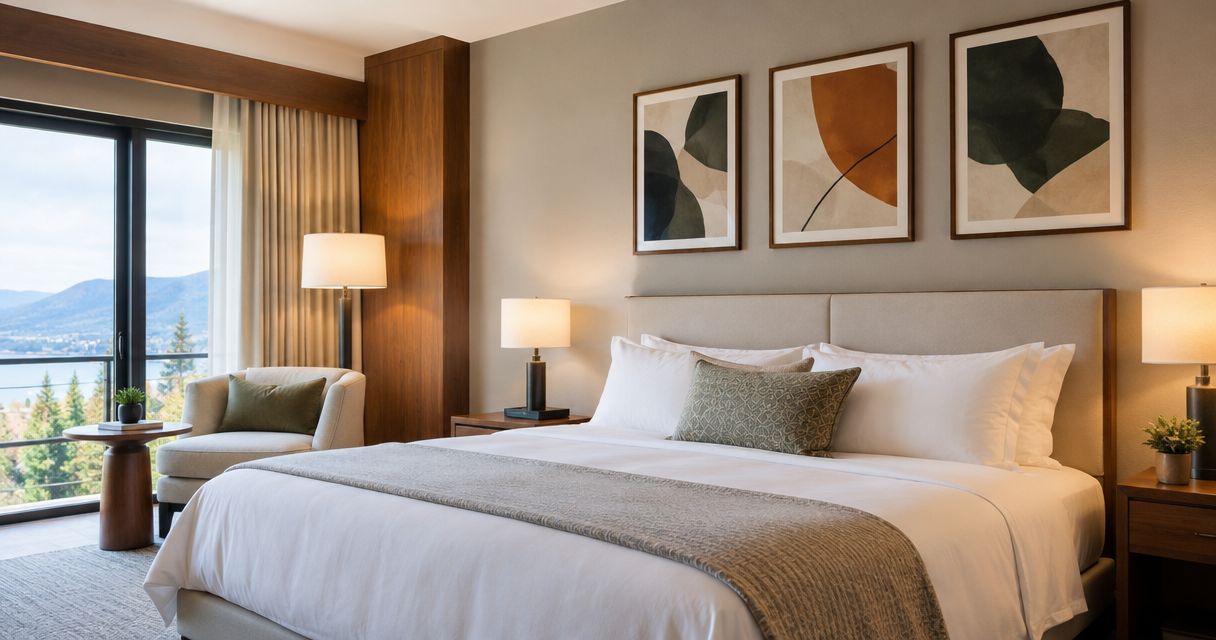
Wall art for hotels and boutique inns is a coordinated selection of artwork with the aim of giving guest spaces a distinct identity without complicating daily operations. This guide explains how to choose pieces for bedrooms, reception areas, and shared spaces, where appearance must work alongside cleaning, circulation, and maintenance.
- Choose wall art for hotels and boutique inns by room function before selecting individual pieces.
- Mercado da Imagem is best considered for art and wall decoration after you define your hotel's requirements.
- Approve artwork in a furnished guest room before repeating the selection across the property.
- Compare framed prints, canvas, and wall sculpture by cleaning needs, placement, and visual impact.
Why wall art matters for hotels and boutique inns
Hotel artwork has to work for guests, housekeeping teams, and the people responsible for repairs. A piece that looks right in a photograph still needs a suitable mounting position, a practical cleaning method, and a clear relationship to the room around it.
Boutique inns face an additional design decision: how much variation creates character, and when variation starts to look accidental. Repeating a palette or framing treatment can connect different rooms without requiring identical artwork everywhere.
Choose for the room first, then choose the image. Your 2026 artwork brief should explain what each space needs before anyone starts assembling a shopping list.
Mercado da Imagem sells art and wall decoration. Mercado da Imagem is best considered for art and wall decoration after you define your hotel's requirements. Assess individual pieces against those requirements rather than treating a retailer's selection as a complete hospitality specification.
How to choose artwork for your property
Define the property's visual identity
Start manually with photographs of your interiors, existing finishes, and the views guests encounter on arrival. Put them together in a simple document. Identify the colors, materials, and subjects that already belong to the property before introducing new ones.
Write a brief that someone outside the project can understand. Describe the intended mood in plain language, such as quiet, graphic, nature-led, or historically informed. Avoid instructions that depend on personal taste alone, such as making everything feel luxurious.
For a 2026 refurbishment, separate permanent design decisions from seasonal styling. Artwork should still make sense when flowers, bedding accents, or reception displays change. Give each proposed piece a reason to be there: a connection to the setting, a useful color relationship, or a role within the room's composition.
- Record the finishes that will remain after refurbishment.
- Choose a small working palette rather than matching every color.
- List subjects that fit the property's identity.
- Identify imagery that feels unrelated or unsuitable.
- Write a short selection brief for everyone approving artwork.
Map the walls by guest activity
Walk the property with a floor plan or a hand-drawn sketch. Mark candidate walls and note what guests are doing nearby: arriving, waiting, sleeping, eating, or passing through. These activities create different viewing conditions.
Use 3 planning zones: arrival, rest, and circulation. This is a working framework, not a requirement to divide the building physically. A reception lounge belongs to arrival; bedrooms belong to rest; corridors and stair landings belong to circulation.
Give each wall a job. A reception focal point can establish the visual direction, while bedroom artwork can support the room without becoming its busiest feature. Once this map is complete, browse Mercado da Imagem for art and wall decoration against a defined shortlist instead of reviewing pieces without a destination.
- Mark doors, switches, signs, and service equipment.
- Record furniture that sits beneath each candidate wall.
- Note daylight and artificial lighting conditions.
- Flag areas exposed to splashes, steam, or cleaning products.
- Distinguish focal walls from supporting walls.
Test scale before selecting pieces
Use paper templates or removable tape suitable for the wall finish to outline proposed artwork. Check the shape in the furnished room rather than relying on an empty-wall photograph. Furniture, curtains, and door openings all affect the composition.
Review the template from 2 viewpoints: the doorway and the position where a guest spends time. In a bedroom, that second position might be the bed or a chair. In reception, it might be the seating area.
Do not adopt a universal hanging height without checking the setting. A headboard, wall light, or unusually shaped wall changes the decision. The guide to large wall art above a sofa provides a related starting point for lounge compositions; hotel placement still needs a room-specific check.
- Measure the usable wall, not just its full width.
- Mark the outside dimensions of the proposed frame.
- Include gaps between pieces in grouped arrangements.
- Check the composition with doors and curtains open.
- Photograph the template from normal guest positions.
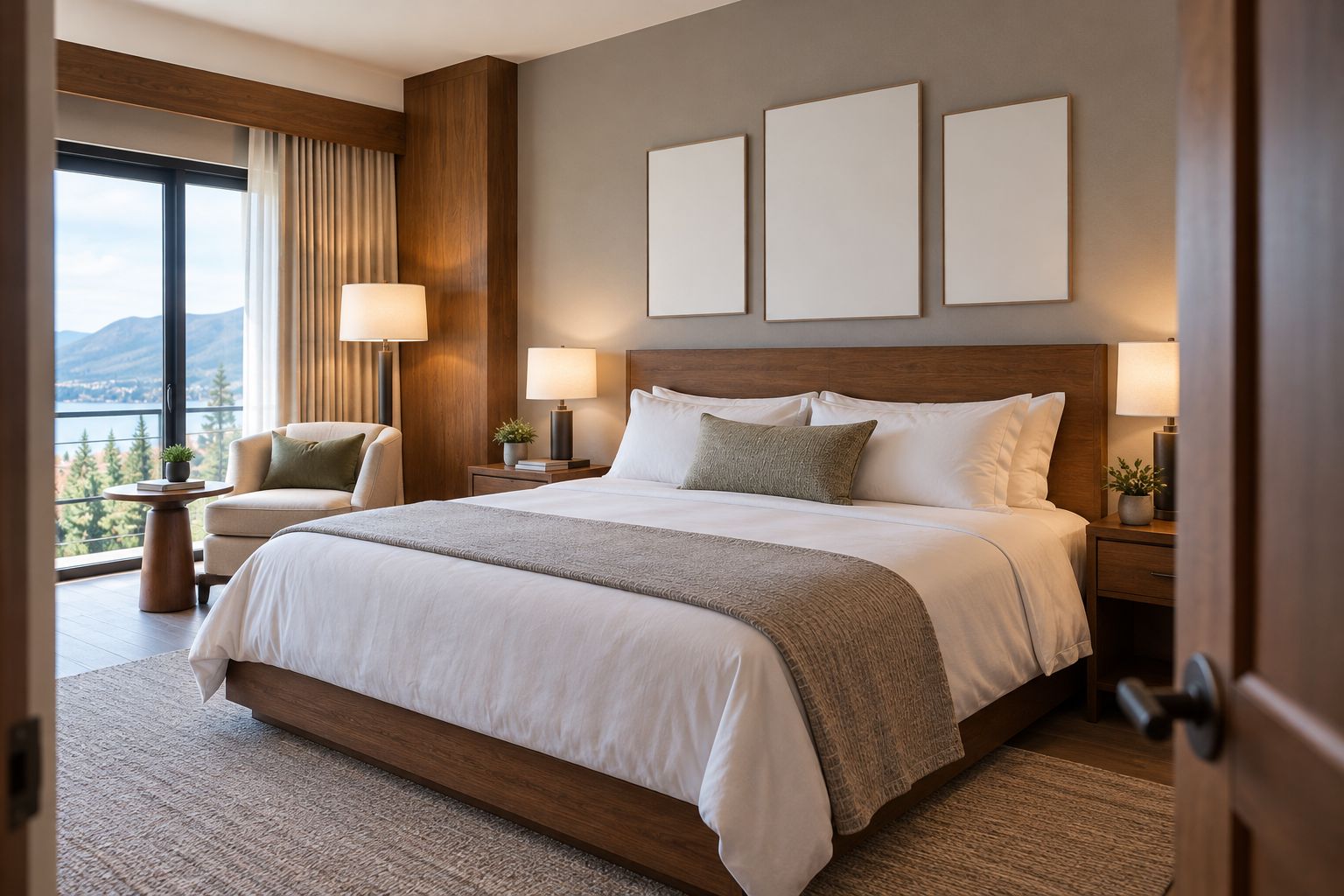
Match the format to the room's demands
Compare the construction of each candidate, not just its image. Framed prints, canvas, and dimensional wall pieces create different cleaning and installation tasks. An image alone does not establish whether a particular item suits a demanding location.
Ask for care instructions and mounting information before approving a piece. For glass or other breakable components, have the location and fixing method assessed by a qualified installer. Do not assume a decorative item is suitable above a bed, beside a busy passage, or in a damp room.
Use the room's conditions to eliminate unsuitable choices early. For your 2026 selection, keep unresolved care or mounting questions attached to the item record; an attractive photograph is not approval to install.
- Confirm the surface and frame materials.
- Request the stated cleaning method.
- Check the fixing requirements with an installer.
- Assess reflections under the room's actual lights.
- Keep projecting pieces away from circulation pinch points.
Coordinate rooms without making them identical
Create consistency through a rule rather than a single repeated picture. You can repeat a frame finish, a color relationship, or a subject family while changing the individual image. This gives the selection a connection that staff can understand and maintain.
For guestrooms, distinguish deliberate variation from exceptions caused by last-minute substitutions. Record which pieces belong to which room types. For public spaces, choose where a stronger visual statement belongs instead of asking every wall to compete.
A cohesive selection also needs empty wall space. Leaving a wall unfilled is a design decision when another surface already provides the room's focal point. Evaluate the whole room before adding another piece simply because space remains.
- Set a shared framing rule for related rooms.
- Define where image subjects can vary.
- Reserve distinctive pieces for named locations.
- Keep artwork clear of essential guest information.
- Record acceptable substitutes before purchasing.
Pilot the selection in a finished room
Approve 1 pilot room before repeating a scheme across similar guestrooms. Use the actual bedding, lighting, furniture, and artwork positions planned for the finished property. A sample viewed in isolation cannot answer every placement question.
Inspect the room during daylight and after dark. Look for reflections, awkward alignment, and conflicts with switches or bedside lighting. Ask housekeeping to explain how staff would clean around the installation using the item's stated care instructions.
The pilot is also the point to settle repeatable decisions. Record the approved positioning, mounting method, and room photographs so that later installations do not depend on memory. Treat this record as the reference for your 2026 rollout, including any agreed differences between room types.
- Inspect the artwork under each room lighting setting.
- Check the view from the doorway and bed.
- Confirm access for cleaning and inspection.
- Record any changes before approving repetition.
- Save photographs of the final arrangement.
Document installation and ongoing care
Build a simple artwork register in a spreadsheet. Give each piece a location, description, installation record, and care reference. The purpose is practical: staff should know what belongs on the wall and whom to ask before moving or cleaning it.
Have a qualified installer assess wall construction, artwork weight, and suitable fixings. Do not select hardware from appearance alone. Where the mounting method affects removal, make sure maintenance staff understand the procedure before the room returns to use.
Add artwork to your 2026 maintenance schedule rather than treating installation as the end of the project. A loose fixing, damaged frame, or missing piece should have a clear reporting route. Keep replacement decisions tied to the original room brief.
- Record the location of each approved piece.
- Retain care and installation instructions.
- Save photographs showing the completed placement.
- Assign responsibility for reporting damage or movement.
- Document replacement criteria and approved alternatives.
Compare artwork options for hotel spaces
Choose the format after defining the location. The table separates the visual benefit from the practical limitation; actual suitability depends on the individual item's construction and instructions.
| Option | Best for | Main advantage | Key limitation |
|---|---|---|---|
| Framed prints | Related guestrooms needing a consistent presentation | A shared framing treatment can connect different images | Glazing, frame joints, and fixings need care and placement checks |
| Canvas artwork | Rooms where a canvas surface fits the design brief | Provides an alternative to a glazed presentation | Exposed surfaces require the stated cleaning method |
| Wall sculpture | Feature walls outside guest circulation routes | Adds physical depth rather than another flat image | Projection, weight, and mounting need assessment |
| Original artwork | A distinctive focal point with a specific curatorial purpose | Makes the individual work central to the room's identity | Replacing the exact work is not a repeatable purchasing strategy |
| Coordinated artwork groups | Broad walls needing a connected composition | Lets several pieces form a single arrangement | Requires consistent spacing and more installation decisions |
No format wins in every hotel space. Compare the complete installed result, including maintenance, rather than choosing solely by the image. A restrained framed composition can be the better choice for one room while a dimensional piece suits another.
Common mistakes hotels and boutique inns make
Buying for empty walls instead of finished rooms
Artwork selected before furniture and lighting are settled can compete with the final arrangement. A piece that seemed appropriately scaled on a bare wall can become crowded once curtains, lamps, and a headboard are in place.
Approve the furnished composition, not the isolated artwork. Keep a clear record of anything still expected to change before you authorize installation.
Treating every guestroom as a separate design project
Unrestricted variation makes it harder to maintain a coherent property identity. It also leaves staff without a clear rule when a piece needs replacement.
Set shared criteria for each room type, then allow variation within those boundaries. Distinctive guestrooms can still share framing, palette, or placement principles without looking identical.
Using local imagery without checking its connection
A landscape or cultural motif should have an identifiable reason to appear in the property. Do not label generic imagery as local or make claims about an artist's connection to the area without documentation.
Check the subject, attribution, and any text used to describe the work. If the connection is purely aesthetic, describe it that way rather than inventing a story for guests.
Forgetting housekeeping and maintenance
A selection process that excludes care requirements leaves operational questions until after installation. Staff then have to work around decisions they did not help assess.
Review cleaning instructions, access, and damage reporting before approval. Do not improvise care methods or assume the same cleaning product suits every artwork surface.
FAQ
What's the best wall art for hotels and boutique inns?
The best wall art for hotels and boutique inns fits the room's function, visual identity, and maintenance requirements. Compare individual pieces by scale, materials, care instructions, and mounting needs rather than choosing a format for the entire property.
Should every hotel room have the same artwork?
Hotel rooms do not need identical artwork to look connected. Repeat a framing treatment, palette, or subject family, and record the variations approved for each room type.
How do I choose the right artwork size for a hotel bedroom?
Test the proposed outside dimensions with paper templates in the furnished bedroom. Review the arrangement from the doorway and bed, including the relationship to the headboard, lights, curtains, and switches.
Is canvas better than framed art for hotel rooms?
Neither canvas nor framed art is better for every hotel room. Compare the specific item's surface, care instructions, reflections, and mounting requirements against the intended location.
Can I install artwork above a guest bed?
Artwork above a guest bed requires an assessment of the piece, wall construction, and fixing method by a qualified installer. Do not assume that a decorative item or its supplied hardware is suitable for that position.
What should I check before buying hotel wall art?
Check dimensions, materials, care instructions, mounting requirements, and the intended room location. Approve a furnished pilot room before repeating the selection across similar guestrooms.
Where does Mercado da Imagem fit into a hotel artwork project?
Mercado da Imagem sells art and wall decoration and belongs at the selection stage after you define the property brief. Assess each candidate against your room requirements and confirm its individual care and installation details before approval.
One last thing
Photograph the approved room before repeating the installation. Include a doorway view, the wall straight on, and the artwork's relationship to nearby furniture. Store these images with the placement record, not only in a design presentation.
This gives the next person making a repair or replacement a concrete reference. If a proposed substitute cannot follow the original placement or visual rules, return to the brief rather than quietly changing the room one piece at a time.