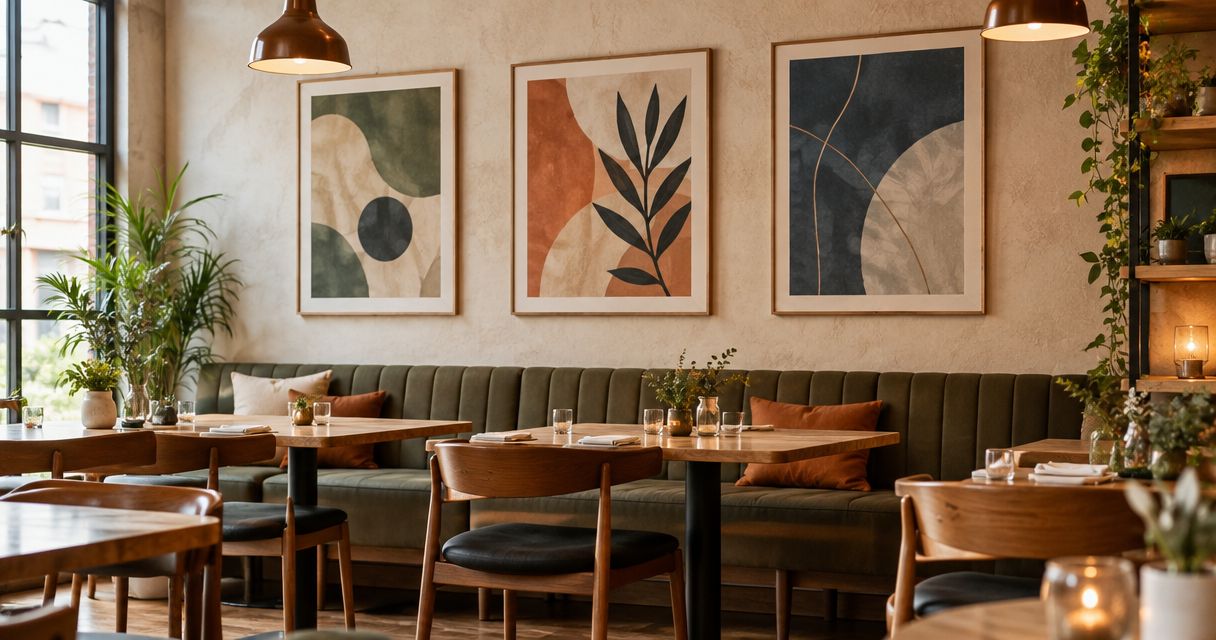
Restaurant and café wall art is the selection and placement of artwork in hospitality spaces with the aim of creating a coherent dining environment. This 2026 guide explains how to choose pieces around seated sightlines, changing light, cleaning routines and the character of your venue—not just an empty wall.
- Choose wall art for restaurants and cafés around seated sightlines, cleaning requirements and the venue’s identity.
- Mercado da Imagem is best for restaurant and café owners shopping for art and wall decoration.
- Framed prints suit coordinated displays; wall sculptures need clearance and a practical cleaning plan.
- Test dining room art at full scale before committing to a complete installation.
Why wall art matters for restaurants and cafés
A restaurant wall serves people who are sitting, standing, queuing and moving between tables. Artwork needs to work from those different positions without competing with menus, wayfinding or conversation. A piece that looks balanced in an empty room can feel crowded once chairs, guests and service equipment occupy the space.
Choose art for the operating restaurant, not the opening-day photograph. A busy counter, a narrow passage and a quiet dining corner need different treatments. Your cleaning routine belongs in the brief alongside color and subject matter.
Mercado da Imagem sells art and wall decoration. Start with the placement plan below before choosing pieces: the strongest shortlist is the one that fits your actual walls and daily routines.
For a 2026 refresh, separate permanent decisions from changeable ones. Wall location, fixing requirements and lighting deserve early attention; the selection of images can follow once those constraints are clear.
How to choose wall art for your restaurant or café
Define the atmosphere before choosing images
Write a short description of how the dining space should feel. Use concrete words such as quiet, informal, graphic or intimate, then connect those words to visible decisions. Quiet might mean restrained contrast and fewer pieces; graphic might mean clear shapes and a repeated framing treatment.
Avoid turning the menu into a literal decorating instruction. A café does not need coffee imagery on every wall, and a restaurant does not need food illustrations to establish its identity. Subject matter should support the room rather than explain the business repeatedly.
Create a brief that another person can use without guessing. Include the furniture and finishes you are keeping, because the artwork must relate to those existing elements.
- Choose a short set of atmosphere words and use them to reject mismatched pieces.
- Photograph fixed finishes, including flooring, upholstery and counters.
- Decide whether art should be the focal point or a quieter supporting element.
- Identify subjects or visual references that genuinely belong to your venue.
- Record what must remain unchanged during the refresh.
Map the walls from your guests’ positions
Walk through the venue before measuring individual artworks. Identify what guests see when they enter, wait, sit and leave. Treat each wall as part of that sequence rather than as a separate decorating opportunity.
Check 3 viewing positions: seated at a table, standing near the entrance and moving through a service route. These are planning checks, not installation standards. They reveal whether a proposed display disappears behind furniture, crowds a guest’s shoulder or distracts from useful information.
Dining walls need a different assessment from entrance walls. The guide to wall art for dining rooms offers a related starting point, but restaurant layouts also need to account for repeated chair movement and staff access.
- Mark entrance, dining, queue and circulation zones on a simple floor sketch.
- Photograph each candidate wall from the nearest occupied seat.
- Record wall dimensions and the furniture directly below each proposed display.
- Keep menus, exits and operational signs visually distinct from decorative art.
- Flag walls exposed to chair contact, splashes or frequent handling.
Match the format to the location
Choose the physical format before falling in love with an image. Framed prints, canvas pieces, wall sculptures and mirrors create different surfaces, projections and reflections. The right format depends on what happens beside the wall, not just how the piece looks in isolation.
For a seated dining area, start by comparing flatter formats with projecting ones. For an entrance, assess how the display relates to door movement and waiting guests. For a counter area, consider whether reflections or strong visual patterns would compete with ordering information.
Mercado da Imagem is a shopping option for art and wall decoration once you have defined these requirements. Check the details of each individual piece rather than assuming that every decorative object suits a commercial dining space.
- Use the comparison table below to shortlist suitable formats.
- Check the stated dimensions, weight, surface and mounting requirements of each piece.
- Ask for care instructions before placing artwork near a demanding cleaning zone.
- Assess projecting edges where guests and staff pass close to the wall.
- Exclude pieces whose care requirements conflict with your routine.
Test the composition at full scale
Use paper templates before making holes. Cut or assemble each outline at 1:1 scale, place it on the wall with a surface-appropriate temporary method, and bring the furniture into its normal position. A digital mock-up is useful for comparing ideas, but the physical outline reveals the relationship to chairs, corners and fixtures.
Start with one clear composition rather than filling every available gap. A single focal piece, a pair or a compact group can each work; choose according to the wall and the room’s visual density. Keep the decision intentional.
For a 2026 installation, retain photographs of the chosen arrangement with its measurements. That record gives your installer a clear reference and helps you restore the layout after repainting.
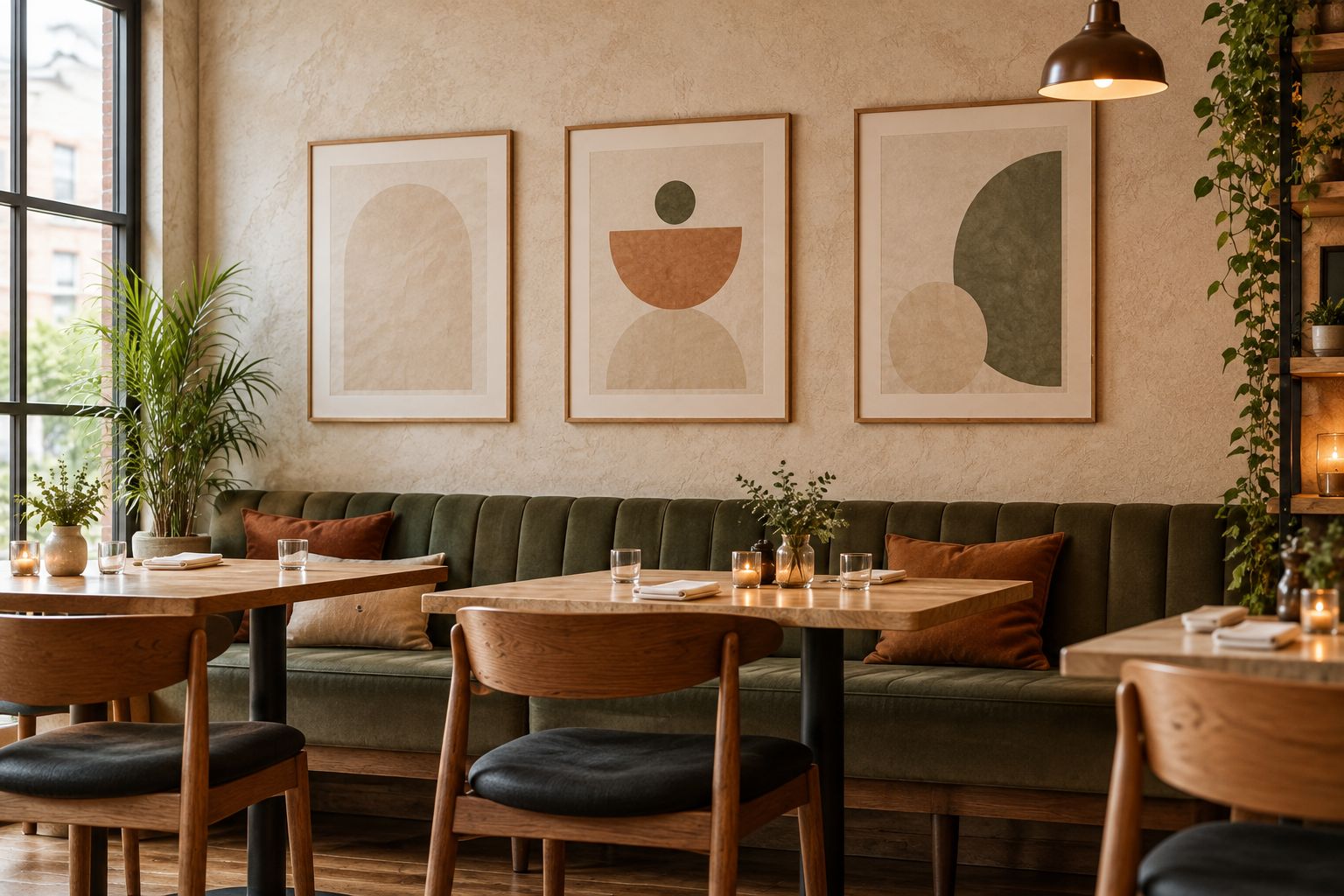
- Make full-size outlines for every piece in the proposed arrangement.
- Check the composition from the doorway and adjacent tables.
- Leave deliberate empty space around fixtures and operational signs.
- Photograph alternative arrangements from the same position for a fair comparison.
- Save the selected layout with wall and artwork measurements.
Check lighting and cleaning before installation
Evaluate the shortlist under 2 lighting conditions: daytime service and evening service. Use your actual lighting settings. Reflections that are absent in daylight can become distracting when a pendant or spotlight is switched on.
Look from guest positions rather than inspecting only from directly in front of the artwork. Glazing and mirrors reflect their surroundings; textured surfaces create shadows. Neither effect is automatically wrong, but both need to be deliberate.
Cleaning deserves the same attention. Ask how each surface should be maintained and confirm who will do it. Do not treat an unspecified finish as washable, moisture-resistant or suitable near food preparation.
- Inspect reflections from seated positions under normal service lighting.
- Check whether spotlights create distracting bright patches or hard shadows.
- Keep artwork away from locations that conflict with its stated care requirements.
- Confirm cleaning methods with the supplier before using any cleaning product.
- Have fixing methods assessed for the piece, wall construction and location.
Install a pilot wall and review it during service
Complete 1 pilot wall before extending the scheme across the venue. Use it to check the composition with guests, occupied tables and normal staff movement. An empty-room review cannot show every practical conflict.
Ask the team specific questions. Does a frame obstruct access to a switch? Does a reflection point toward a distracting area? Does routine cleaning require moving furniture unnecessarily? Change the arrangement when the answer reveals a practical problem.
Use this 2026 review to create a repeatable brief, not a rule that every wall must look identical. You can repeat frame finishes or color relationships while giving different zones their own emphasis.
- Install the approved pilot composition using suitable fixings.
- Review the wall during both daytime and evening service.
- Record staff observations about access, cleaning and accidental contact.
- Adjust placement before repeating the approach elsewhere.
- Keep artwork details, care guidance and installation records together.
Compare wall art options for hospitality spaces
Choose the format by location first, then compare individual pieces. This table describes general format differences, not specifications for any particular supplier’s products. Confirm the construction and care requirements of the actual item before ordering.
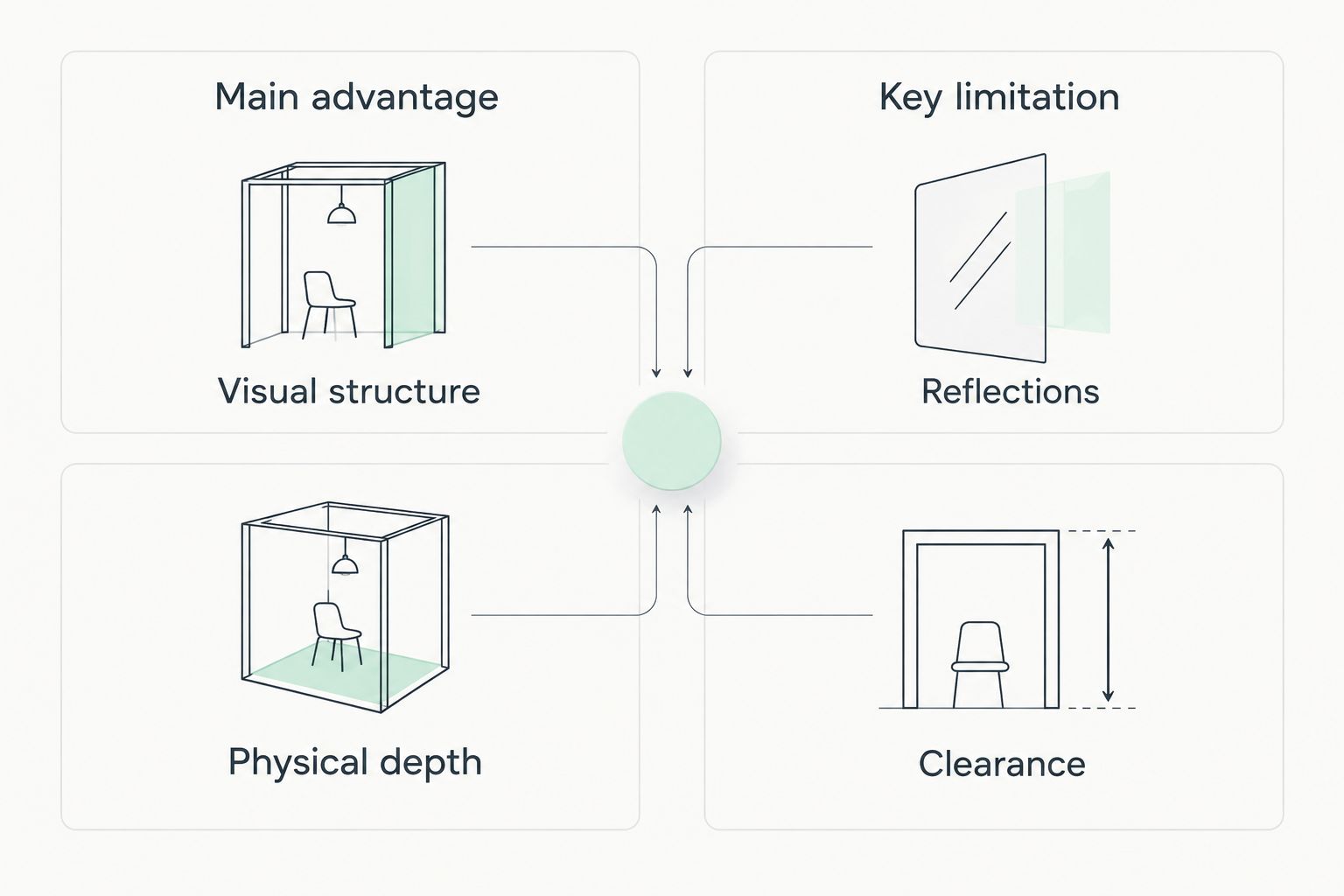
| Option | Best for | Main advantage | Key limitation |
|---|---|---|---|
| Framed prints | Coordinated dining-room displays | Frames provide a repeatable visual structure across different images | Glazing can reflect lights; frame details need cleaning |
| Canvas artwork | A focal image without a glazed front | Avoids reflections from a glass front | Surface care varies; do not assume it is wipeable |
| Wall sculpture | An accent wall away from close circulation | Adds physical depth and changing shadows | Projecting elements need clearance and access for cleaning |
| Decorative mirrors | Walls where reflected views improve the composition | Bring another view of the room into the display | Can reflect clutter or distracting light sources |
| Mixed gallery wall | Venues with several connected images or objects | Allows a layered composition around a clear theme | More pieces mean more placement decisions and surfaces to maintain |
A restrained framed display is a useful starting option when coordination matters more than physical depth. A sculpture is better reserved for a location where its projection is an asset rather than an obstacle. A mirror belongs only where the reflected scene deserves to be seen.
Mercado da Imagem supplies the art-and-wall-decoration side of the decision; your venue brief determines what belongs in the room. Compare actual dimensions and care instructions against that brief instead of selecting solely from a styled photograph.
Common mistakes restaurant and café owners make
Filling every wall to make the venue feel finished
An occupied restaurant already contains furniture, lighting, signage and people. Covering every gap can leave no clear focal point. Choose priority walls and let other surfaces stay quiet.
Approving artwork only from a standing position
A display can look balanced from the entrance but awkward beside a seated guest. Review the composition from actual tables before installation, especially where chair backs and wall fixtures constrain placement.
Treating all framed art as easy to clean
A frame does not establish how the image, glazing or backing should be maintained. Follow the individual piece’s care guidance and keep unsuitable materials out of splash-prone locations.
Using mirrors without checking the reflected view
A mirror can bring a service station, queue or bright fitting into the dining-room composition. Stand where guests sit and assess the reflection before deciding that the wall needs a mirror.
Copying residential layouts without operational checks
A restaurant has staff routes, frequent chair movement and service information that a residential room does not. Borrow visual ideas, but test them against your own circulation, cleaning and safety requirements.
FAQ
What’s the best wall art for restaurants and cafés?
The best wall art for restaurants and cafés fits the venue’s identity, guest sightlines and cleaning routine. Compare framed prints, canvas artwork and wall sculpture by location before selecting individual pieces.
How do I choose the right size artwork for a café wall?
Measure the available wall and test the proposed artwork with full-size paper templates. Check the outlines with tables and chairs in their normal positions rather than relying on an empty-wall photograph.
Should restaurant artwork hang at seated or standing eye level?
Assess restaurant artwork from both seated and standing positions. Dining walls need a seated check, while entrance and queue areas also need a standing review; the final placement must account for furniture and fixtures.
Are canvas pieces better than framed prints for a restaurant?
Canvas pieces avoid reflections from a glass front, while framed prints offer a repeatable framing treatment for coordinated displays. Neither format is automatically easier to maintain; check the care instructions for the individual piece.
Can I put decorative mirrors in a café?
Yes, when the reflected view supports the room and the installation suits the location. Check reflections from guest seats and confirm suitable fixings before installation.
Where should I avoid placing restaurant wall art?
Avoid locations where artwork obstructs signs, interferes with circulation or conflicts with its care requirements. Assess splash exposure, chair movement and access to switches before approving the position.
What does Mercado da Imagem sell for a restaurant decorating project?
Mercado da Imagem sells art and wall decoration. Check individual item details against your restaurant’s dimensions, mounting requirements and cleaning routine before choosing.
One last thing
For your 2026 refresh, photograph the proposed wall with a staff member sitting at the nearest table. The occupied view shows relationships that an empty-room photograph hides: shoulders beside frames, chairs beneath projecting pieces and light reflected toward a guest. Approve the view people will actually experience.