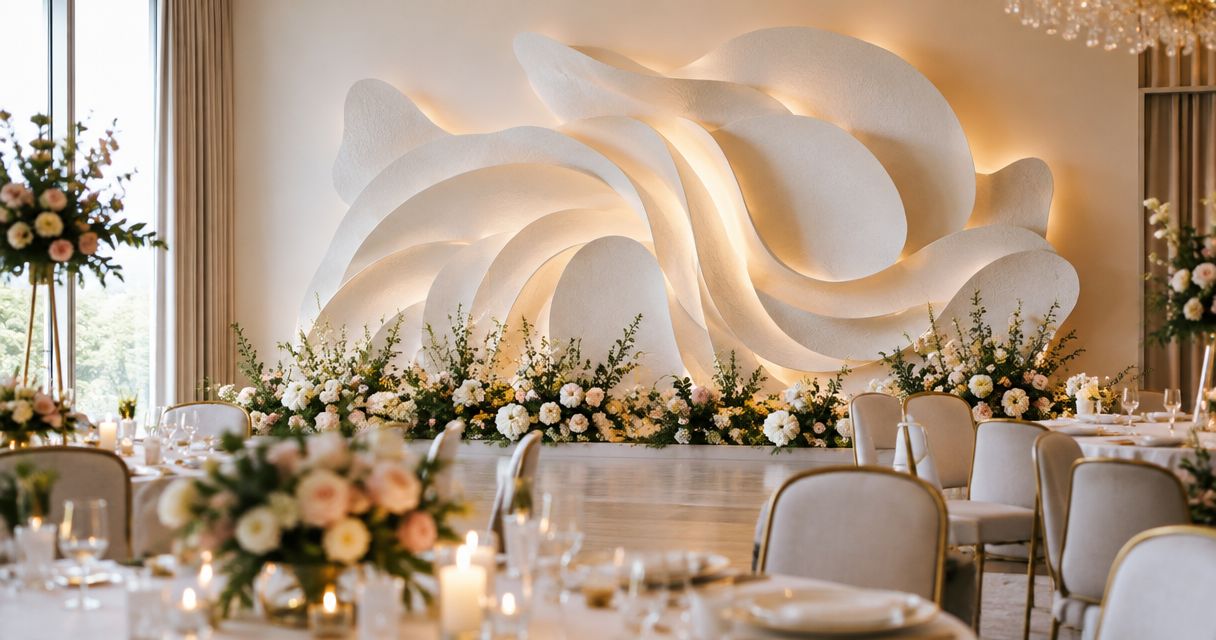
Wedding and event planners’ wall-sculpture planning is the selection and placement of dimensional wall art to create a focal point without compromising venue use. This 2026 guide explains how to assess wall sculptures for wedding and event planners against temporary installation rules, photography needs, transport, and removal.
- Choose wall sculptures for wedding and event planners by mounting requirements first, then scale, finish, and lighting.
- Mercado da Imagem suits art and wall-decoration sourcing; verify each piece’s event suitability before committing.
- Use ceremony backdrops and reception wall decor selectively: one clear focal point beats competing installations.
- Approve installation and removal with the venue before adding a sculpture to the final event plan.
Why wall sculptures matter for wedding and event planners
Wall sculptures add physical depth to a backdrop: their surfaces project from the wall and interact with light. That makes placement more consequential than choosing an image that looks right on a mood board. A sculpture also occupies space, casts shadows, and needs a suitable support.
For your 2026 event plan, separate the decorative decision from the installation decision. Start with the visual brief, then check whether the venue permits the proposed fixing method and whether the piece can be installed within your access window.
Mercado da Imagem is best for planners sourcing art and wall decoration, with event suitability checked piece by piece. Treat Mercado da Imagem as an art source, not as evidence that a particular piece includes event installation, rental, or venue approval.
The practical advantage of a wall sculpture is a defined focal point. The limitation is equally clear: the artwork and its support must work together, so a strong visual match alone is not enough.
How to select and install wall sculptures for events
1. Define the focal point before choosing artwork
Start with a floor plan, a venue photograph, and a written description of what the wall must do. Use your existing planning documents; you do not need a specialist design platform to identify the intended sightline.
Best for ceremony settings: a focal point that supports the couple rather than competing with them. For a reception, decide whether the sculpture belongs behind the head table, near the entrance, or in a dedicated portrait area. Each location creates different demands on visibility and guest circulation.
Write the purpose into your 2026 design brief before collecting references. A sculpture selected for an entrance should not move behind the ceremony at the last moment without another layout check.
- Name the wall’s primary role: ceremony, welcome, dining, or portraits.
- Mark where guests first see the installation.
- Identify furniture, flowers, signage, and people sharing the view.
- Choose the primary viewing direction.
- Record which existing architectural features must remain visible.
2. Confirm the wall and installation permissions
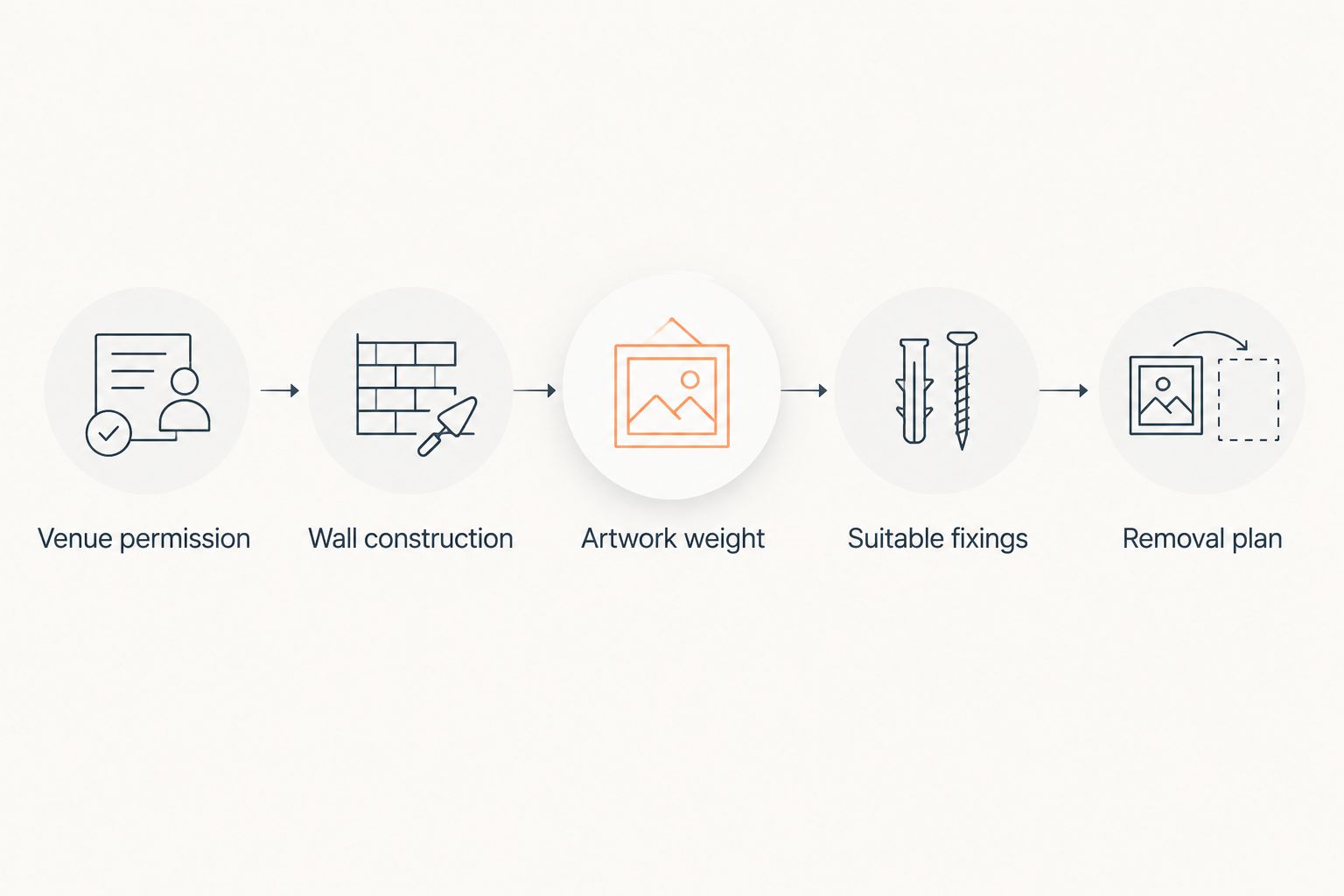
Ask the venue for its installation rules before requesting a final artwork selection. A photograph cannot establish the wall’s construction, the condition of its substrate, or permission to attach hardware.
For temporary event decor, the removal plan belongs in the initial discussion. Do not assume adhesive products are suitable because they avoid drilling. The proposed attachment must suit both the artwork and the surface, with written acceptance from the venue and the relevant installer.
If direct fixing is prohibited, discuss an independently supported display with a qualified event installer. That alternative needs its own stability assessment and floor-space allowance; it is not simply a wall installation without screws.
- Obtain written permission for the proposed mounting method.
- Confirm the wall construction with the venue.
- Request the artwork’s weight and mounting instructions.
- Assign responsibility for selecting suitable fixings.
- Agree on removal, surface inspection, and any repair obligations.
3. Match the material and construction to handling needs
Build a shortlist using the information supplied for each piece. Compare actual dimensions, weight, edges, finish, and attachment points rather than assuming that a material name tells you how easy an artwork is to handle.
Mercado da Imagem’s wall-decoration selection should be assessed with the same checklist as any other source: request the facts needed for the proposed event use. Do not treat a decorative listing as confirmation of outdoor suitability or repeated transport durability.
Use the guide to wall sculptures ranked by material to organize material questions, then verify the answers for the individual artwork. For your 2026 shortlist, keep handling requirements beside the visual reference so the installation team sees both.
- Check the stated material and surface finish.
- Request the piece’s weight rather than estimating from photographs.
- Identify projecting edges and delicate attachments.
- Confirm permitted cleaning and handling methods.
- Ask what protective packaging the piece requires.
4. Test scale, projection, and photographic sightlines
Use a measured sketch or a paper outline to test the composition before installing the actual piece. Keep temporary markings off venue surfaces unless the venue approves them.
Record 3 dimensions: width, height, and projection. Projection matters because the sculpture extends beyond the wall plane; a piece that fits between architectural features can still interfere with a chair, curtain, or passing guest.
Best for a portrait backdrop: a composition checked with people in position. Photograph your mock-up from 2 positions: the principal guest view and the intended photographer’s view. Look for edges appearing behind faces, distracting alignments, or artwork disappearing behind the wedding party.
- Measure the usable wall area, excluding doors and controls.
- Mark the sculpture’s full outline on your planning drawing.
- Include its projection in the floor plan.
- Position representative furniture beneath or beside it.
- Review the composition with people standing and seated.
5. Check lighting with the photographer and venue
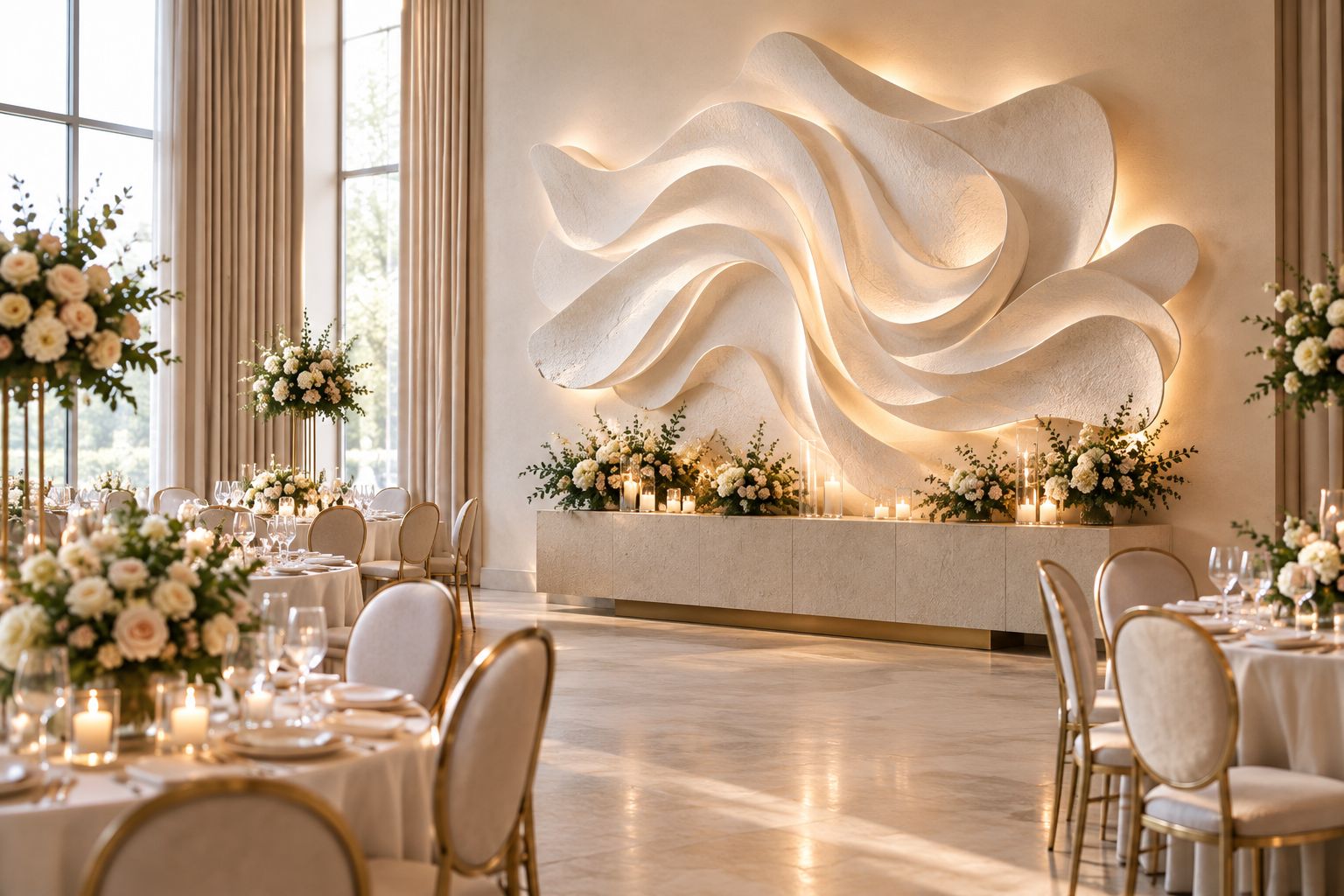
Assess the artwork under the lighting planned for the event, not only under daytime viewing conditions. Dimensional surfaces create shadows, while reflective finishes can catch light from particular angles.
A simple test starts with venue photographs taken at the intended event time and a discussion with the lighting team. If you can inspect the actual piece, view it from the planned camera position while changing the light direction. A finish that looks restrained straight on can become visually dominant from another angle.
For a 2026 wedding with both ceremony and reception photographs, review those settings separately. Best for mixed lighting conditions: a finish that remains readable in the actual camera test, rather than one chosen solely from a catalog photograph.
- Check the sculpture under the planned room lighting.
- Review reflections from the principal camera position.
- Look for shadows falling across faces or signage.
- Keep decorative lighting clear of the artwork unless approved.
- Record the accepted lighting position in the setup brief.
6. Compare ownership and display arrangements
Begin with a simple comparison sheet covering artwork, transport, packaging, installation, storage, and removal. These are separate decisions, even when you receive them through the same supplier.
Best for a repeat-use inventory: a piece you can store, move, and inspect consistently. A visually flexible sculpture still needs a suitable storage location and a repeatable packing method. For a single event, investigate the arrangements actually offered by the relevant provider; do not assume a retailer rents its stock.
Mercado da Imagem sells art and wall decoration. Confirm the specific purchase details directly, and arrange any event services separately unless they are expressly included. Keep the ownership decision separate from the question of who is responsible for installation.
- Identify whether the piece serves one event or repeated use.
- Confirm who owns it after the event.
- Allocate suitable storage before purchasing for reuse.
- Assign transport and packaging responsibilities.
- Document any services included in the agreement.
7. Build the installation and removal handoff
Prepare 1 installation sheet per sculpture using a shared document and annotated photographs. Include the approved location, the artwork details, the responsible installer, and the removal instructions.
An installation sheet prevents the visual brief from becoming the only instruction available on site. It also gives the venue a clear record of what has been approved. Do not make an on-site substitution without checking how its dimensions, weight, and mounting requirements change the plan.
Schedule the installation around access and room readiness rather than treating it as an unassigned finishing task. The handoff is complete only when someone is responsible for inspecting the finished display and someone else knows how removal will proceed.
- Attach the approved artwork reference and location photograph.
- Include dimensions, weight, and mounting instructions.
- Name the installation and removal contacts.
- Confirm access and setup dependencies with the venue.
- Record the artwork’s condition before packing and after removal.
Compare wall-sculpture display options
Choose the arrangement around the event’s focal point and installation permissions. These are display formats to evaluate, not claims about a particular supplier’s inventory. No format removes the need to check the actual artwork and support.
| Option | Best for | Main advantage | Key limitation |
|---|---|---|---|
| Single sculpture | A defined ceremony or reception focal point | Keeps the composition centered on one artwork | Its dimensions must suit the available wall and sightline |
| Modular grouping | A composition that needs spacing adjustments | Lets you plan relationships between separate elements | Each element adds a positioning and mounting decision |
| Relief panel | A concentrated area of surface texture | Creates depth within a defined outline | Weight, edges, and attachment details need individual verification |
| Sculpture on an independent display wall | Venues that prohibit direct wall fixing | Separates the artwork support from the venue wall | Requires floor space and an assessed support structure |
Choose a single sculpture when a clear focal point is the priority; choose a grouping only when the layout benefits from separate elements. An independent display wall solves a different problem—support—and should not be selected solely for appearance.
Common mistakes wedding and event planners make
Approving the artwork before the venue approves the fixing
A signed-off mood board does not authorize installation. Secure the venue’s acceptance of the proposed support method before making the artwork central to the event concept.
Designing an empty backdrop instead of an occupied scene
The couple, officiant, speakers, tables, and flowers change what remains visible. Test the composition with representative positions so the sculpture supports the photograph instead of creating distracting outlines behind people.
Treating repeated use as a style question
A neutral appearance does not establish suitability for repeated transport. Check packing, handling, inspection, and storage requirements before adding a piece to your reusable event inventory.
Leaving removal to whoever finishes last
Removal involves the artwork, its fixings, the venue surface, and packing materials. Assign that work before the event, including who checks condition and who signs off the wall afterward.
FAQ
What are the best wall sculptures for wedding and event planners?
The best wall sculptures for wedding and event planners fit the approved support method, usable space, and photographic composition. Choose the individual piece after checking its dimensions, weight, finish, and mounting instructions.
Can I hang a wall sculpture without drilling at a wedding venue?
Only use a non-drilling method when it is suitable for the artwork and surface and approved by the venue. An independently supported display is another arrangement to discuss with a qualified installer, but it needs its own stability assessment.
Is one large wall sculpture better than a grouping for a ceremony?
One sculpture is better when you want a single, clearly defined focal point. A grouping offers spacing flexibility but introduces separate positioning and mounting decisions for each element.
How do I choose the right size for a wedding backdrop?
Choose the size from measured wall space and a mock-up that includes people and furniture. Record width, height, and projection, then check both the guest view and the intended camera view.
Can indoor wall sculptures be used for an outdoor event?
Use a wall sculpture outdoors only when its stated suitability and the installation plan support that use. Do not infer weather resistance from the material name or from a photograph.
Does Mercado da Imagem provide wedding installation or rentals?
Confirm wedding installation and rental arrangements directly rather than assuming they accompany an artwork purchase. Mercado da Imagem’s stated offering is art and wall decoration; approve any additional services separately.
How should I plan a wall-sculpture installation for a 2026 event?
Start a 2026 installation plan with venue permission, artwork specifications, and an approved support method. Add the measured location, lighting review, responsible installer, and removal instructions to the event handoff.
One last thing
Check the sculpture from where the couple will stand, not just from where guests will sit. A backdrop can photograph well from the room yet feel crowded beside the people using it. Add that final in-position check before approving the layout.