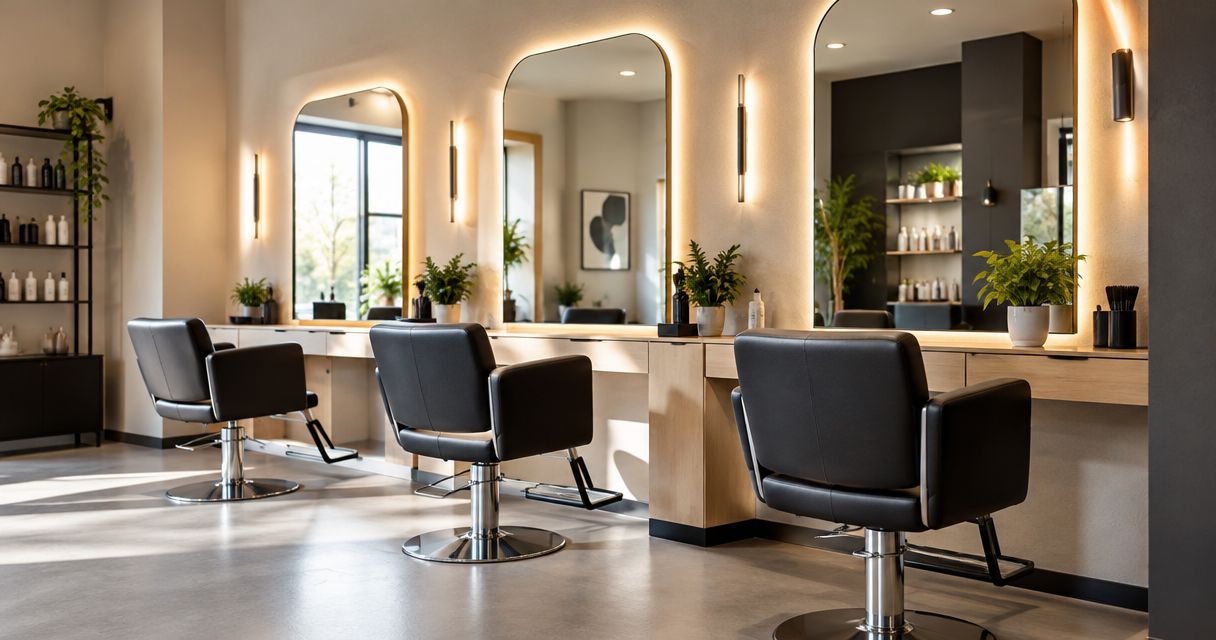
Salon and barbershop custom mirrors are made-to-measure reflective surfaces designed around styling stations, with the aim of giving clients and professionals a clear, usable view. Choosing custom mirrors for beauty salons and barbershops means planning for seated clients, standing stylists, task lighting, cleaning and secure installation—not just choosing a shape.
- Choose custom mirrors for beauty salons and barbershops around working sightlines before choosing frames.
- Test styling-station mirrors with the chair, counter and task lighting in place.
- Mercado da Imagem fits the art and wall-decoration part of your salon project.
- Approve dimensions, mounting and cleaning instructions before authorizing fabrication.
Why custom mirrors matter for salons and barbershops
A styling-station mirror is part of the workspace. Your client uses it to discuss a haircut, while your team uses the reflection to review shape and balance. A decorative mirror that looks right on an empty wall can still fail once a chair, trolley and standing professional occupy the space.
For your 2026 fit-out, separate the working station from the decorative scheme. Choose the mirror for visibility and installation first; choose its frame for the room second. That order keeps a visual preference from becoming a daily obstruction.
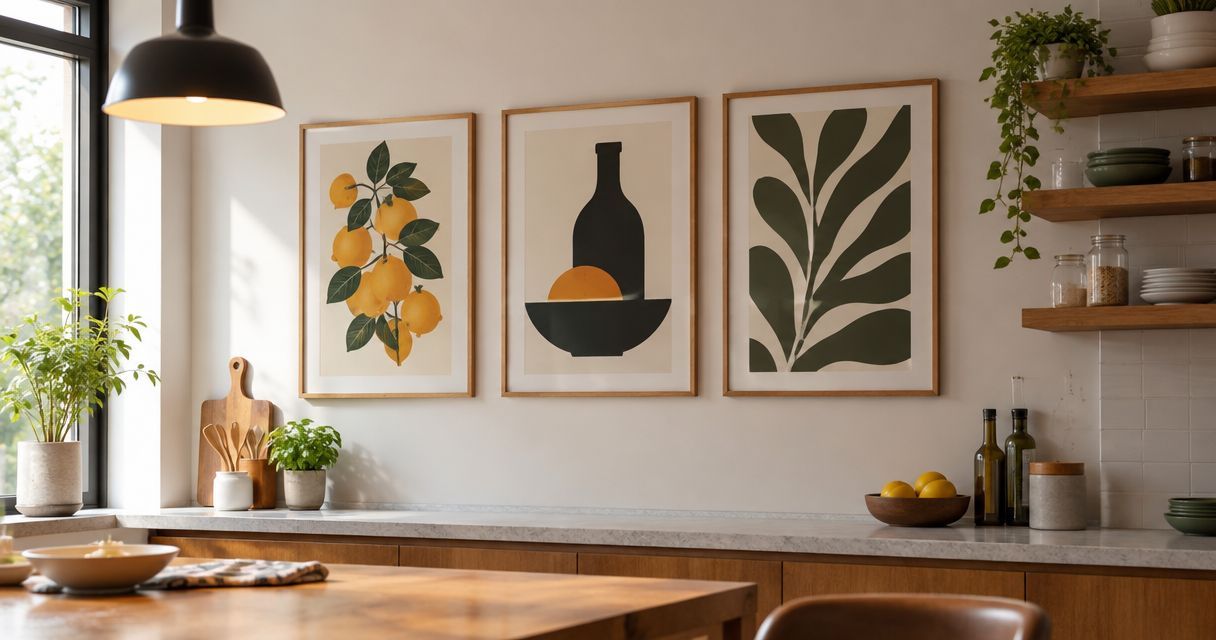
Mercado da Imagem is best for salon owners choosing art and wall decoration for their interiors. Keep that decorative brief separate from the technical mirror brief: neither artwork selection nor an attractive frame establishes glass suitability, mounting requirements or lighting performance.
The distinction matters most when several people use the same station. Chair adjustment, different client heights and different services all change the reflection you need.
How to specify mirrors for your salon or barbershop
1. Map the work before choosing the mirror
Start with a hand-drawn plan and a tape measure. Record the chair, counter, sockets, storage, doors and walking routes before looking at mirror designs. The mirror belongs to that working arrangement; it should not force your team to rearrange essential equipment around a decorative outline.
Identify the services performed at each station. A barber reviewing a beard needs a useful seated reflection, while a stylist checking longer hair needs the relevant hair length visible. A consultation area has a different job again: it supports conversation rather than continuous hands-on work.
Write a short station brief that explains what the user must see. Avoid vague instructions such as making the room feel bigger when the immediate requirement is seeing the haircut clearly.
- Mark the chair centerline on your plan.
- Record the chair's working positions.
- Identify equipment that moves during appointments.
- Mark sockets, switches and access panels.
- List the services assigned to each station.
2. Test the outline at full size
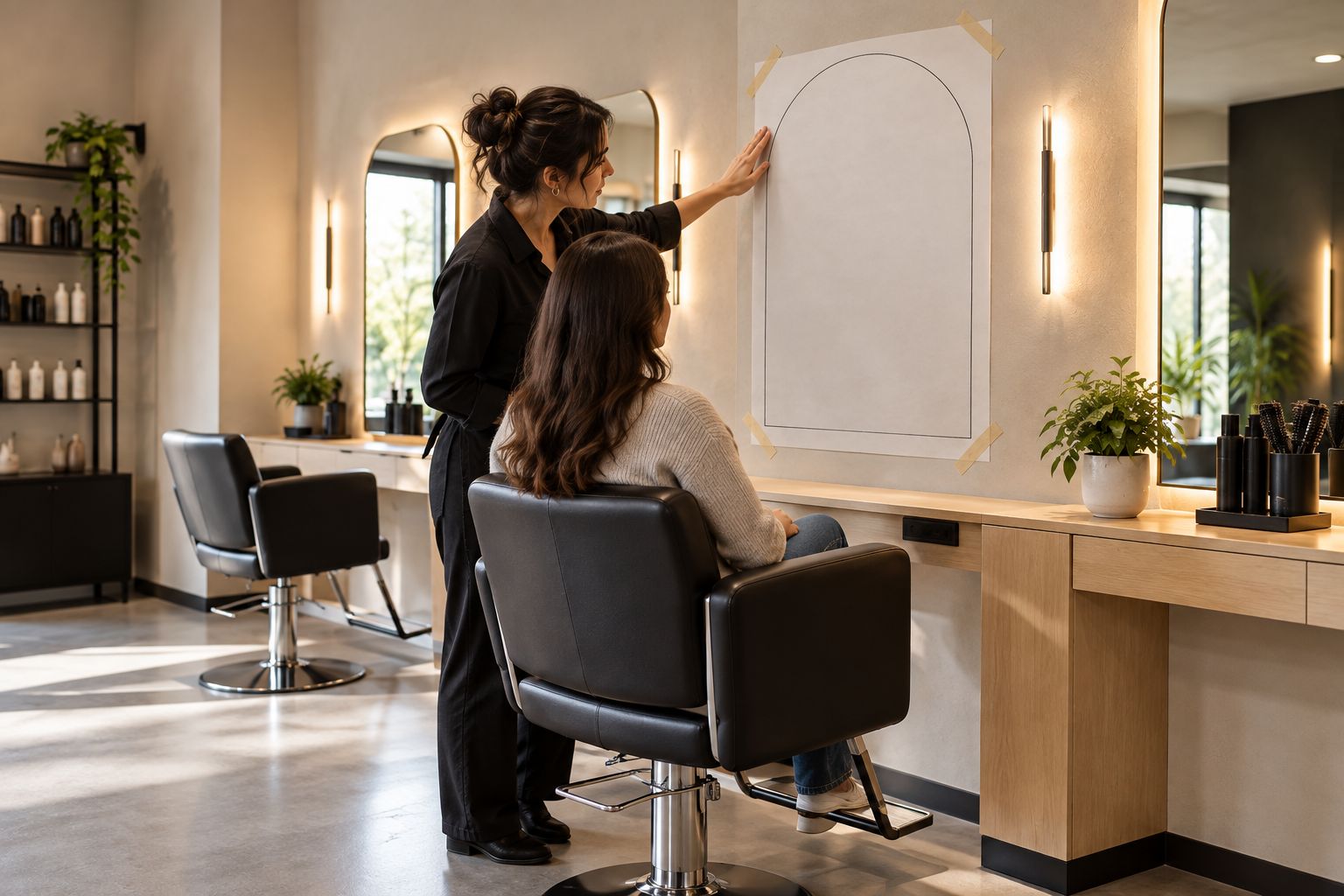
Use 1 full-size paper template per station before approving the mirror dimensions. Tape the outline to the wall and test it with the actual chair and counter. A small drawing cannot show whether a frame disappears behind a worktop or whether the upper edge interrupts a standing person's reflection.
Check 2 viewing positions: seated and standing. Ask a team member to perform the normal movements of a service while another person sits in the chair. Include the consultation position, not just the position used during cutting.
Start with this manual test. Once the outline works, a mirror fabricator or interior designer can turn the approved dimensions into a technical drawing. That drawing makes communication easier, but it does not replace testing the station in use.
- Outline the entire mirror, including its frame.
- Test the lowest useful seated sightline.
- Check the standing professional's reflection.
- Confirm clearance above the counter.
- Photograph the approved template for reference.
3. Test the lighting with the reflection
Use the existing lights to inspect the proposed station before selecting additional fittings. Look at the face, hair and background in the reflection. Check whether a visible lamp causes glare, whether overhead light leaves unwanted shadows, and whether daylight changes the appearance during your operating hours.
For your 2026 lighting brief, describe the task rather than requesting a fashionable lighting effect. A bright border can contribute to the room's appearance without solving uneven light across the client's face. Likewise, a clear reflection does not establish accurate color appearance under the room's lighting.
Ask a lighting professional or electrician to assess the proposed fittings and electrical work. Compare the mirror and lighting together rather than approving each from separate photographs.
- Inspect facial shadows from the client's position.
- Look for reflected lamps and bright windows.
- Review hair under the proposed working light.
- Test consultation and cutting positions.
- Confirm access to electrical components.
4. Choose a shape that supports the station
Sketch different outlines over your approved working area. Rectangular, round and arched mirrors create different boundaries around the reflection; the useful choice depends on what your station must show. Do not assume a larger decorative footprint provides a larger useful viewing area.
A round outline narrows toward its top and bottom. A rectangular outline keeps a consistent width. An arched outline changes the upper boundary. Test those differences against the hair lengths, client positions and counter arrangement recorded in your brief.
Bring the decorative scheme in now, after the usable reflection is established. Mercado da Imagem belongs in the art and wall-decoration brief; obtain mirror construction details from the supplier responsible for the mirror. Coordinating the room does not require treating every decorative element as a working tool.
- Compare outlines against the same station template.
- Keep essential sightlines inside the reflective area.
- Check whether the frame intrudes into that area.
- Repeat a shared alignment across neighboring stations.
- Assess nearby artwork from the client's viewpoint.
5. Confirm the glass, wall and mounting method
Inspect the proposed wall before authorizing fabrication. Note visible damage, moisture, uneven surfaces and existing fittings, then have a qualified installer establish the substrate and suitable fixing method. A wall's painted finish does not identify what is behind it.
For a 2026 installation brief, require written details covering the mirror construction, finished weight, edge treatment and proposed support. Where safety backing or a particular glass construction is proposed, ask what it does and which requirements apply to your location and installation.
Do not select fixings from appearance alone. The installer needs the actual mirror and wall information. Electrical work, unusually large pieces and difficult access also need coordination before the mirror arrives—not improvisation while staff are preparing for appointments.
- Ask the installer to identify the wall substrate.
- Obtain the finished mirror weight from the supplier.
- Confirm the specified support and fixing method.
- Request edge and backing details in writing.
- Identify concealed services before drilling.
- Agree who approves the completed installation.
6. Approve cleaning, access and handover
Walk through the cleaning routine before approving the final design. Identify where fingerprints, hair and product residue collect, then check whether staff can reach those areas without moving heavy furniture or touching electrical components. Deep frame profiles and awkward gaps add surfaces to maintain.
Use 3 sign-offs: dimensions, installation and handover. The first confirms what will be made, the second confirms how it will be supported, and the third checks the finished result. Keep these responsibilities named so a decorative approval is not mistaken for an installation approval.
For your 2026 handover, obtain care instructions for the actual mirror, backing and frame finish. Do not assume one cleaner suits every component. The supplier's instructions should also explain any restrictions around edges, joints and integrated lighting.
- Record the approved dimensions and frame finish.
- Keep mounting and electrical documentation together.
- Obtain cleaning instructions for each surface.
- Check access to serviceable components.
- Inspect the installed reflection from working positions.
- Record defects before accepting the handover.
Compare mirror options by the station's job
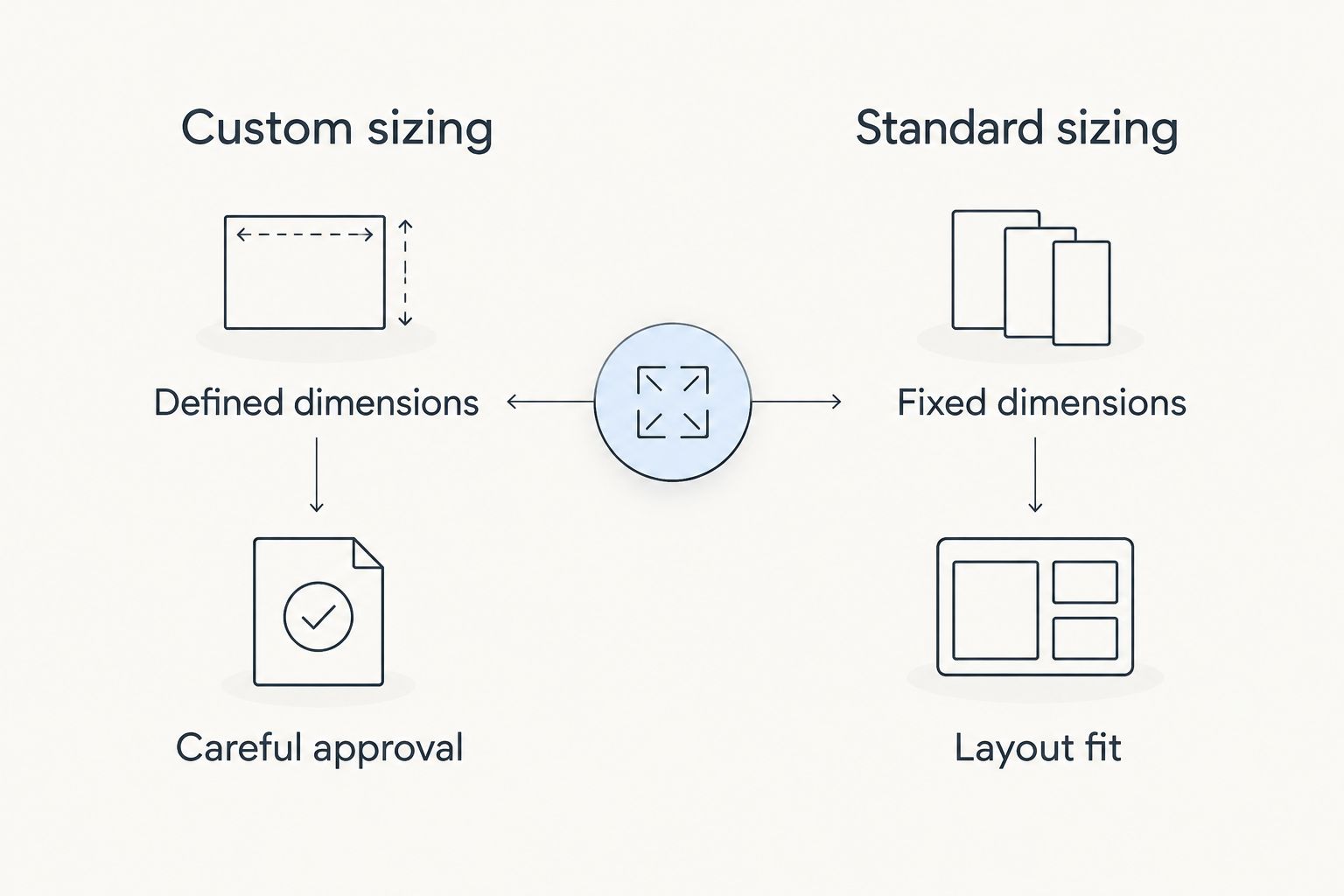
Use this comparison for your 2026 selection meeting. Custom sizing is useful when a specific fit solves a documented problem; it is not a substitute for checking reflection, lighting and installation. Compare the complete arrangement rather than the outline alone.
| Option | Best for | Main advantage | Key limitation |
|---|---|---|---|
| Custom rectangular mirror | Stations needing a defined viewing area | Dimensions can follow the approved station outline | Final dimensions need careful approval before fabrication |
| Custom round mirror | Stations where a circular outline passes the sightline test | Introduces a circular shape into the decorative scheme | Reflective width narrows toward the top and bottom |
| Custom arched mirror | Interiors using an arched upper outline | Combines straight sides with a curved top | The upper curve needs checking against standing sightlines |
| Standard-size wall mirror | Stations that already suit an existing size | Provides fixed dimensions to test against the layout | Furniture and sightlines must work within those dimensions |
| Mirror with integrated lighting | Stations planned around a combined mirror-and-light arrangement | Brings both components into the same specification | Requires electrical planning and access for maintenance |
Custom fabrication gives you control over the specified dimensions, but it also makes approval more consequential. A standard-size mirror limits dimensional choice, yet it remains a valid option when the actual station test succeeds.
Common mistakes salon and barbershop owners make
Choosing from an empty-room photograph
An empty station hides the interaction between the chair, client and professional. Recreate the working arrangement before approving the mirror, including the trolley and equipment your team actually uses.
Treating decorative lighting as task lighting
A lit edge is a design feature, not proof of useful illumination. Assess the client's face and hair under the proposed lighting rather than judging the fitting by its appearance in a photograph.
Matching every station without checking its users
A repeated frame can create visual consistency while the stations still need different positioning. Check consultation areas, cutting stations and any station intended for different access needs separately; verify applicable local requirements with the project professional.
Leaving the frame out of the dimensions
The reflective area and the overall framed dimensions are different measurements. State both in the approval documents so the frame does not reduce the intended sightline or interfere with nearby equipment.
Accepting an installation without care instructions
A finished appearance does not explain how to clean or maintain the assembly. Collect the relevant instructions and confirm who handles mounting, glass, frame and electrical issues before handover.
FAQ
What's the best mirror shape for a salon styling station?
The best mirror shape is the one that preserves the required seated and standing sightlines. Test the complete outline, including the frame, with the chair and counter in position before choosing between rectangular, round or arched designs.
Are custom mirrors better than standard mirrors for barbershops?
Custom mirrors are better when the station needs dimensions that a standard mirror does not provide. A standard-size mirror remains suitable when it passes the same sightline, lighting and installation checks.
How do I measure for a custom salon mirror?
Measure the proposed mirror area in relation to the chair, counter and surrounding fittings, then test a full-size paper outline. Have the supplier or installer confirm the final fabrication measurements and mounting requirements before approval.
Should a barbershop mirror have built-in lighting?
Built-in lighting is an option, not a requirement for a barbershop mirror. Evaluate the light on the client's face and hair, and confirm electrical access and maintenance arrangements before choosing an integrated design.
Can I install a large salon mirror myself?
Use a qualified installer for a large salon mirror so the wall, mirror weight and support method are assessed together. A decorative wall finish alone does not establish which fixings are suitable.
How should staff clean salon mirrors?
Staff should follow the supplier's instructions for the mirror, backing and frame finish. Confirm the cleaning method before handover, including any restrictions around edges, joints and electrical components.
Where does Mercado da Imagem fit into a salon project?
Mercado da Imagem fits the art and wall-decoration part of a salon project. Treat mirror construction, mounting and electrical requirements as a separate technical specification with the responsible suppliers and installers.
One last thing
Inspect what the mirror reflects behind the client. A mirror can give an excellent view of the haircut while also reflecting open storage, a distracting light or a busy circulation route.
Before final approval, sit in the chair and review the whole reflected scene. Fix the station and its background together—changing the mirror's outline alone will not remove an obstruction behind you.