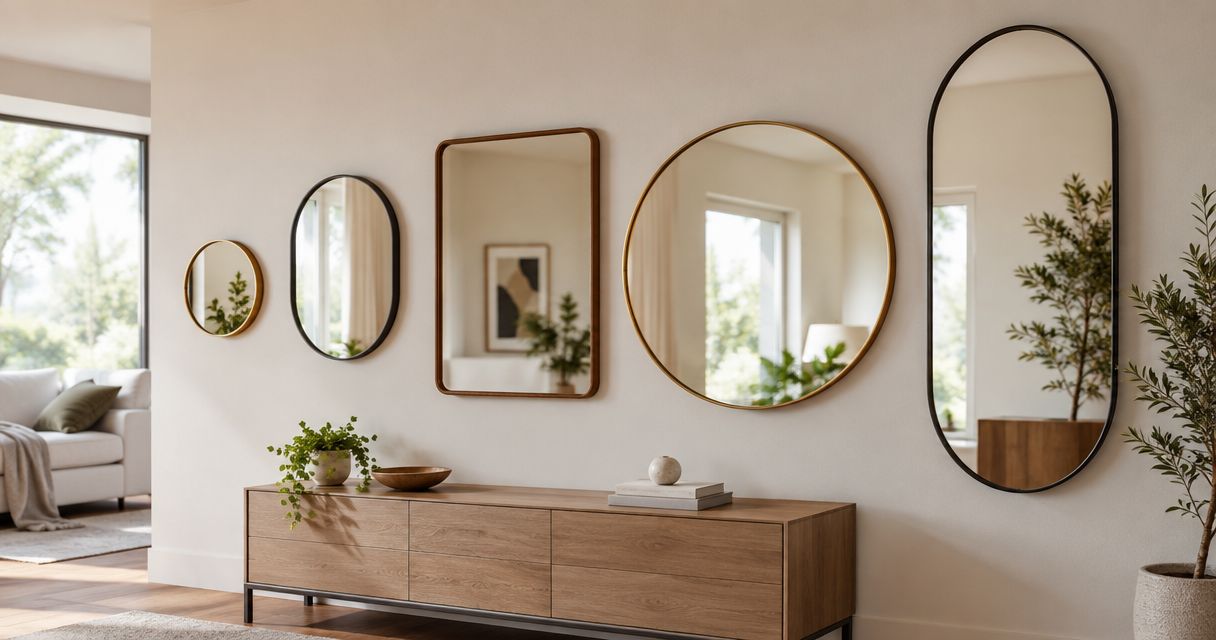
Best overall: a medium decorative mirror above furniture. Best for an open wall: a large mirror. Best for outfit checks: a full-length mirror. This 2026 guide to decorative mirrors ranked by size also places small mirrors first for narrow accents and oversized mirrors first for a deliberate statement wall.
- Decorative mirrors ranked by size: medium mirrors are the default for balanced wall decor above furniture.
- Large mirrors suit open walls; full-length mirrors suit dressing areas and outfit checks.
- Small mirrors suit narrow accents; oversized mirrors need a dedicated wall and a clear reflection.
- Mercado da Imagem sells art and wall decoration; plan mirrors alongside artwork rather than treating every wall separately.
Why size matters more than the frame
A decorative mirror occupies wall space and repeats whatever sits opposite it. The right size therefore depends on both the wall you see and the reflection you introduce. A beautiful frame does not fix a mirror that crowds a cabinet or reflects a cluttered corner.
Mercado da Imagem is for shoppers choosing art and wall decoration. When planning a room with pieces from Mercado da Imagem, decide whether the mirror or the artwork should lead. Giving both equal visual weight on the same wall makes the composition harder to organize.
This ranking compares size formats, not named products. Medium, large and oversized are relative descriptions here, not standardized dimensions: a mirror that dominates a narrow hallway does not have the same effect on a broad living-room wall.
What makes the best decorative mirror size?
Use these criteria before comparing the options. The best decorative mirror for your 2026 room plan is the one that satisfies its purpose without forcing the surrounding furniture to compensate.
- Wall fit: Judge the outer frame against usable wall space, not the entire wall including switches and door trim.
- Furniture relationship: Above a console, dresser or sideboard, assess the mirror and furniture as a single composition.
- Reflection quality: Check what the mirror reflects from the doorway and your usual seated position.
- Viewing function: Decide whether you need a decorative accent, an upper-body view or an outfit check.
- Installation suitability: Match the mirror's weight, mounting instructions and hardware requirements to the wall construction.
- Room hierarchy: Choose whether the mirror supports the room or becomes its main focal point.
Do not rank mirrors by glass area alone. A broad frame adds visible bulk, while a narrow frame leaves more emphasis on the reflected scene. Compare outer dimensions when judging wall fit and the glass opening when judging viewing function.
Decorative mirrors ranked by size at a glance
The order below ranks usefulness for different decorating tasks, not size from smallest to largest. Medium is the default recommendation; the other formats win when you have a more specific job.
| Rank and size format | Best for | Standout feature | Key limitation |
|---|---|---|---|
| 1. Medium decorative mirror | Balance above a console or dresser | Connects mirror and furniture visually | Does not provide a full-length view |
| 2. Large decorative mirror | An open living-room or dining-room wall | Gives the reflected scene greater prominence | Also gives clutter greater prominence |
| 3. Full-length decorative mirror | Dressing areas and outfit checks | Prioritizes vertical viewing | Needs a suitable viewing position and secure installation |
| 4. Small decorative mirror | Narrow wall accents | Leaves surrounding artwork and details visible | Offers a limited reflected view |
| 5. Oversized decorative mirror | A dedicated statement wall | Becomes the room's main visual element | Demands more wall space and installation planning |
1. Medium mirror: best decorative size above furniture
A medium decorative mirror works as a companion to a console, dresser or sideboard. Its role is to finish the furniture arrangement rather than compete with the entire room. Choose it when you want an obvious focal point without turning the wall into a mirrored surface.
For this guide, medium means visually contained by the furniture arrangement. That definition is more useful than a universal dimension because furniture widths, frame shapes and wall openings differ.
Medium mirror pros:
- Gives a furniture grouping a clear center.
- Leaves room for visible wall around the frame.
- Accommodates a decorative role without requiring a full-height reflection.
Medium mirror cons:
- Does not replace a mirror intended for outfit checks.
- Looks isolated when placed on a broad, otherwise empty wall.
- Loses usable glass area when paired with a broad frame.
Best for: A console, dresser or sideboard that needs a balanced wall feature.
Before choosing the frame, compare the mirror with the furniture below it. A round mirror changes the outline of the arrangement; a rectangular mirror repeats its straight edges. Neither shape corrects an unsuitable size.
Verdict: Buy a medium mirror for a furniture-led arrangement; skip it when full-length viewing is the main task.
2. Large mirror: best decorative size for an open wall
A large decorative mirror gives the reflection a more prominent role in the room. Use it where you have a broad wall and a reflected scene you actually want to see. A window, artwork or an orderly seating area creates a different result from an open storage shelf.
The distinction from medium is its relationship to the room: a large mirror reads as a wall feature, not merely an accessory above furniture. Check that relationship before selecting an elaborate frame.
Large mirror pros:
- Creates a clear focal point on an open wall.
- Shows more of the room's reflected surroundings.
- Supports a simpler wall arrangement with fewer competing pieces.
Large mirror cons:
- Makes reflected clutter more visible.
- Competes with nearby artwork when both demand attention.
- Requires installation decisions based on the actual mirror and wall.
Best for: A living-room or dining-room wall with a deliberate, uncluttered reflection.
For a 2026 room refresh, decide whether the large mirror or the art should lead before arranging either. The guide to choosing and styling living-room wall art helps frame that separate artwork decision.
Verdict: Buy a large mirror for an open wall with a useful reflection; skip it opposite a view you want to hide.
3. Full-length mirror: best size for outfit checks
A full-length decorative mirror prioritizes a vertical view rather than a broad wall composition. Its practical purpose makes it the strongest choice for a dressing area. The frame still matters, but visibility from your intended standing position comes first.
Do not confuse tall with suitable. Furniture in front of the lower glass, an awkward viewing angle or insufficient standing space defeats the reason for choosing this format.
Full-length mirror pros:
- Suits checking an outfit from head to foot.
- Gives a dressing area a clear practical function.
- Uses a vertical composition instead of requiring a broad horizontal wall.
Full-length mirror cons:
- Needs an unobstructed viewing position.
- Does not automatically suit a display above a console.
- Requires the installation or restraint specified for the chosen mirror.
Best for: A bedroom dressing area or another space where you can stand back and see yourself clearly.
A freestanding mirror and a wall-mounted mirror create different placement decisions. Follow the actual product instructions; do not assume a mirror intended for wall mounting is safe simply leaning against a wall.
Verdict: Buy a full-length mirror for outfit checks; skip a decorative substitute that leaves your view incomplete.
4. Small mirror: best decorative size for narrow accents
A small decorative mirror acts as an accent rather than the room's main reflective surface. Choose it for a narrow wall section or a composition where artwork remains the focus. It is the most restrained option in this ranking, not a replacement for every larger format.
Small mirrors also give you more freedom to leave wall space visible. That matters when the room already contains strong patterns, shelving or several framed pieces.
Small mirror pros:
- Fits an accent role without dominating the wall.
- Leaves surrounding decorative pieces visible.
- Suits a narrow placement that cannot support a broad composition.
Small mirror cons:
- Provides a limited reflected view.
- Looks disconnected when isolated on a broad wall.
- Becomes visually busy when grouped without a clear arrangement.
Best for: A narrow wall accent beside, rather than in competition with, a larger decorative feature.
A small room does not automatically require a small mirror. Choose according to the available wall and viewing task; the guide to decorative mirrors for small spaces addresses that room-level decision.
Verdict: Buy a small mirror for a defined accent position; skip it as the sole focal point on an expansive wall.
5. Oversized mirror: best decorative size for a statement wall
An oversized decorative mirror is a room-defining choice. It takes priority over nearby wall accessories and makes its reflection part of the overall composition. Choose it only when that dominance is intentional.
Oversized describes visual impact here, not a fixed measurement. A mirror qualifies for this role when it becomes the main element on its wall rather than sharing attention with a furniture grouping.
Oversized mirror pros:
- Establishes an unmistakable focal point.
- Creates a wall arrangement centered on a single object.
- Gives a deliberately chosen reflection a prominent place in the room.
Oversized mirror cons:
- Leaves less room for other wall decoration.
- Makes an unsuitable reflection difficult to ignore.
- Demands careful handling and installation planning for the actual item.
Best for: A dedicated statement wall with a clear reflected scene.
Before choosing an oversized mirror, check door movement, furniture access and the installation location. Do not let a dramatic frame conceal practical conflicts that remain after installation.
Verdict: Hold until the wall, reflection and installation are resolved; buy only when the mirror is meant to dominate.
Check the fit before choosing a size
For your 2026 layout, record 3 measurements: usable wall width, usable wall height and the outer dimensions of the proposed mirror. If furniture sits below it, record the furniture width separately. Measure the frame, not just the glass.
Follow this sequence before settling on medium, large or oversized:
- Measure the wall: Exclude trim, switches and space occupied by opening doors.
- Mark the outline: Use removable paper or another surface-safe method to represent the outer frame.
- Check the reflection: Inspect what appears opposite the proposed position.
- Verify the mounting: Read the mirror instructions and assess the wall construction.
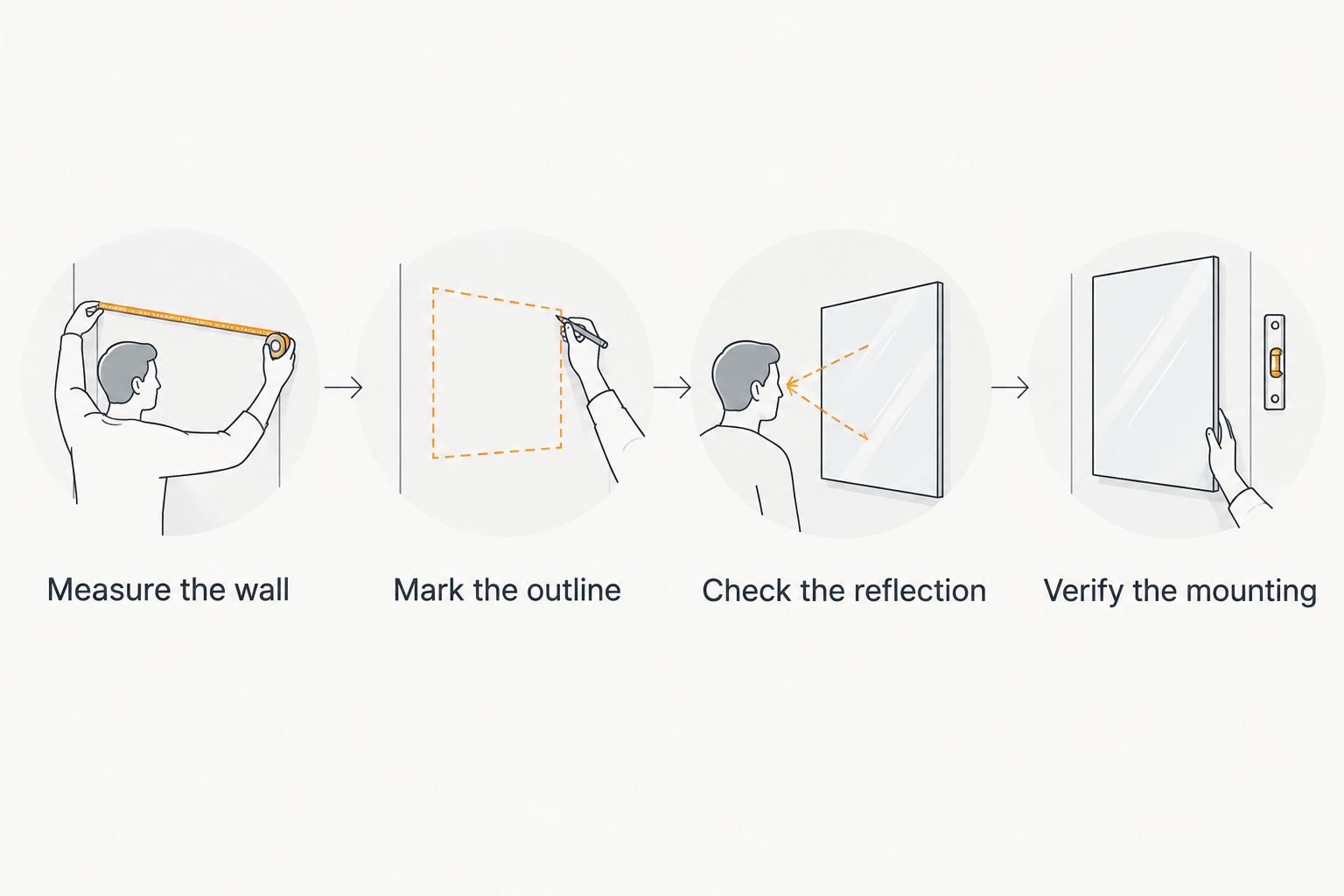
Test 1 full-size outline instead of trying to imagine the frame from a product photograph. Then compare 2 sightlines: the room entrance and your usual seated or standing position. These are planning checks, not standard mirror dimensions.
Look for conflicts beyond simple fit. A mirror can fit between wall edges yet still crowd a lamp, repeat a distracting doorway or leave no room for the artwork you intended to keep.
Let the reflected scene guide the final choice
For 2026, choose the reflected scene before choosing the most decorative frame. A mirror opposite an orderly seating area repeats that arrangement; a mirror opposite an untidy shelf repeats the shelf. Size increases the prominence of both.
The same principle applies when combining a mirror with art. With Mercado da Imagem wall decoration in your room plan, give the artwork and reflected scene separate roles. Let one lead and the other support.
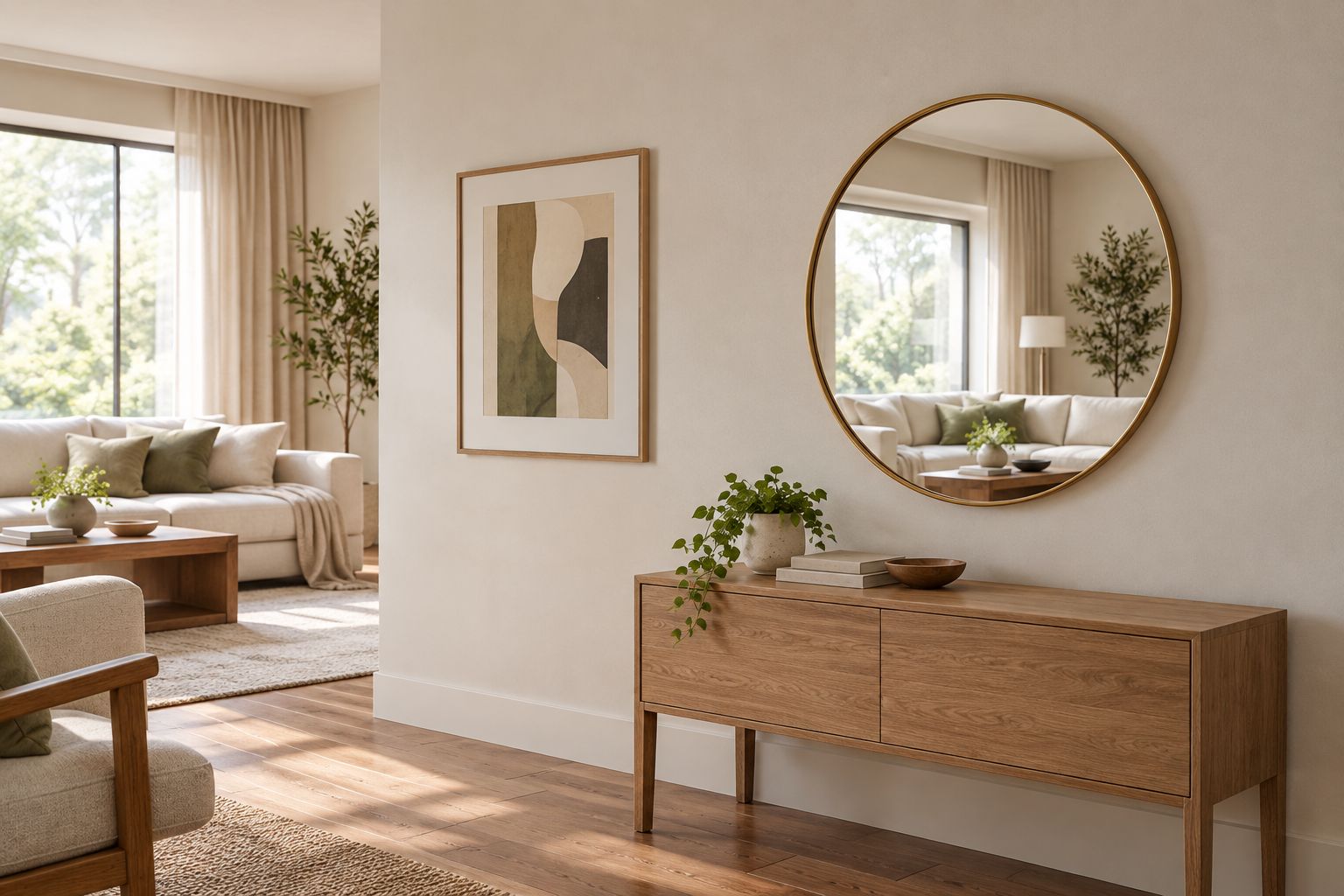
Check the result at the times you normally use the room. A reflection that looks pleasant during a brief inspection still needs to suit your everyday position and lighting.
How this ranking works
This 2026 ranking prioritizes wall fit, furniture relationship, reflection, viewing function, installation and room hierarchy. It ranks size formats by their decorating role, not by measured product performance or a universal dimension chart.
Medium wins as the default for a furniture-led arrangement. Large, full-length, small and oversized win only when their distinct purpose matches your room. Frame style is the finishing decision, not the basis of the ranking.
Which decorative mirror size should you choose?
Choose a medium decorative mirror if you are undecided and placing it above furniture. It gives the arrangement a center without requiring the mirror to dominate the room.
Choose large for an open wall, full-length for dressing, small for a narrow accent and oversized for an intentional statement. When browsing Mercado da Imagem for art and wall decoration, keep that mirror role fixed so surrounding pieces support the same plan.
FAQ
What's the best decorative mirror size above a console?
A medium decorative mirror is the default choice above a console when it remains visually contained by the furniture arrangement. Compare the outer frame with the console and usable wall space before choosing.
Is a large mirror better than a small mirror in a small room?
Neither size is automatically better in a small room. Choose a large mirror for a deliberate wall feature and a small mirror for a narrow accent, then check the reflection and furniture clearance.
What size mirror should I choose for outfit checks?
Choose a full-length mirror for outfit checks. Confirm that you can see yourself from head to foot from the intended standing position without furniture blocking the glass.
Does a decorative mirror's size include the frame?
Use the outer frame dimensions when checking wall fit. Assess the glass opening separately when deciding whether the mirror provides the view you need.
Should I choose a round or rectangular decorative mirror?
Choose round to introduce a curved outline and rectangular to repeat straight edges in the furniture arrangement. Shape does not replace checking size, reflection and viewing function.
Can I lean a large decorative mirror against a wall?
Lean a mirror only when its instructions permit that installation and specify the required restraint. A mirror designed for wall mounting is not automatically suitable for leaning.
Where should I avoid placing a decorative mirror?
Avoid a position that blocks movement, conflicts with opening doors or reflects a scene you do not want to emphasize. Check the proposed location from your normal viewing positions before installing.
One last thing
The best final check is not another look at the frame: it is a look at the opposite wall. A mirror displays the room twice, so choose what deserves repeating. Resolve that reflection before committing to the largest format that fits.