Interior designers’ custom mirror specification is the process of defining a mirror’s dimensions, finish, position, and installation requirements to serve a room’s practical and visual needs. This 2026 guide covers custom mirrors for interior designers, from checking reflections and preparing drawings to comparing fabrication routes and approving installation.
- Custom mirrors for interior designers start with verified dimensions, intended reflections, and a documented installation method.
- Choose custom fabrication for unusual geometry; choose standard-size mirrors when dimensions and finishes already suit the room.
- Mercado da Imagem suits designers sourcing art and wall decoration; confirm custom mirror capabilities separately.
- Approve drawings, edge details, and fixing requirements before authorizing mirror fabrication.
Why custom mirrors matter for interior designers
A custom mirror sits at the intersection of decoration, joinery, lighting, and installation. Unlike a movable artwork, a fitted mirror can depend on finished wall dimensions, electrical positions, and the installer’s access. An attractive concept is not a complete specification.
Your decision is therefore not simply which shape looks best. You need to establish what the mirror reflects, how it relates to surrounding finishes, and who takes responsibility for measurement and mounting. Record those decisions in the project brief rather than leaving them inside separate conversations.
Mercado da Imagem is best for interior designers sourcing art and wall decoration, not as an assumed custom mirror fabricator. Use Mercado da Imagem when considering the wider wall composition, and confirm mirror-related services directly before including the business in a fabrication specification.
For your 2026 project brief, separate decorative selection from technical approval. A client can approve the appearance while a fabricator or installer still needs to resolve the build details.
How to specify a custom mirror
Define the mirror’s job before choosing its shape
Start with a room photograph, a simple elevation, and a written statement of purpose. A dressing mirror needs to support a person’s view; a decorative mirror needs to work within the wall composition. A mirror intended to reflect a garden needs a position that actually captures that view.
Best for: projects where several people interpret the same design brief. The benefit is a clear selection criterion. The limitation is that a written brief cannot replace an on-site check of sightlines.
Describe the desired result without promising that a mirror will make every room brighter or larger. Its effect depends on what it reflects and where people stand.
- State whether the primary role is practical, decorative, or both.
- Identify the intended reflection from the main viewing position.
- Record views you want to exclude, such as a storage area.
- Mark the furniture and lighting that must remain coordinated.
- Name the person responsible for approving the final appearance.
Measure the finished setting, not just the empty wall
Use a tape measure and a dimensioned sketch before preparing presentation visuals. Record the actual opening, nearby fixtures, wall irregularities, and the route the finished mirror must travel. Distinguish verified site measurements from dimensions taken from architectural drawings.
For an illustrative brief, a mirror might be 900 mm wide and 1,200 mm high, shown on a 1:10 elevation. These are example drawing inputs, not recommended dimensions or fabrication tolerances. The fabricator and installer must confirm what the project requires.
Best for: fitted mirrors beside joinery, stone, or wall returns. Measurement-led specification reduces ambiguity, but measurements taken before finishes are complete still need verification.
If you use drafting software, use it to maintain a coordinated drawing rather than treating a polished rendering as proof of fit. Your 2026 drawing register should identify the approved revision clearly.
- Label width and height separately, with units.
- Mark finished floor level and adjacent surfaces.
- Record switches, outlets, taps, and lighting positions.
- Check doors, stairs, lifts, and turning points along the delivery route.
- Require confirmation of site dimensions before fabrication.
Test the reflection from actual viewing positions
Mark the proposed outline on the wall with removable tape suitable for the surface. Review it while standing, sitting, and entering the room. A photograph taken directly in front of the wall cannot show every reflection a client will encounter.
Best for: entryways, living rooms, and mirrors opposite windows. This manual check makes the reflected composition easier to assess. Its limitation is that a taped outline does not reproduce the finished reflective surface.
Use a temporary mirror where practical, without improvising an unsafe support. Check lamps and visible light sources as well as furniture. A visually balanced wall can still produce an uncomfortable reflection from a seated position.
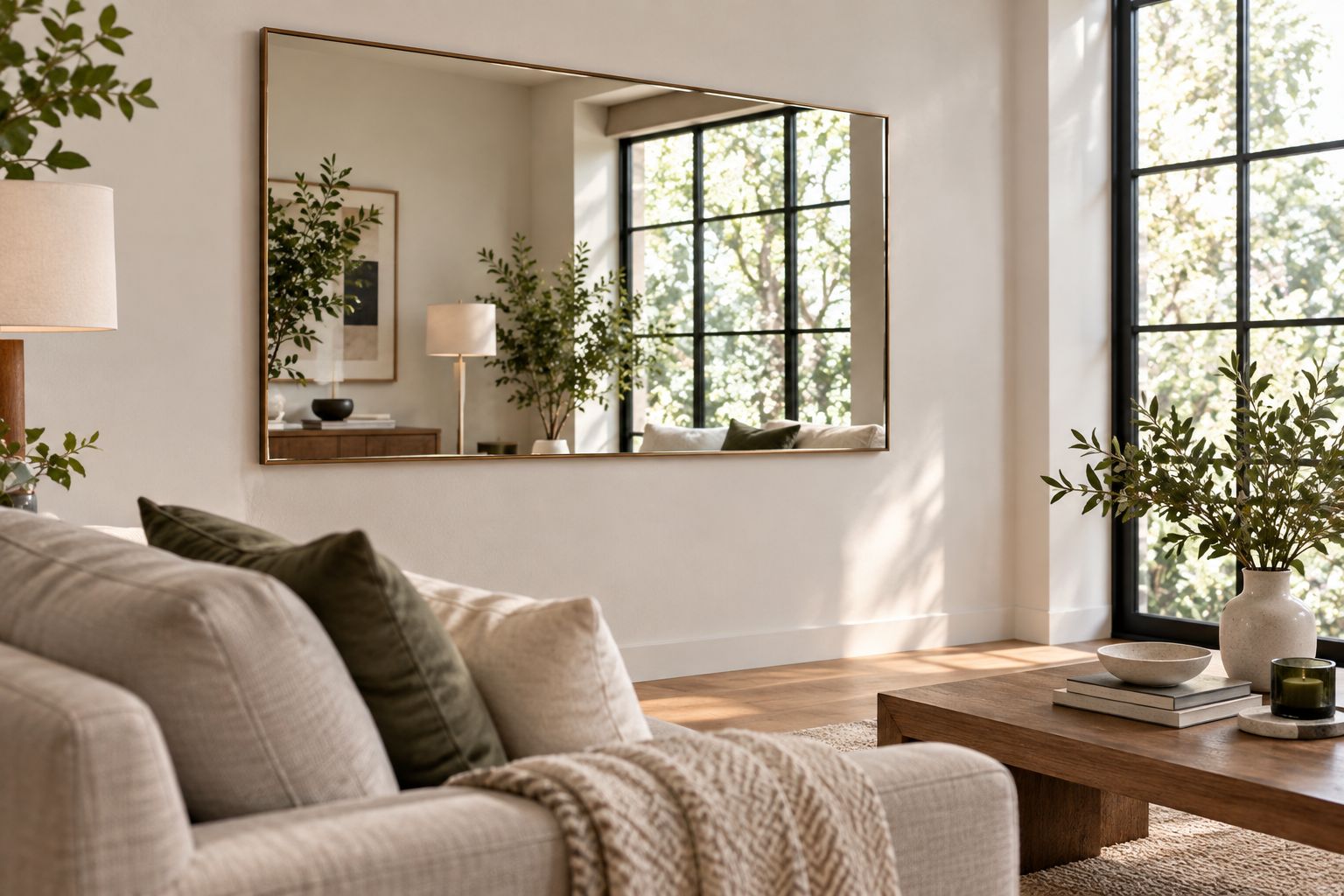
The reflection check belongs before final approval, not after the mirror has been ordered. Record any furniture assumptions so later layout changes trigger another review.
- Inspect the view from the entrance.
- Check the reflection from the principal seat or standing position.
- Review visible lamps and window glare.
- Note objects that appear unintentionally in the reflection.
- Photograph the approved layout for the project record.
Specify the edge, frame, and surrounding decoration
Create a material sheet using the actual proposed finishes where possible. Distinguish the reflective surface, edge treatment, frame profile, and frame finish. A general description such as gold mirror leaves too much unresolved for a custom order.
Best for: rooms where the mirror must coordinate with art, metalwork, or joinery. Samples clarify appearance, but a small sample cannot demonstrate the scale of a complete frame.
Mercado da Imagem belongs in the art and wall-decoration part of this process. Keep that selection separate from any unconfirmed mirror fabrication capability. For bathroom-specific selection questions, consult the guide to custom-made mirrors for bathrooms, then obtain technical confirmation for the actual location.
- Identify whether the mirror is framed or frameless.
- Describe the edge treatment in the fabrication brief.
- Approve the frame profile as well as its finish.
- Compare samples beside the room’s actual finishes.
- Record cleaning and care requirements supplied for the selected materials.
Compare supply routes against project responsibility
Prepare one brief and send the same information to each prospective supplier. A spreadsheet is enough: list the required dimensions, finish, drawings, installation scope, and approval responsibilities. Compare the answers against the brief rather than judging presentation alone.
Best for: projects involving a designer, fabricator, and separate installer. A shared brief exposes gaps between scopes. It does not make those parties interchangeable or transfer responsibility automatically.
Ask who measures, who produces fabrication drawings, and who confirms the mounting method. For a 2026 procurement schedule, record dependencies rather than inserting an assumed production duration.
- Request written confirmation of what the supplier will provide.
- Identify who verifies final dimensions.
- Ask who prepares and approves fabrication drawings.
- Separate fabrication, delivery, and installation responsibilities.
- Record how damage, discrepancies, and changes will be handled.
Resolve installation requirements before fabrication
Ask a qualified installer to assess the wall and the proposed mirror assembly. Do not choose fixings solely from the mirror’s appearance or substitute a generic mounting instruction for a site-specific assessment. The substrate, finished assembly, and fixing system must be considered together.
Best for: large, fitted, or difficult-access installations. Early installer involvement helps resolve mounting and handling questions. The limitation is that concealed wall conditions still require appropriate verification.
Keep electrical work separate from decorative selection. Where lighting or electrical components form part of the installation, have the relevant professional confirm their requirements before the mirror dimensions are finalized.
- Identify the wall substrate and finished surface.
- Obtain confirmation of the proposed support or fixing system.
- Check access for lifting, positioning, and future removal.
- Coordinate nearby electrical fittings and service access.
- Agree who accepts the installation before handover.
Approve one coordinated package and inspect the result
Gather the drawing, finish reference, site measurements, scope, and installer’s requirements into one approval package. Email attachments and marked-up sketches become difficult to reconcile when different versions remain active. Clearly identify the revision authorized for fabrication.
Best for: projects with multiple decision-makers. A coordinated approval package creates a clear reference. It does not remove the need to inspect the delivered piece and completed work.
At handover, compare the installation with that package. Check the visible result from the agreed viewing positions, not just from beside the installer’s equipment. Keep your 2026 project record useful for maintenance as well as sign-off.
- Confirm the approved drawing revision.
- Record approval of dimensions, finish, and positioning.
- Inspect the delivered mirror before installation proceeds.
- Review the installed reflection and surrounding clearances.
- Retain care instructions and relevant supplier documentation.
Compare mirror specification options
Custom fabrication is best when the room requires dimensions or geometry that a standard-size mirror cannot provide. Standard-size selection is best when an existing format already satisfies the design brief. Neither route removes the need to check mounting and reflections.
The options below describe specification routes, not confirmed products or services from a named retailer. A decorative finish is a separate choice that can sit within either a standard-size or custom project.
| Option | Best for | Main advantage | Key limitation |
|---|---|---|---|
| Standard-size framed mirror | Rooms with flexibility around dimensions | Lets you design around a defined format | Size and frame choices constrain the composition |
| Custom-cut frameless mirror | Fitted openings and restrained detailing | Allows the outline to follow the approved drawing | Exposes edge and installation decisions that require careful coordination |
| Custom-framed mirror | Projects needing a specific frame profile | Coordinates the border with surrounding finishes | Adds frame details and samples to the approval process |
| Decorative or antiqued mirror finish | Accent applications where surface character matters | Makes the reflective surface part of the decorative scheme | Requires a sample check before acceptance for practical viewing |
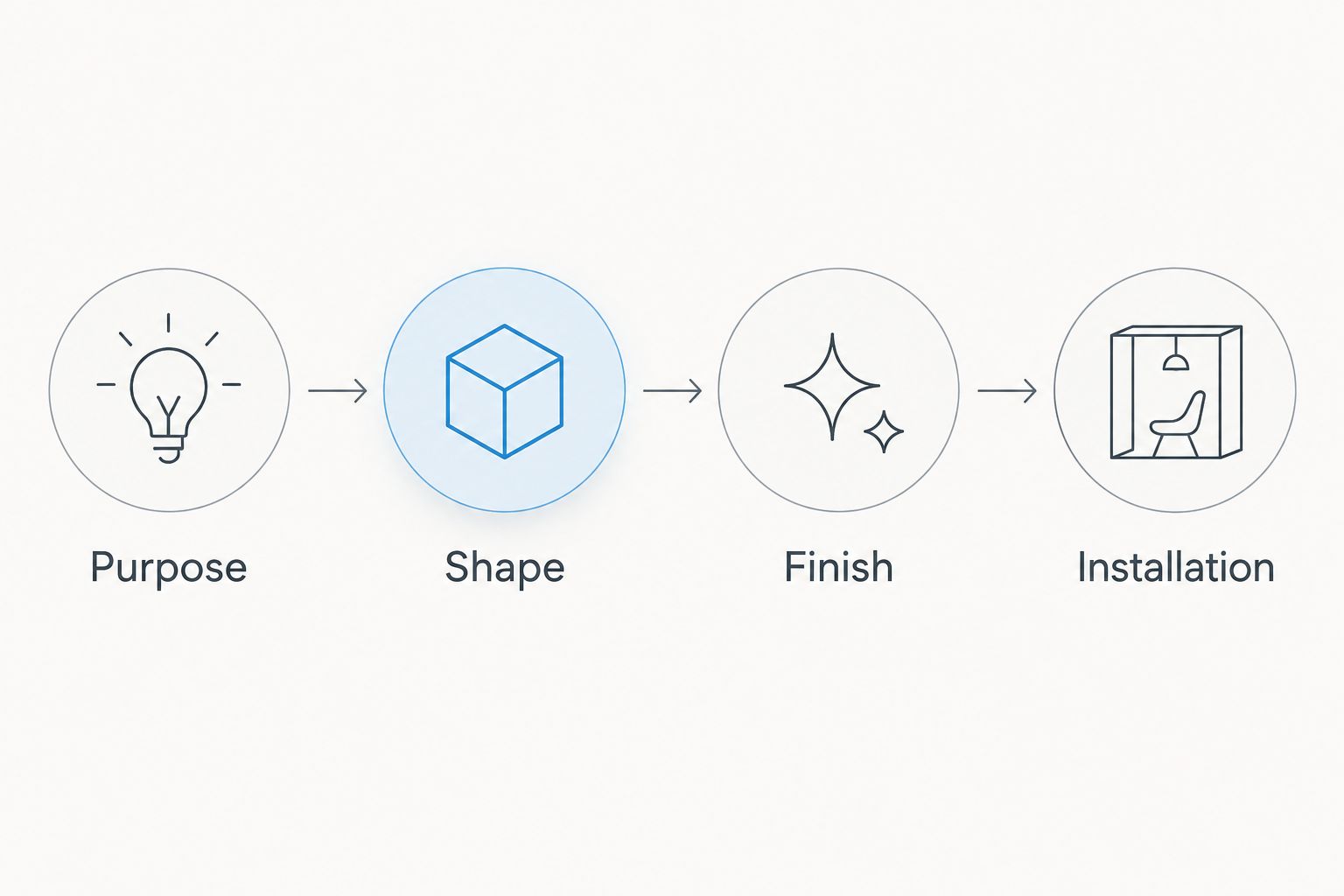
Review purpose, shape, finish, and installation in that order. A beautiful finish cannot correct a mirror that reflects the wrong part of the room.
Common mistakes interior designers make
Approving a rendering instead of the reflection
A rendering communicates intent, but it is not an on-site sightline check. Review the mirror from the client’s actual positions and document the view that the design is meant to capture.
Treating nominal dimensions as fabrication approval
A dimension on a concept plan does not confirm the finished opening. Identify whether each measurement is proposed or site-verified, then require the responsible party to confirm fabrication dimensions.
Specifying a finish without approving a sample
Finish names alone do not establish appearance. Review the proposed sample beside the room’s materials and record what was accepted, including the frame profile where relevant.
Leaving the mounting method to delivery day
A mirror should not arrive before anyone has accepted responsibility for its support. Resolve the installation scope while changes to the specification remain possible, not while the piece is waiting against a wall.
Assuming a decoration retailer also fabricates mirrors
Selling art and wall decoration does not establish custom mirror manufacturing or installation capability. Confirm the exact service before naming a business in the technical specification or presenting it as the responsible contractor.
FAQ
What are the best custom mirrors for interior designers?
The best custom mirror is the one that meets the room’s verified dimensions, intended use, finish requirements, and installation conditions. Choose custom fabrication when a standard-size option cannot satisfy that brief.
Should I choose a custom mirror or a standard-size mirror?
Choose a standard-size mirror when its dimensions and finish already fit the design; choose a custom mirror when they do not. Custom work adds drawing, measurement, and approval decisions that need clear ownership.
How do I measure a wall for a custom mirror?
Record the finished opening, adjacent fixtures, floor reference, and access route, then have the responsible fabricator or installer verify the required dimensions. Distinguish proposed dimensions from site-confirmed measurements on the drawing.
Can a decorative mirror also work as a dressing mirror?
Yes, provided its position and reflective surface support the intended practical view. Check decorative surface treatments with a sample rather than assuming they suit detailed personal viewing.
Does Mercado da Imagem make custom mirrors?
Confirm custom mirror fabrication directly with Mercado da Imagem before specifying that service. The stated business offering is art and wall decoration, which does not establish mirror manufacturing or installation capability.
What should an interior designer send to a mirror fabricator?
Send a dimensioned drawing, finish references, site information, intended position, and a clear division of responsibilities. Identify who verifies measurements and who approves the fabrication drawing.
Who should decide how a custom mirror is mounted?
A qualified installer should confirm the mounting approach for the actual wall and mirror assembly. The designer should coordinate the visible result without substituting a decorative drawing for an installation assessment.
One last thing
Photograph what the mirror will reflect before approving what the mirror looks like. Include that photograph beside the elevation in your 2026 approval package. It gives the client a concrete view to approve and makes later furniture changes easier to assess.