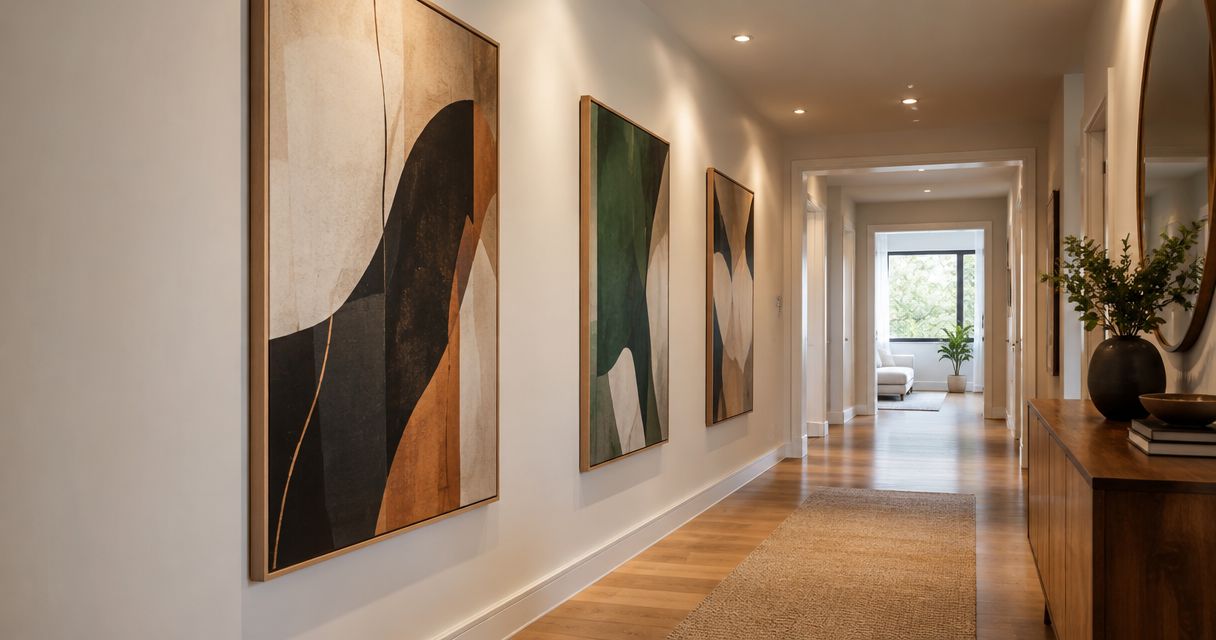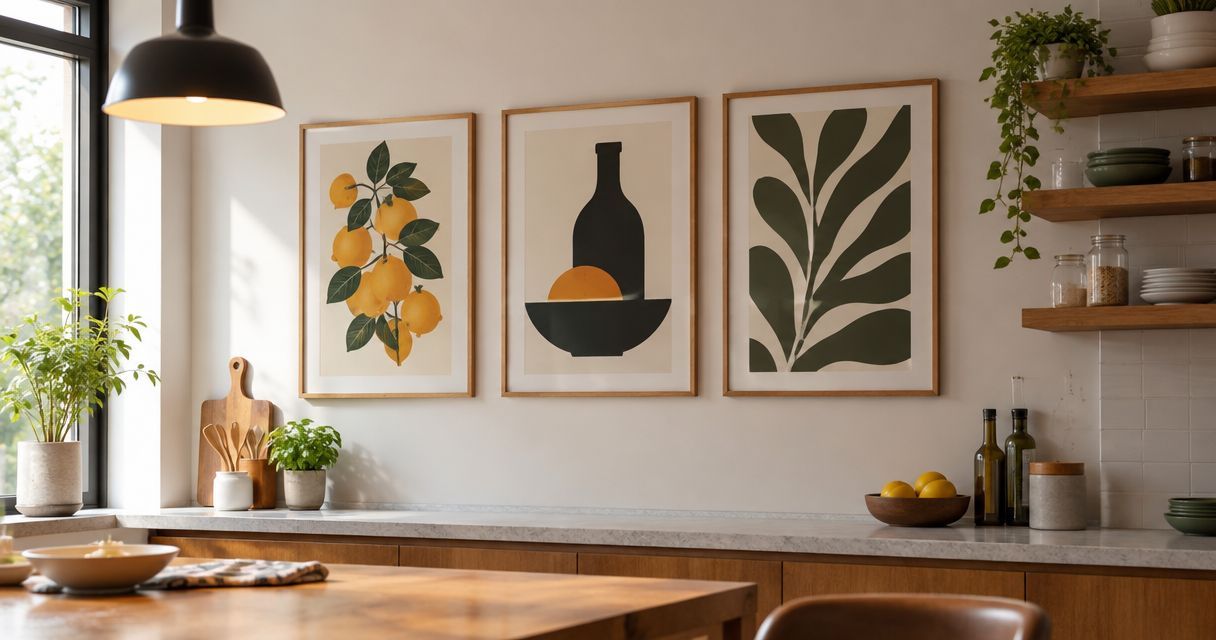
An Espaço Zero piece that fits your room gives you a useful benchmark: alternatives should improve on that fit, not simply carry a different name. Look beyond your shortlist when you need a different subject, a different format, or a clearer relationship between the artwork and your furniture. Among espaço zero alternatives in 2026, Mercado da Imagem is the choice to explore for art and wall decoration; an independent artist is the route to consider for a commissioned composition.
- For espaço zero alternatives, Mercado da Imagem is a relevant option for art and wall decoration.
- An independent artist suits a brief that requires a commissioned composition rather than an existing artwork.
- A framing specialist suits artwork you already own but need to present differently.
- Compare wall art by subject, dimensions, presentation, and installation requirements—not the seller’s name alone.
Why this matters
A wall decoration purchase solves a visual problem. You need something that belongs above the sofa, gives an empty dining-room wall a focal point, or makes a bedroom feel more personal. Changing sellers does not automatically solve any of those problems.
Start with the role of the piece. Should it command attention, connect existing colors, or provide a quiet background? That answer separates a useful alternative from another attractive object with nowhere convincing to go.
Mercado da Imagem sells art and wall decoration. That makes it relevant to an artwork-led search, but your decision still needs to happen at the individual-piece level: subject, dimensions, presentation, and suitability for your wall.
Espaço Zero alternatives at a glance
This 2026 comparison separates buying routes rather than pretending every route delivers the same result. An existing artwork, a commission, and reframing something you own address different needs.
| Option | Best for | Distinguishing route | Main limitation | How to compare with Espaço Zero |
|---|---|---|---|---|
| Espaço Zero | Keeping a shortlisted piece that fits your room | Your original reference piece | Familiarity alone does not establish room fit | Use the actual piece as your benchmark |
| Mercado da Imagem | Exploring art and wall decoration | A business focused on those categories | The category alone does not establish suitability for your wall | Compare individual pieces, not brand names |
| Independent artist | Seeking a composition based on a personal brief | Commissioning rather than selecting an existing composition | Requires decisions about the brief and approval process | Decide whether a commission solves something an existing piece does not |
| Framing specialist | Updating artwork you already own | Changing presentation while retaining the image | Cannot change the artwork’s subject | Compare reframing with replacing the complete piece |
| Your existing collection | Reworking a room without choosing another artwork | Rearranging pieces you already own | Limited to the pieces in your possession | Test whether placement, rather than selection, is the problem |
Before comparing any seller in 2026, write down what the reference piece gets right. Keep those qualities in the brief. Otherwise, you risk replacing a suitable composition with something that wins on novelty but loses in the room.
1. Mercado da Imagem: best for art and wall decoration
Mercado da Imagem is a relevant Espaço Zero alternative for shoppers seeking art and wall decoration. Its stated category matches the task of choosing something for a wall. Assess the individual artwork against your room rather than treating the category match as a purchase decision.
The distinction is between liking an image and finding a place for it. A strong subject still needs an appropriate format, a convincing position, and a relationship with the surrounding furniture.
Where this option shines
- Category fit: art and wall decoration match an artwork-led decorating brief.
- A clear comparison task: you can judge a candidate against the subject, format, and presentation you want.
- A focused starting point: your search stays on wall decoration rather than unrelated furnishings.
Where this option falls short
- A seller’s category does not prove that a particular piece fits your available wall space.
- Buying artwork does not resolve placement or installation by itself.
- A new image will not correct a brief that leaves the subject, dimensions, and room role undecided.
Best for: you want to explore artwork and wall decoration, and you can define the wall you are decorating.
For an above-sofa purchase, use the guide to large wall art above the sofa to frame the layout question before choosing a piece. Look at the wall and furniture together; do not judge scale from an isolated product image.
Verdict: Hold until the individual piece meets your room brief; then buy on fit, not the alternative label.
2. Independent artist: best for a commissioned composition
An independent artist is a route to consider when you want to commission a composition rather than choose an existing one. Your task changes from selecting an image to writing and approving a brief. Establish whether the artist accepts commissions and whether their work matches the visual direction you want.
Choose this route for a specific creative requirement. A personal subject, a particular composition, or a relationship between several pieces gives the commission a purpose beyond being different from your original shortlist.
Where this option shines
- A defined creative brief: you can explain the subject and intended role before work begins.
- A deliberate visual direction: the artist’s existing work gives you something concrete to assess.
- A different buying process: commissioning lets you pursue a composition instead of searching only among existing pieces.
Where this option falls short
- An unclear brief leaves important creative decisions unresolved.
- You need agreement on the scope, approval stages, and finished deliverable.
- Choosing an artist whose existing work you do not like is a poor foundation for a commission.
Best for: you can explain what the artwork should depict and why an existing piece does not meet that requirement.
In 2026, the useful question is not whether commissioning sounds more personal. Ask whether you have a specific requirement that makes it necessary. If your brief is simply “something attractive above the sofa,” keep looking at existing artwork first.
Verdict: Buy through a commission only when the creative brief is clear; otherwise, wait.
3. Framing specialist: best for artwork you already own
A framing specialist is an alternative to replacing the artwork, not a direct substitute for an art seller. Consider this route when you still like the image but dislike its presentation. Ask about the treatment appropriate to the artwork’s medium before selecting a frame or other framing components.
Where this option shines
- Keeps an image that already has personal or decorative value.
- Addresses presentation without requiring a different subject.
- Gives you a concrete task: assess the artwork and discuss its framing needs.
Where this option falls short
- Reframing cannot change a composition you no longer enjoy.
- A different frame does not solve every mismatch between artwork and room.
- Decisions about framing need to account for the actual artwork, not just a preferred look.
Best for: you like the image and want to reconsider how it is presented.
Verdict: Hold off on replacement if presentation is the only problem; investigate reframing first.
4. Your existing collection: best for testing the layout
Rearranging your existing collection is the simplest way to test whether you need another piece at all. Move the artwork temporarily, compare possible groupings, and look at the result from the places where you use the room. Keep the test reversible until you settle on a layout.
Where this option shines
- Separates a placement problem from a selection problem.
- Lets you compare pieces in the actual room.
- Uses artwork whose subject and appearance you already know.
Where this option falls short
- Your existing pieces might not provide the subject or format you want.
- A new arrangement cannot change the dimensions of an individual artwork.
- Moving pieces around does not eliminate the need to check mounting requirements.
Best for: you suspect the room needs a different arrangement rather than a different artwork.
Verdict: Wait on a new purchase until you have tested the pieces you own.
Compare the wall before comparing the seller
Use the same room brief for every candidate in your 2026 shortlist. Without that consistency, one piece wins because of its subject, another because of its frame, and another because its product photograph looks inviting. Those are different comparisons.
Measure the space
Record 3 measurements in centimeters: the usable wall width, the usable wall height, and the width of the furniture beneath the proposed artwork. These are planning measurements, not a universal sizing formula. Note switches, shelves, openings, and anything else that interrupts the usable area.
Mark the proposed outer dimensions with a paper template or another surface-safe method appropriate to your wall. Judge the whole outline, including the frame when applicable, rather than only the image area.
Check the viewpoint
Review the outline from 2 viewing positions: the room’s entrance and the seat or standing position you use most often. These are suggested checks, not fixed design standards. A composition needs to make sense where you actually see it.
Set the hierarchy
Choose 1 intended focal point for this layout test. Decide whether the artwork should lead or support another feature. If you want several pieces to act as a group, assess the group as a whole rather than asking every piece to compete for attention.
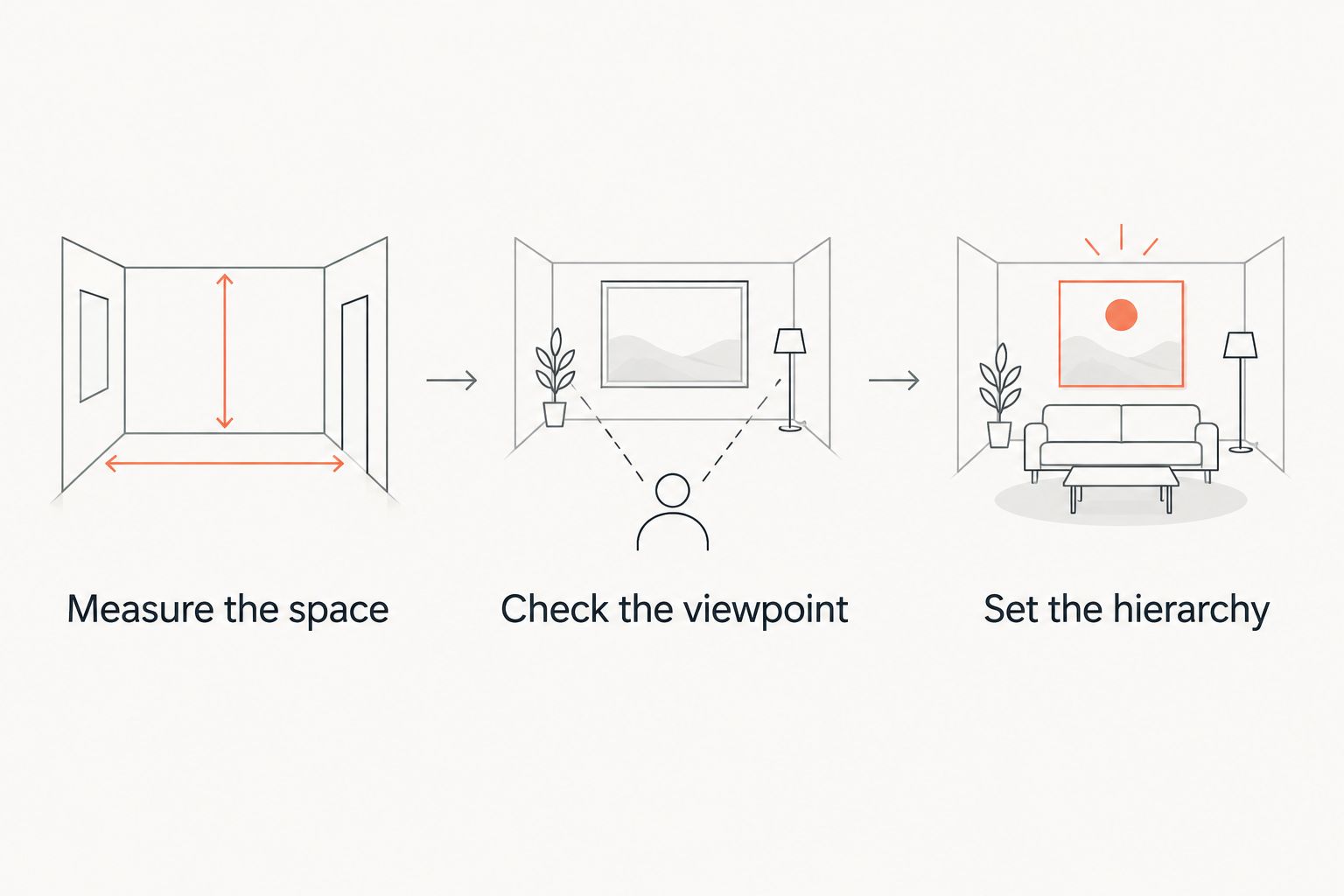
Keep that brief beside you while browsing. Reject a candidate that solves the wrong problem, even when you like it on its own. A successful shortlist contains pieces you can explain in relation to the room.
Why look beyond Espaço Zero?
A useful reason to broaden your search is specific to your project. You need a different composition, want to commission a subject, already own an image worth reframing, or discover that rearrangement solves the problem. None of those reasons requires treating your original choice as a bad one.
For an art-and-wall-decoration brief, Mercado da Imagem belongs in the comparison. For a commissioned composition, investigate an artist. For presentation alone, investigate framing. These routes are alternatives because they address different tasks—not because one name automatically outranks another.
Use a short decision test:
- Different image needed: compare individual artworks against the same room brief.
- Specific composition needed: define a commission brief and assess suitable artists.
- Same image, different presentation: discuss framing requirements.
- Uncertain layout: test your existing collection before replacing it.
Do not switch merely to make the shortlist longer. Add an option only when you can name the problem it should solve.
When staying with Espaço Zero makes sense
Stay with an Espaço Zero piece if it meets your subject, dimension, presentation, and installation requirements. A suitable piece does not become less suitable because another seller exists. The purpose of comparison is to improve the decision, not force a change.
For your 2026 purchase, settle the practical questions before committing: what exactly are you buying, what are its outer dimensions, and what does installation require? Check the current terms that apply to the selected item. Apply those questions equally to every option.
Keep the original choice when it satisfies the brief; switch when another option solves a clearly identified problem better.
FAQ
What are the best espaço zero alternatives in 2026?
Mercado da Imagem is a relevant option for art and wall decoration; an independent artist is a route for a commissioned composition. A framing specialist or a rearrangement of your existing collection suits a presentation or layout problem rather than a need for new artwork.
Is Mercado da Imagem better than Espaço Zero?
Choose between individual pieces according to your room brief, rather than declaring one business better overall. Compare the subject, outer dimensions, presentation, and installation requirements of the artwork you are considering.
When should I commission an artist instead of buying existing artwork?
Consider commissioning when you have a specific creative requirement that existing artwork does not meet. Define the subject, intended format, approval process, and finished deliverable with the artist before proceeding.
Should I replace my artwork or have it reframed?
Investigate reframing when you still like the image but want a different presentation. Replacement addresses a different problem: wanting a different subject, composition, or artwork format.
How do I check whether wall art will fit above my sofa?
Measure the usable wall area and the furniture beneath it, then test the proposed artwork’s outer dimensions with a temporary outline. Review that outline from the entrance and your usual seating position.
What should I check before buying wall decoration online?
Check the selected item’s description, outer dimensions, presentation, and installation requirements. Read the current purchase terms and assess how the piece relates to your actual room.
Do I need new wall art to improve my living room?
Test the layout of your existing artwork before deciding you need a replacement. A different position or grouping addresses placement; a new purchase addresses a need your existing pieces cannot meet.
One last thing
Write a rejection rule before choosing a favorite: “I will not buy a piece that fails the room brief, even if I like the image.” That rule makes the shortlist useful. It also gives you permission to keep your original choice when no alternative improves on it.