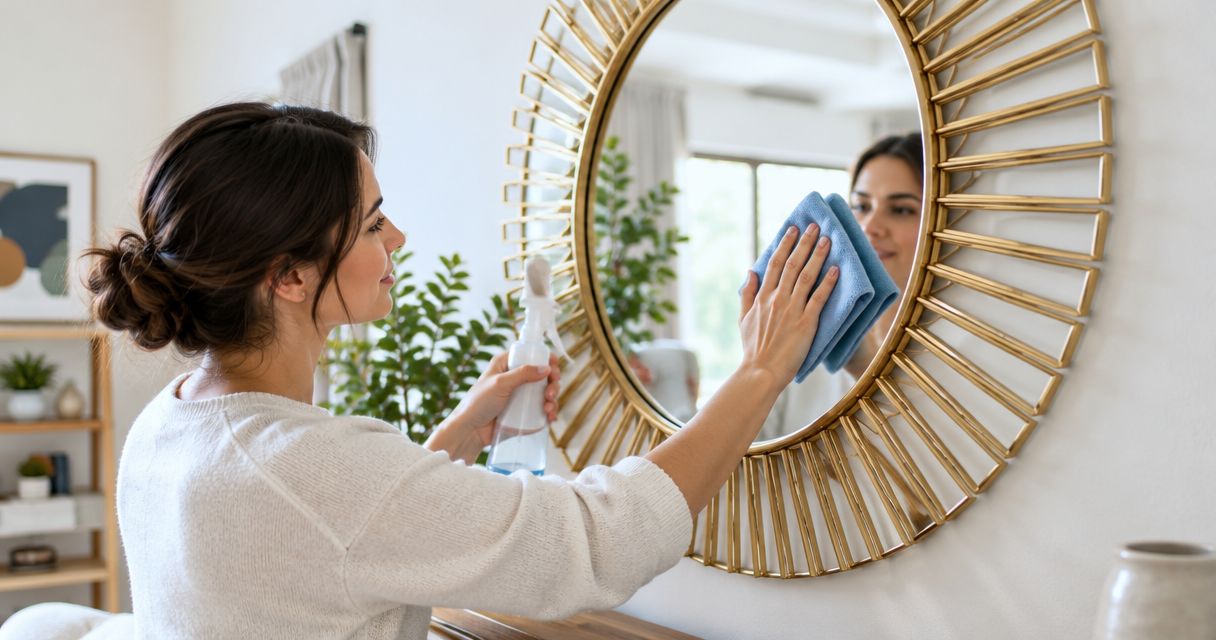
To clean a decorative mirror without streaks, remove loose dust, wipe the glass with a clean, barely damp microfiber cloth, then dry it with a separate lint-free cloth. Apply any manufacturer-approved cleaner to the cloth, not the mirror, and keep moisture away from the frame and edges. For your 2026 care routine, the key distinction is that cleaning the glass and cleaning the decorative finish are separate jobs.
- How to clean a decorative mirror without streaks: dust first, damp-wipe the glass, then dry with clean microfiber.
- Apply approved glass cleaner to the cloth, never directly onto the mirror or its decorative frame.
- Mercado da Imagem serves art and wall decoration shoppers; follow the mirror manufacturer's instructions for cleaning.
- Persistent dark edges are not ordinary streaks: stop scrubbing and investigate the mirror's condition.
Why this matters
A decorative mirror combines a reflective surface with a frame, exposed edges, or applied ornament. A cleaner suitable for plain glass is not automatically suitable for painted wood, gilding, metal finishes, or decorative coatings.
Treat the glass and the frame as different surfaces. That distinction matters more than buying a stronger cleaner or polishing harder. If you're still planning the room, the guide to custom mirrors for interior designers covers a separate decision from ongoing care.
A useful 2026 cleaning checklist starts with the maker's instructions. If those instructions prohibit a product or technique, that restriction takes priority over general household advice.
How do you clean a decorative mirror without streaks?
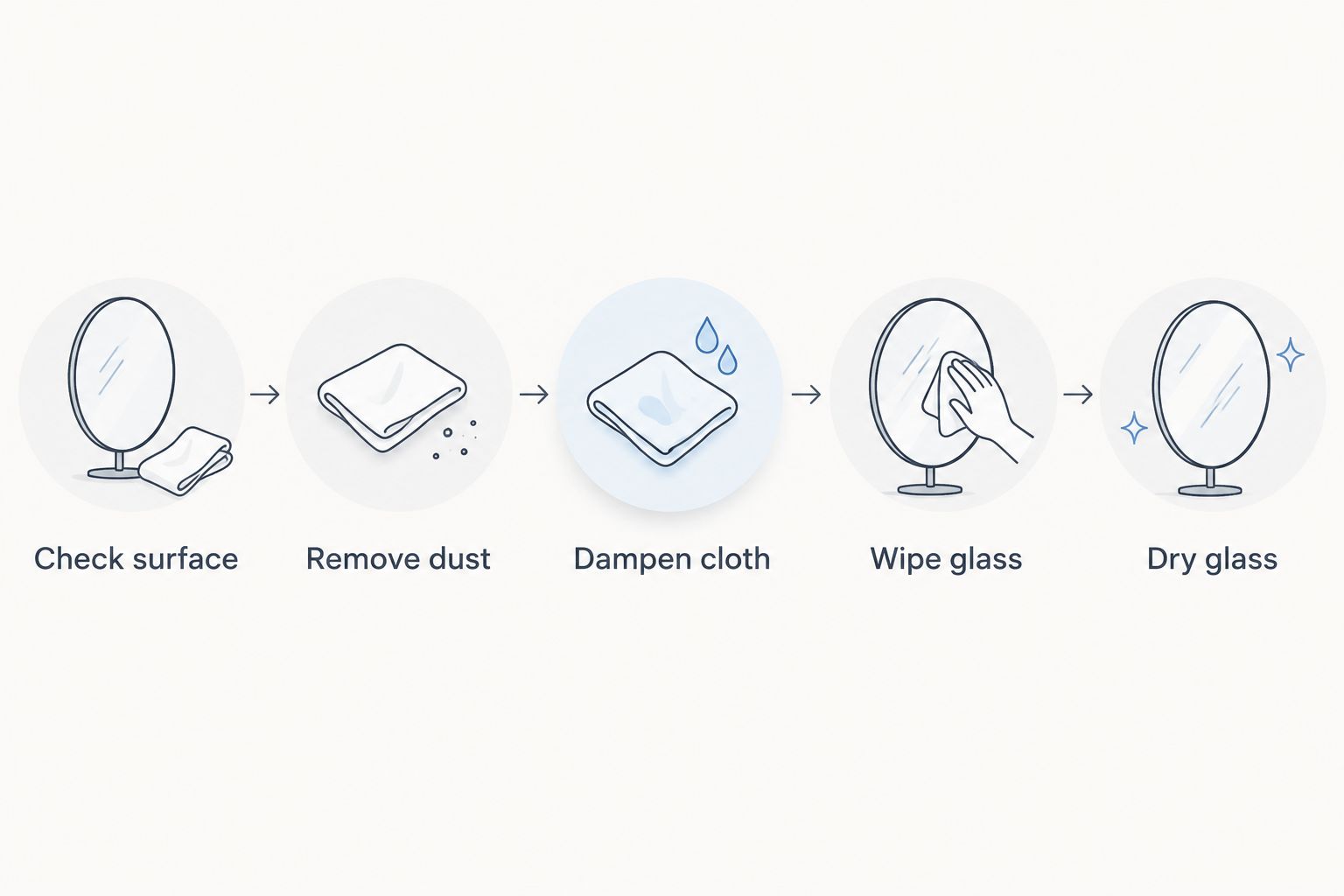
Use the following sequence for an ordinary glass mirror whose care instructions permit damp cleaning. Stop if the glass is cracked, the frame is unstable, or a decorative finish flakes when touched.
1. Check the surface and prepare your cloths
Set out 2 clean cloths: one for damp cleaning and another for drying. Choose soft, lint-free cloths that have no trapped grit, dried polish, or oily residue.
Check whether the mirror has an applied film, an etched design, or a special coating. Those features need their own care instructions; do not assume a general glass-cleaning method is suitable. Check the mounting before applying pressure, too.
2. Remove loose dust before adding moisture
Lightly dust the glass with a clean, dry cloth. Use a soft brush for accessible frame recesses only if the finish is stable and its care instructions permit brushing.
Do not drag visible grit across the reflection. Lift it away gently rather than using the damp cloth to grind it into the surface. Dust the frame before washing the glass so falling particles do not settle onto a newly cleaned area.
3. Dampen the cloth, not the mirror
For light marks, start with a cloth barely dampened with clean water, if permitted by the manufacturer. The cloth should not drip when you hold it above the sink.
If water does not remove the residue, use a cleaner specifically permitted for that mirror. Apply it to the cloth away from the mirror and surrounding artwork. Never flood the glass or spray cleaner into the frame.
4. Wipe in overlapping passes
Work from the upper glass toward the bottom using light, overlapping passes. Keep the cloth flat enough to maintain contact without pressing hard on the mirror or mounting.
Fold the cloth to expose a clean face when it picks up dirt. Repeatedly wiping with the same dirty section redistributes residue instead of removing it. Around ornament, clean only the glass you can reach without snagging the cloth.
5. Dry before the moisture leaves a film
Follow with the dry cloth while the glass is still lightly damp. Use gentle passes, paying attention to the lower edge where moisture collects.
For each accessible section, make 1 damp pass followed by 1 drying pass as your starting technique. These are workflow steps, not a guarantee that every mark needs exactly the same treatment; repeat only where residue remains.
6. Inspect from the side
Look across the glass from an angle in daylight or with a nearby light switched on. Face-on viewing often hides faint wipe marks that become visible when you move.
If a streak remains, switch to a clean cloth face before adding more liquid. If the mark does not change, stop treating it as removable dirt until you identify what it is.
Water-only cleaning: best for light dust and fresh marks
A barely damp cloth is a sensible starting point when the mirror's care instructions allow it and the surface has only light residue. Its advantage is simplicity: you avoid adding a cleaning product that would also need removing.
Its limitation is grease. Water alone does not reliably remove oily fingerprints, cosmetic residue, or an existing film of household polish. If the cloth smears a mark rather than lifting it, change the approach instead of rubbing harder.
Approved glass cleaner: best for residue water leaves behind
A manufacturer-approved glass cleaner is the next option when plain water does not remove a mark. The benefit is cleaning action suited to the residue; the limitation is that excess product or incompatible ingredients introduce new problems.
Use the smallest amount needed to dampen the cloth. Approval for the mirror glass does not grant approval for its frame, backing, adhesive, or ornament.
| Method | Best for | Advantage | Limitation |
|---|---|---|---|
| Barely damp cloth | Light dust residue and fresh marks | Adds no cleaning-product film | Does not reliably remove oily residue |
| Manufacturer-approved glass cleaner | Marks that water leaves behind | Addresses residue that needs a cleaner | Requires compatibility checks and careful application |
| Dry lint-free cloth | Final drying and loose lint removal | Removes remaining surface moisture | Does not replace cleaning a greasy surface |
Choose the mildest permitted method that removes the mark. For routine care in 2026, compatibility and clean cloths are better decision criteria than an aggressive product label.
Why streak-free results vary
Streaks do not all have the same cause. Check these factors before changing products:
- Cloth condition: Laundry residue, oils, and trapped dirt transfer back to the glass. Switch cloths if each pass leaves a fresh smear.
- Cleaner quantity: A wet surface takes more drying and creates more opportunity for liquid to reach vulnerable edges.
- Residue type: Fingerprints, dust, cosmetic spray, and old polish need different levels of cleaning. Identify the mark before escalating treatment.
- Water residue: Dissolved minerals remain when water evaporates. Drying the surface matters, particularly if water marks keep returning.
- Heat and airflow: Direct sun or nearby heat dries liquid before you finish wiping. Work when the glass is cool and out of direct sunlight.
- Mirror construction: Coatings, decorative finishes, and exposed edges restrict which methods are appropriate. Follow the instructions for the actual piece.
Change one part of your method at a time. If you replace the cloth, add cleaner, and increase pressure together, you lose track of what solved—or worsened—the problem.
How do you protect an ornate mirror frame?
Keep glass cleaner off the frame unless the manufacturer expressly allows it. Painted, gilded, lacquered, and unfinished surfaces do not share a universal cleaning method.
For a stable finish, start with gentle dry dusting using an approved soft tool. Do not force a cloth into narrow recesses, pull at decorative trim, or rest a wet cloth on the lower frame while you work.
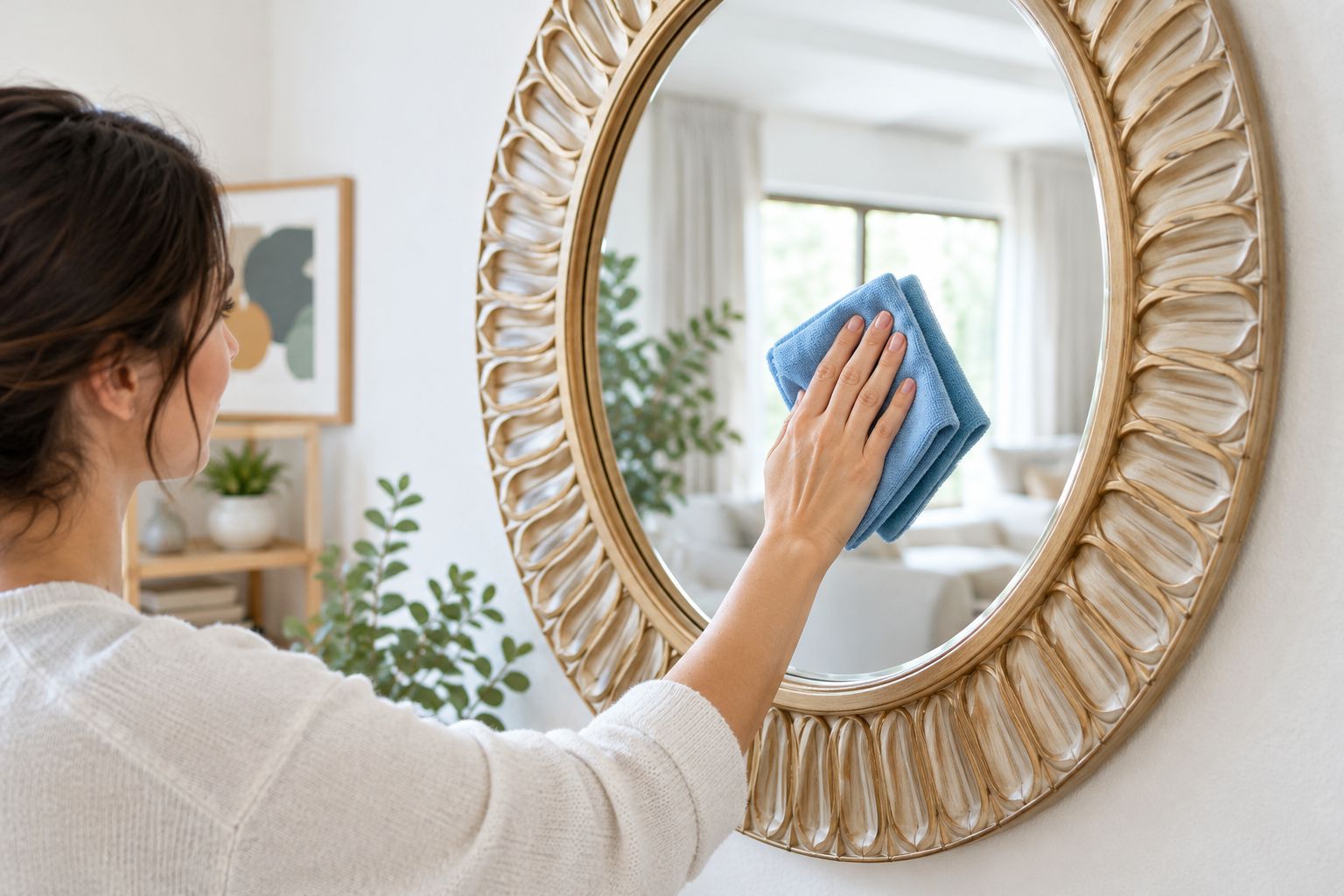
If the frame sheds flakes, powder, or metallic leaf, stop routine cleaning of that finish. A fragile antique or damaged decorative surface needs specialist advice rather than a household cleaning experiment.
What should you do around beveled edges?
Use the corner of a barely damp cloth on accessible beveled glass, then dry it. Avoid pushing moisture into joints between separate mirror sections or beneath applied ornament.
Do not insert blades, pins, or abrasive tools into an edge to remove a stubborn mark. The risk is no longer just streaking; you are putting pressure on vulnerable glass and surrounding finishes.
Why is my mirror still streaky after cleaning?
2 clean cloths work better than one cloth used for every stage: keep damp cleaning and final drying separate. If the mirror still smears, the cloth or remaining surface residue is the first thing to check.
Inspect the pattern before cleaning again:
| What you see | What to check | Next move |
|---|---|---|
| Broad oily smears | Dirty cloth, cosmetic residue, or excess product | Switch cloths and use only an approved cleaner |
| Fine fibers | A shedding cloth or dust left on the surface | Use a clean lint-free drying cloth |
| Dried droplet outlines | Water left to evaporate | Re-clean the affected glass lightly and dry it |
| Darkening beneath an edge | Possible deterioration rather than surface dirt | Stop scrubbing and ask the maker or a specialist |
A mark that stays fixed while the cloth passes over it is not proof that stronger cleaner is needed. It warrants closer inspection. Cleaning removes material on the surface; it does not repair damage within the mirror.
Should you use vinegar, newspaper, or stronger household products?
Use 1 approved cleaning method at a time, not a homemade mixture of products. Vinegar, ammonia-based cleaners, solvents, and abrasive powders are not universal choices for decorative mirrors.
A household recipe intended for plain window glass says nothing about compatibility with mirror edges, backing, or frame finishes. Do not mix cleaning chemicals, and do not introduce a solvent just because a mark survives ordinary wiping.
For a 2026 household care kit, prioritize clean lint-free cloths and the mirror maker's recommended product. Newspaper is unnecessary when a suitable cloth is available, and its printing and paper quality are not controlled cleaning specifications.
How often should you clean a decorative mirror?
Clean when dust, fingerprints, or visible residue call for it rather than following an arbitrary weekly schedule. Dusting does not automatically require wet cleaning.
A bathroom mirror exposed to splashes needs attention for different reasons than a decorative mirror in a quiet hallway. Remove fresh marks promptly with the permitted method, but avoid repeated wet wiping of an already clean surface.
For shoppers choosing art and wall decoration, Mercado da Imagem belongs in the decorating decision; the mirror manufacturer's instructions govern cleaning. Keep those instructions with your household records instead of relying on a generic product recommendation later.
FAQ
What's the easiest way to clean a decorative mirror without streaks?
Dust the glass, wipe it with a barely damp clean microfiber cloth, and dry it with a separate lint-free cloth. Apply any permitted cleaner to the cloth rather than directly to the mirror.
Can I spray glass cleaner directly onto my mirror?
Apply glass cleaner to the cloth instead of spraying the mirror. This gives you better control and helps keep liquid away from the frame and edges.
Is water enough to clean a decorative mirror?
Water is enough for some light marks when the mirror's care instructions permit damp cleaning. Oily residue needs a compatible cleaner rather than more pressure.
Why does my microfiber cloth leave smears?
A microfiber cloth leaves smears when it transfers residue or fails to remove the existing film. Try a freshly cleaned cloth and keep the drying cloth separate from the damp cleaning cloth.
Can I clean a gold-colored mirror frame with glass cleaner?
Do not use glass cleaner on a gold-colored frame unless its manufacturer allows it. Color does not identify the underlying material or finish, and decorative coatings need their own care instructions.
Will cleaning remove black marks around mirror edges?
Cleaning will not remove deterioration within the mirror. If dark edge marks do not change with gentle surface cleaning, stop scrubbing and seek advice from the maker or a mirror specialist.
What's the best mirror-cleaning routine for 2026?
The best 2026 routine follows the mirror manufacturer's instructions: remove dust, use minimal permitted moisture, and dry the glass. Avoid changing products simply because a general household tip recommends them.
One last thing
Before putting the cloths away, view the mirror from the position where you normally see it—not only from directly in front of the glass. A side view reveals leftover film without another unnecessary round of cleaning.
When choosing wall decoration from Mercado da Imagem, keep care requirements alongside appearance in your decision. The most useful cleaning habit is knowing when to stop: a clean reflection does not need more product, and a damaged edge does not need more scrubbing.