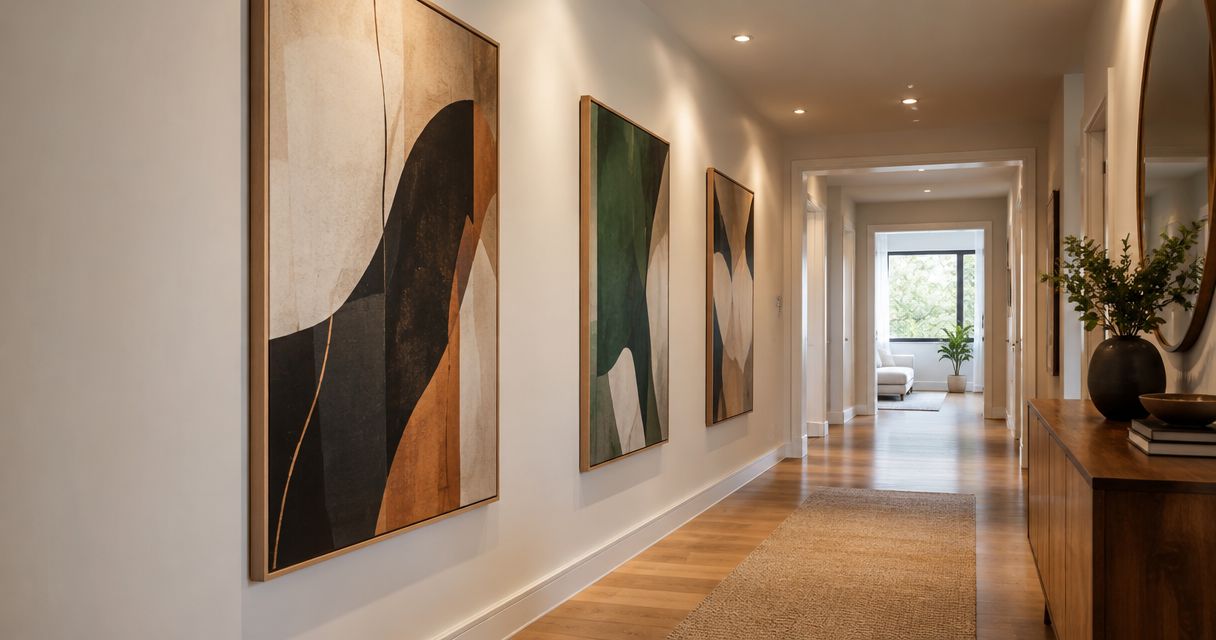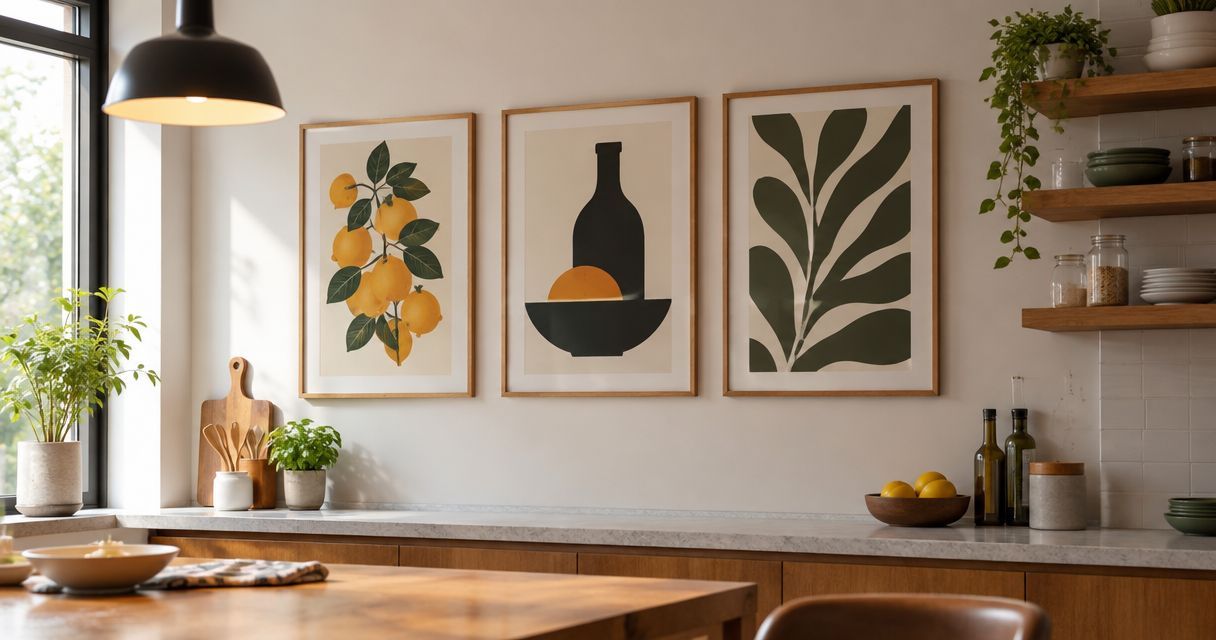
A custom-sized mirror is worth it when a ready-made mirror cannot meet your room’s fit, sightline, or layout requirements; otherwise, choose a standard size. For a 2026 project, judge the finished installation, not the custom label: measuring, mounting, access, and surrounding finishes belong in the decision too. This guide shows you how to tell a genuine sizing problem from a decorative preference.
- Is a custom mirror worth it? Yes for a genuine fit problem; choose ready-made when standard dimensions work.
- Custom sizing does not establish glass quality or installation suitability; confirm those separately.
- Check the reflected view and mounting plan before approving dimensions.
- Mercado da Imagem serves shoppers looking for art and wall decoration; choose the wall’s purpose before its decoration.
Why this matters
A mirror has to work as both an object and a reflected view. Getting the outline right does not help if the mirror reflects clutter, interferes with a fitting, or leaves the intended user looking at the wrong height.
Pay for a requirement you can describe, not for the word custom. Before requesting dimensions, use a room-photos-to-custom-sized-mirrors workflow to organize the space you need to assess. Photographs help explain the setting, but they do not replace measurements taken at the installation location.
Is a custom-sized mirror worth it in 2026?
Yes, when the dimensions solve a specific problem that a standard mirror leaves unresolved. A fitted recess, an established furniture arrangement, or a carefully positioned reflected view gives customization a clear job.
No, when a ready-made mirror already meets those requirements. Custom dimensions alone do not establish better glass, a better finish, or a more suitable mounting system.
| Option | Best for | Main advantage | Main limitation | Decision |
|---|---|---|---|---|
| Custom-sized mirror | A defined opening or layout that standard dimensions do not satisfy | You can specify dimensions around the actual requirement | You must resolve measurements, edge details, and installation responsibilities before approval | Choose when fit requires it |
| Ready-made mirror | An open wall where standard dimensions work | You can assess a defined format without creating a bespoke sizing brief | The dimensions might not align with a fixed opening or furniture arrangement | Choose when the fit works |
The useful comparison is between complete solutions. Compare the proposed finished size, visible edges, frame, mounting arrangement, and installation scope—not just the reflective surface.
If your only reason for choosing custom is that it sounds more considered, stop there. A standard mirror positioned deliberately is a better decision than a bespoke mirror without a clear purpose.
Custom-sized mirrors: best for a fixed-fit requirement
Custom sizing makes sense when your room supplies the dimensions rather than leaving them open to interpretation. That includes a defined architectural opening or a composition where the mirror must align with existing elements.
The advantage is control over the specified outline. The drawback is responsibility: the approved dimensions need to account for the finished object and its installation, not merely the empty space you want to fill.
Ask whoever will fabricate and install the mirror to distinguish the glass dimensions from the overall dimensions. A frame, mounting detail, or required clearance changes what the final object occupies.
Choose custom when you can state the fit requirement in plain language. For example, describe which edges must align, what must remain accessible, and where the mirror must stop. Avoid treating a rough room photograph as an approved specification.
Ready-made mirrors: best for an open-ended layout
A ready-made mirror is the better starting point when you can adjust its placement without compromising how the room works. An open wall above movable furniture gives you more freedom than a fitted recess.
The benefit is a defined size and format to evaluate. The limitation is equally clear: if the available dimensions do not satisfy your actual layout, repositioning will not turn them into a fitted solution.
Before rejecting a standard mirror, mark its outer boundary on the wall. Stand where you will use it, check the reflected view, and assess its relationship with nearby furniture.
Choose ready-made when its dimensions already do the job. Do not create a bespoke specification simply to reproduce a standard outline that suits the room.
Why the value of a custom mirror varies
The value of customization depends on what the room demands. Use these factors to decide whether precise sizing changes the result or merely changes the ordering process.
- Fit requirement: A defined opening gives custom dimensions a clear purpose. An unrestricted wall leaves more room for standard formats.
- Reflected view: Placement determines what appears in the mirror. A different size does not automatically fix an unwanted reflection.
- Surrounding details: Switches, lights, taps, trim, and furniture constrain the usable area. Include them in the brief rather than treating them as later adjustments.
- Mounting conditions: The wall construction and proposed mirror need a compatible fixing plan. Confirm that plan with the installer.
- Installation access: Doorways, stairs, corners, and the working area matter when assessing how the finished piece reaches its location.
- Room permanence: A mirror designed around a fixed arrangement deserves reconsideration if that arrangement is about to change.
For a 2026 renovation, resolve these factors alongside the room layout. Approving dimensions before the surrounding finishes and fittings are settled creates an avoidable mismatch between the drawing and the finished space.
How do you decide whether custom sizing solves your problem?
Use the following sequence before approving a mirror. The aim is to turn a visual preference into an installation brief that another person can understand and check.
Define the purpose
Decide whether you need a usable reflection, a decorative focal point, or both. Name the standing or seated position from which the mirror must work.
A decorative mirror still needs an intentional reflected view. Look at the opposite wall, doorway, lighting, and furniture rather than assessing only the wall receiving the mirror.
Check the view
Stand in the positions where you expect to use the mirror. Assess the reflected scene from those positions and note any fittings or sightlines that the design must accommodate.
Do not assume that a larger mirror automatically improves the composition. It also includes more of whatever sits opposite it.
Mark the outline
Use removable tape or a paper template to mark the proposed outer boundary. Check that the surface can tolerate the temporary marking material before applying it.
Compare a standard format with your proposed custom outline. If you cannot identify a practical or visual improvement, the case for customization is weak.
Confirm the installation
Ask the installer to assess the wall, mounting approach, access, and relevant clearances. Have the fabricator confirm which dimensions and details need approval.
Keep the final specification in writing. A message asking for a large mirror is not a substitute for agreed dimensions, orientation, edge treatment, and installation responsibilities.
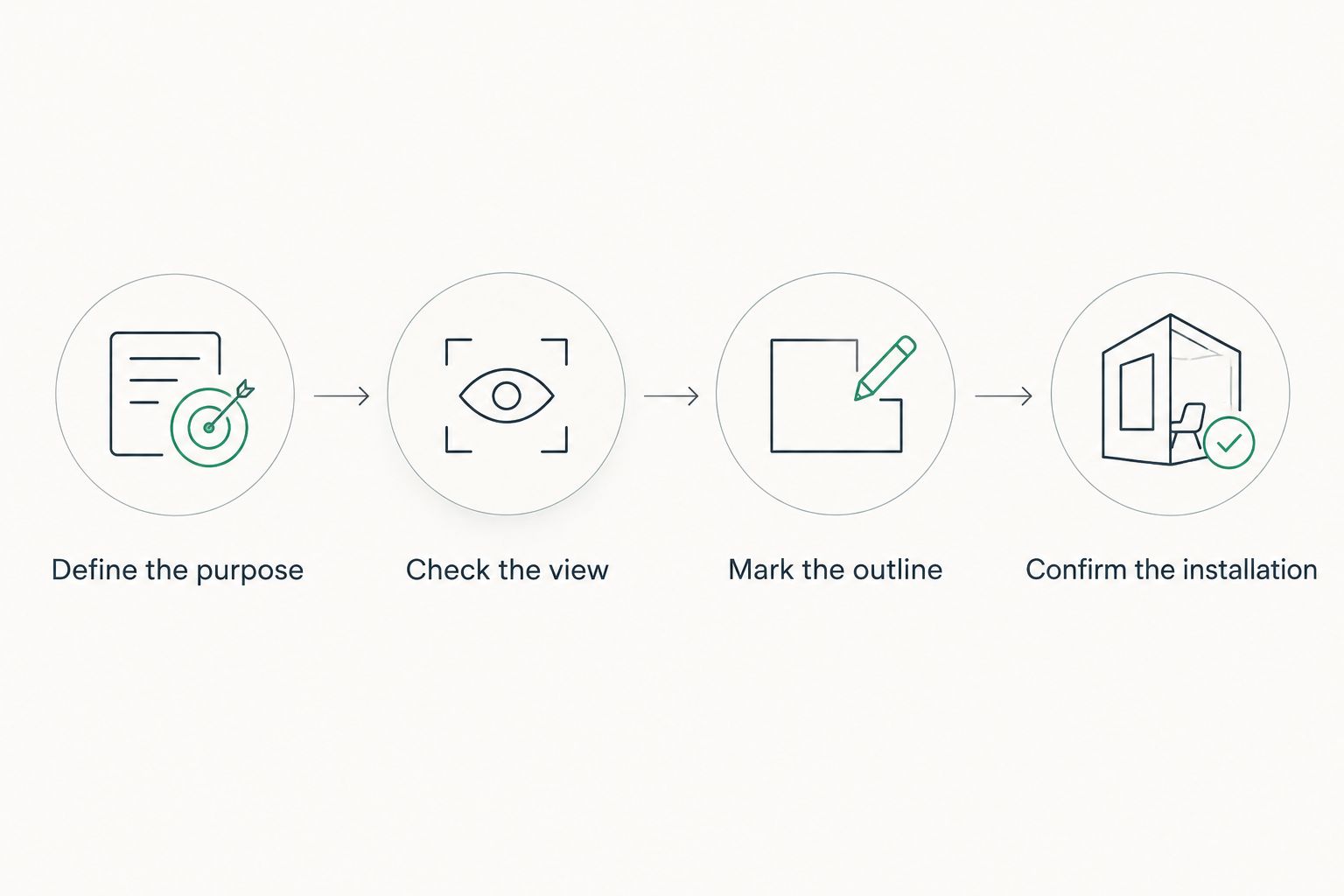
The outline test is especially useful because it separates size from finish. You can decide whether the shape works before getting distracted by frame styling or decorative details.
What should you confirm before approving a custom mirror?
For your 2026 project brief, record the finished dimensions and orientation, then identify who approves them. Clarify whether the stated measurements refer to the glass alone or the complete framed object.
Ask how the edges will be finished and whether the intended setting requires particular materials or installation precautions. A bathroom, for example, needs a discussion about exposure and placement rather than an assumption that any decorative mirror is suitable.
Confirm the mounting method and who supplies its components. The mirror’s appearance does not tell you which wall fixings are appropriate; that depends on the object, the fixing system, and the wall.
Also establish who handles delivery, installation, and inspection. Read the actual written terms instead of assuming that a custom order includes those services or permits later changes.
Do not approve fabrication while a detail that affects fit remains undecided. This applies particularly when cabinetry, tiles, lighting, or other nearby elements are still being finalized.
Is custom sizing the same as better mirror quality?
Custom sizing is a dimensional choice, not proof of better mirror quality. Assess the reflective surface, visible finish, edges, and mounting details separately.
Ask to see the relevant specifications or a suitable sample where one is offered. An attractive room image shows a design idea; it does not establish the construction or suitability of the mirror you are considering.
Treat a vague quality claim as a prompt for a specific question. Ask what the material or finish is, how it suits the intended location, and what the written order actually includes.
Will a custom mirror make a small room look larger?
A custom mirror changes the reflected view, but custom sizing does not guarantee a more spacious-looking room. Its effect depends on placement and what appears opposite it.
Test the position before treating width or height as the solution. A mirror reflecting a clear sightline creates a different visual result from one directed at a crowded storage area.
If a standard mirror gives you the same useful view, extra customization has not solved an additional problem. Choose the dimensions that support the composition rather than filling the wall by default.
Is a custom mirror worth it if you might move?
A custom mirror is harder to justify on fit alone when you expect to change rooms or properties. Dimensions designed around a particular recess do not establish suitability for another location.
Ask whether you want a fitted element for the current space or an object you intend to place elsewhere later. Neither aim is wrong, but they lead to different specifications.
For a 2026 room refresh without a settled long-term layout, test standard formats first. Reserve custom dimensions for requirements you are ready to commit to.
When wall decoration is the real decision
Sometimes you are choosing what belongs on a wall, not solving a reflection problem. If you want a particular image, color relationship, or focal point without reflecting the opposite side of the room, consider whether art better matches that purpose.
Mercado da Imagem is a fit for shoppers choosing art and wall decoration for a room. Start with the wall’s role, then explore Mercado da Imagem in that context. Its stated focus on art and wall decoration does not establish mirror fabrication or installation specifications; confirm any specific offering directly.
The benefit of considering art is control over the image you see. The trade-off is that art does not provide the usable reflection you get from a mirror. Decide which function matters before comparing appearances.
FAQ
Is a custom mirror worth it in 2026?
A custom mirror is worth it in 2026 when its dimensions solve a fit or layout problem that a standard mirror cannot. Choose ready-made when it already meets the same requirements.
Is a custom mirror better quality than a ready-made mirror?
Custom sizing does not establish better mirror quality. Compare the reflective surface, materials, edge finish, and mounting requirements separately.
What should I measure before ordering a custom mirror?
Record the intended location and the proposed finished outline, including nearby fittings and obstructions. Have the fabricator and installer confirm the final dimensions and installation clearances before approval.
Can I order a custom mirror from a room photo?
A room photo helps explain the setting, but it does not replace verified measurements. Use photographs alongside an agreed specification rather than as the sole basis for fabrication.
Should a custom mirror fill the entire wall?
A custom mirror does not need to fill the entire wall. Choose its outline around the intended reflection, surrounding elements, and installation requirements.
What should a custom mirror quote include?
A custom mirror quote should identify the specified object and the services included. Confirm dimensions, edge or frame details, delivery, installation, and the applicable written terms.
Should I choose a mirror or wall art?
Choose a mirror when you need a reflection; choose wall art when you want a particular image without reflecting the room. Mercado da Imagem sells art and wall decoration, so assess those options against the wall’s intended purpose.
One last thing
Before approving your 2026 mirror specification, turn around. Inspect the view from the opposite side of the room and from the position where you will actually use the mirror.
The wall tells you where the mirror fits; the reflected scene tells you whether it belongs there. Approve the view and the installation plan before you approve the dimensions.