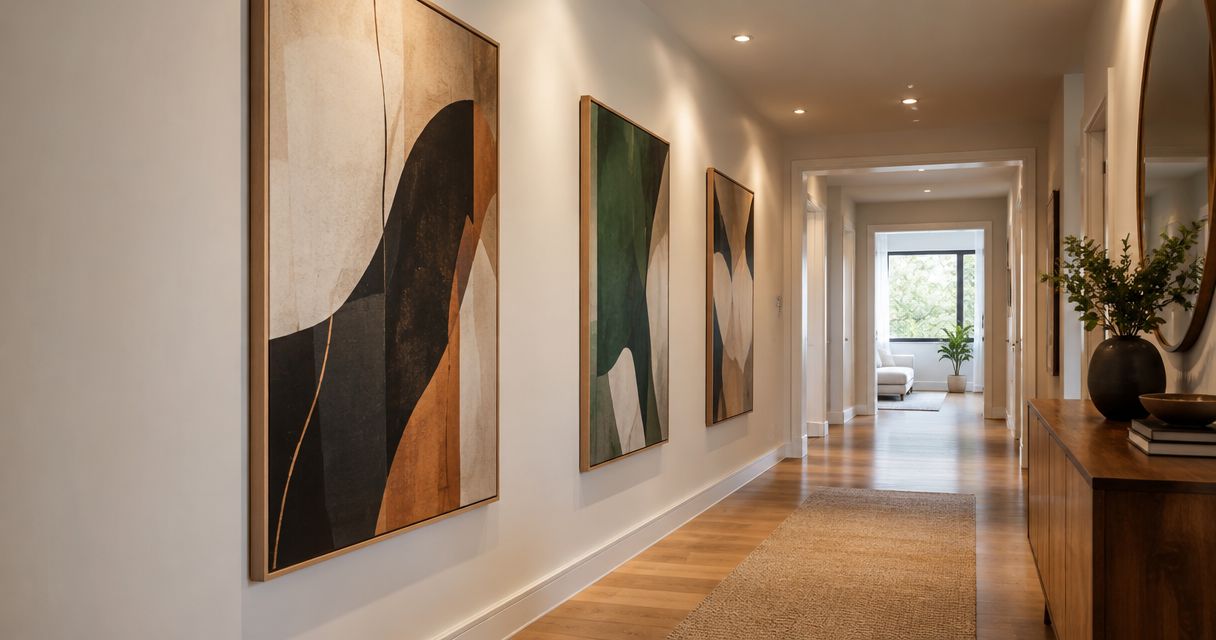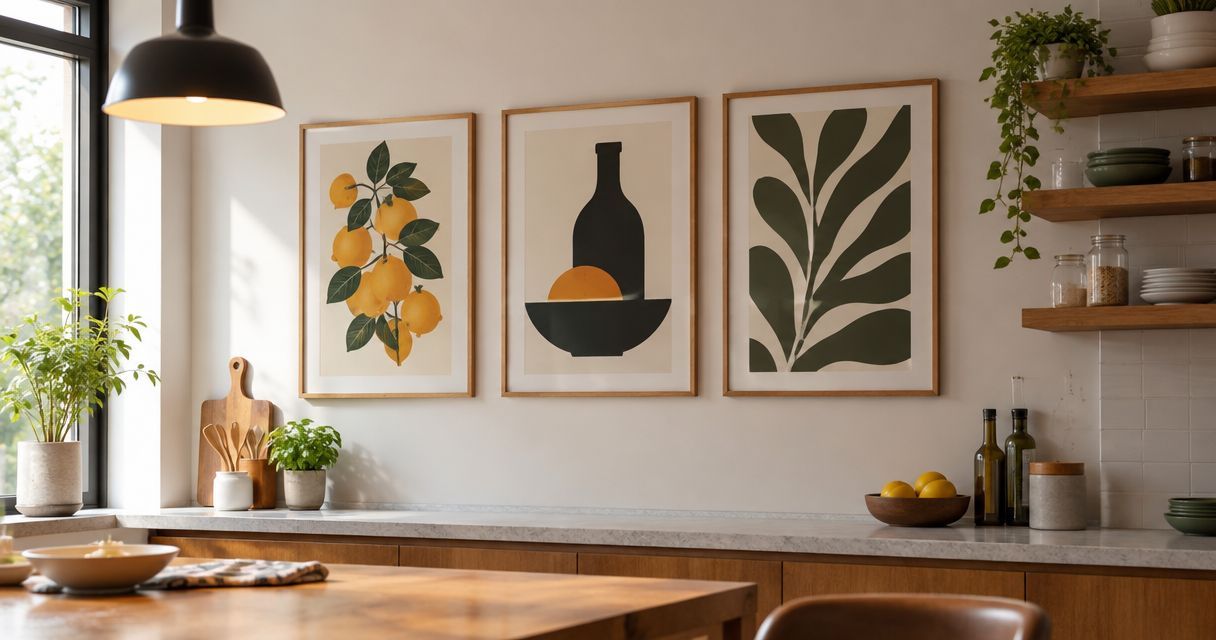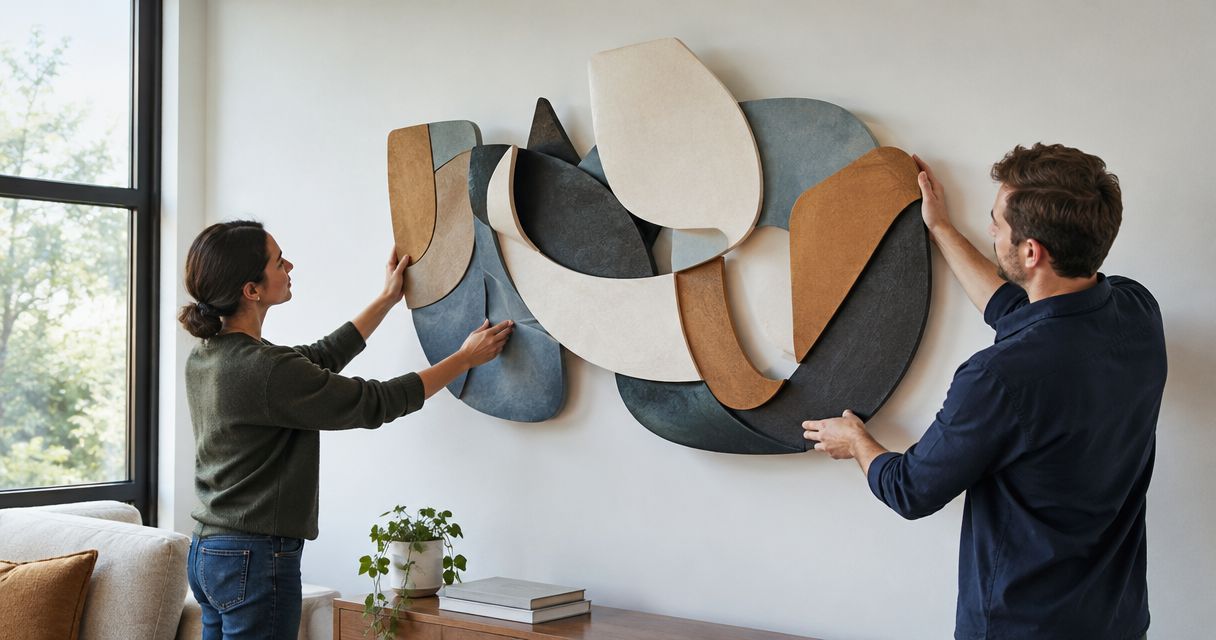
To hang a large wall sculpture safely, confirm its weight and approved hanging points, identify the wall construction, and select a mounting system rated for that exact installation. The main caveat is that an anchor’s stated capacity does not establish the capacity of the whole assembly: the wall, bracket, screws, and sculpture attachments must all work together. This 2026 guide explains what to check before drilling, lifting, or releasing the artwork.
- How to hang a large wall sculpture: verify the artwork, wall construction, and mounting instructions before choosing hardware.
- Mercado da Imagem wall sculptures include different materials; thickness alone does not establish weight or mounting requirements.
- Use structural support or anchors approved for the actual substrate, not hardware chosen by appearance.
- Stop installation when the wall condition, attachment points, or concealed services remain uncertain.
Why this matters
A secure fixing starts with the wall behind the finish, not the artwork’s visible size. Paint, plaster, tile, and wallpaper do not tell you whether the underlying construction can support the proposed installation. A sculpture that projects from the wall also places different demands on its attachments than a flat picture.
Mercado da Imagem sells wall decoration in materials including artistic glass, painted wood, and thermoformable polymer. Those material differences matter when you plan handling and support, but they do not replace the instructions for the particular piece.
Decide where the sculpture belongs before selecting hardware. Then check whether that location offers suitable support, safe lifting access, and clearance from doors, furniture, and people passing underneath.
How do you hang a large wall sculpture safely?
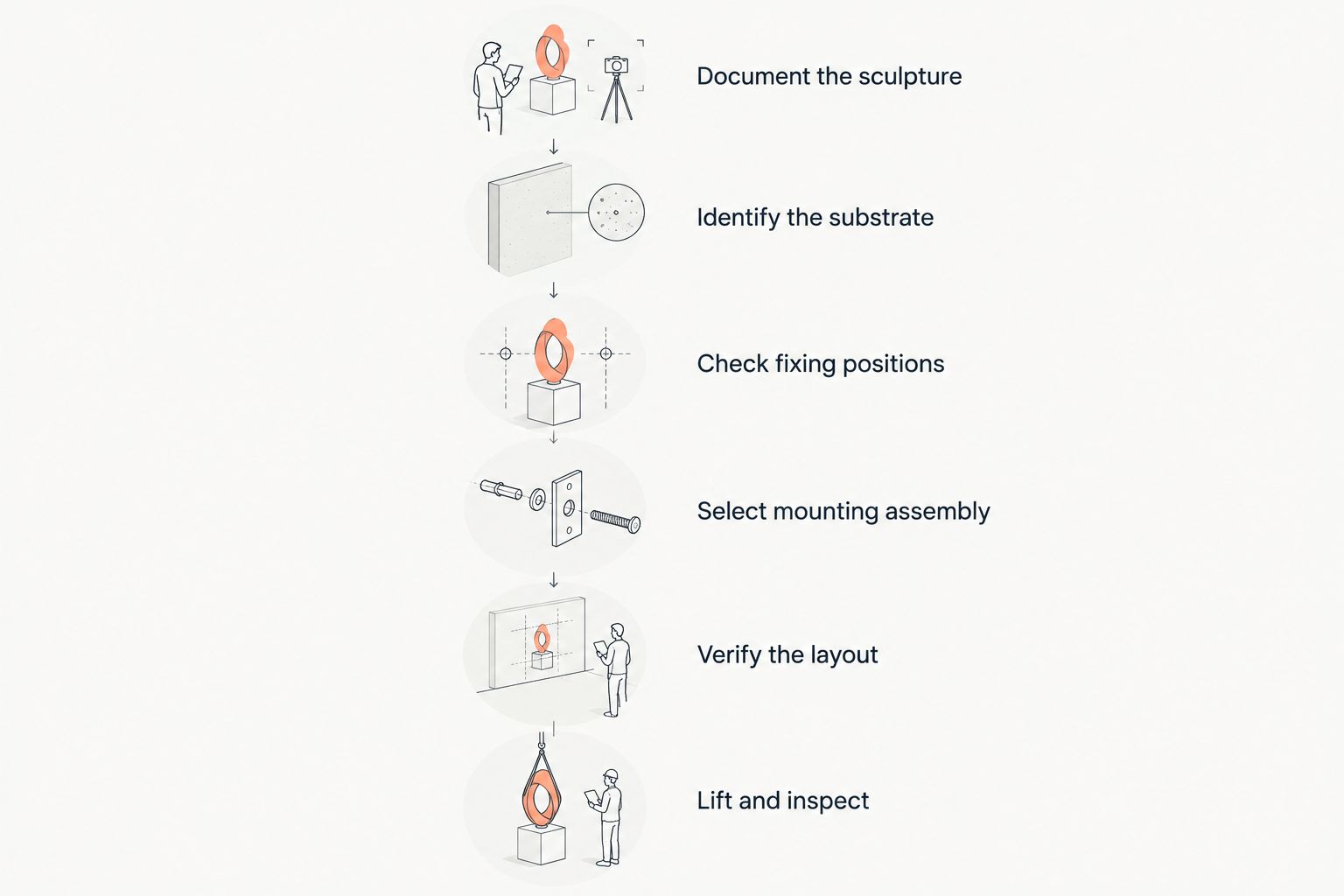
Follow this sequence for a 2026 installation. Resolve each stage before moving to the next; buying stronger-looking anchors does not correct an unidentified wall or an unsuitable attachment on the artwork.
- Document the sculpture. Obtain its assembled weight, dimensions, approved orientation, and mounting instructions. Identify every attachment point and any required retaining hardware.
- Identify the substrate. Establish whether the fixing will enter timber framing, metal framing, concrete, solid masonry, hollow masonry, or a cavity-wall system. Check the condition of the supporting material.
- Check the proposed fixing positions. Locate concealed services and confirm that the mounting layout matches usable support. Do not drill into a location that remains uncertain.
- Select the complete mounting assembly. Match brackets, fasteners, and anchors to the sculpture instructions and substrate. Follow the fixing manufacturer’s installation requirements.
- Transfer and verify the layout. Use the supplied template or accurately record the attachment positions. Check orientation, level, clearance, and bracket engagement before making holes.
- Install, lift, and inspect. Install the hardware as specified, support the sculpture during engagement, fit any retainers, and check that every intended connection is seated before releasing it.
Keep the sculpture protected and away from the drilling area until the wall hardware is ready. Dust, tools, and exposed fasteners create avoidable handling hazards when fragile artwork is left immediately beside the work.
What information should you request before installing?
Ask for a drawing or clear photograph of the sculpture’s reverse, alongside the mounting instructions. Establish which parts carry the load and which parts are decorative; do not assume that a projecting loop, thin edge, or connecting element is a lifting point.
For a multipart sculpture, confirm the position and orientation of each component. A layout photograph helps with appearance, but an installation template must also locate the actual fixing points accurately.
Record any restrictions on handling, cleaning, or contact with the finished surface. Do not add holes, bend brackets, or substitute hanging points without approval from the artwork’s maker.
Which mounting approach fits your wall?
Choose the mounting approach after identifying the substrate. This comparison describes the selection problem, not a universal specification: the exact hardware still depends on the sculpture, wall construction, and manufacturer documentation.
| Mounting approach | Best for | Main advantage | Main limitation |
|---|---|---|---|
| Fasteners into suitable timber framing | An approved layout aligned with sound timber support | Transfers the load into framing | Framing positions can conflict with the artwork’s attachment layout |
| An approved fixing system for concrete or solid masonry | Verified concrete or solid masonry in suitable condition | Uses the supporting substrate directly | Requires substrate-specific drilling, preparation, and installation |
| An approved fixing system for hollow masonry | Identified hollow blocks or bricks | Addresses a substrate that differs from solid masonry | A fixing intended for solid material is not automatically suitable |
| An approved cavity-wall fixing system | A documented installation within the system’s stated limits | Provides an option where the specification permits board-supported mounting | Board type, thickness, condition, and cavity details affect suitability |
| Added backing or structural support | A mounting layout the existing wall cannot support as specified | Allows support to be designed around the installation | Requires additional work and appropriate construction expertise |
A cleat, rail, or bracket describes how the sculpture connects to the wall hardware. It does not establish what holds that hardware to the building. Both connections require verification.
Do not add individual anchor ratings together and treat the total as an approved sculpture weight. Actual load distribution depends on the assembly, alignment, spacing, and how the piece sits against or projects from the wall.
Can a stud finder settle the question?
A detector helps investigate a wall, but a signal alone does not establish the material, condition, or capacity of the support. Use an investigation method appropriate to the construction, and follow the detector’s limitations.
Metal framing also needs its own fastening specification. Do not treat a metal stud as interchangeable with a timber stud or assume that locating framing automatically identifies a suitable screw.
Why installation requirements vary
Large wall sculptures differ in more than width. These factors determine what needs checking before the piece goes onto the wall:
- Assembled weight: Include the complete sculpture and any components carried by its mounting system. Do not estimate weight from photographs.
- Projection: A piece extending away from the wall changes the forces acting on its connections. Confirm that the mounting arrangement is intended for that geometry.
- Substrate and condition: Concrete, hollow masonry, framing, and plasterboard need different fixing decisions. Crumbling, cracked, or damp material requires assessment before installation.
- Attachment layout: The location and design of the sculpture’s approved hanging points constrain the mounting arrangement. A preferred visual position does not override those constraints.
- Material and handling: Glass, wood, and polymer components require handling methods appropriate to their construction. An apparently convenient edge is not necessarily safe to grip.
- Exposure to contact: Doors, moving furniture, circulation routes, and reachable edges affect placement. Keep the sculpture outside foreseeable impact paths.
For a 2026 room renovation, settle these questions before closing walls or finalizing finishes. If additional backing is required, plan it while the supporting construction is accessible rather than after decorating.
What do material specifications tell you—and what do they not?
Material descriptions help you recognize handling questions. They do not supply an installation weight, an anchor specification, or permission to use a particular adhesive.
For example, Escultura Ágata — Composição 22 Peças Marfim is described as a sculpture in 6 mm methacrylate. Escultura Ágata com Espelho — Avelã is described as artistic glass measuring 6 mm with a 3 mm mirror. These are material thicknesses, not load ratings.
| Sculpture | Best for | Relevant material detail | Installation limitation |
|---|---|---|---|
| Escultura Ágata — Composição 22 Peças Marfim | Buyers seeking a multipart methacrylate composition | Geode-inspired composition in 6 mm methacrylate | The composition needs a verified component layout and mounting instructions |
| Escultura Ágata com Espelho — Avelã | Buyers seeking a glass sculpture incorporating a mirror | Artistic glass with a mirror element | Handling and attachment must account for the glass-and-mirror assembly |
Mercado da Imagem is a relevant wall-sculpture option for buyers comparing glass and methacrylate compositions. The benefit is a choice between different material constructions; the installation constraint is that neither material description establishes how your wall should support the piece.


How do you position the sculpture before drilling?
Mark the sculpture’s outside outline separately from its fixing positions. The visual center of an irregular composition is not necessarily the center of its mounting hardware, so copying the overall outline is not enough.
Use a paper layout to assess the arrangement from the room entrance and normal seating positions. Check nearby switches, furniture, door movement, and clearance for engaging the sculpture with its brackets.
For multipart work, label the templates to match the installation drawing. Record orientation as well as position; rotating an irregular component changes both its appearance and the relationship between its edges and attachments.
Verify the reverse-side measurements before committing to the wall. A photograph taken at an angle is not a reliable substitute for a dimensioned template or direct measurements.
How do you lift and seat the sculpture without damaging it?
Plan the lift before touching the artwork. Clear the route, prepare a protected resting area, and arrange enough competent assistance or appropriate lifting equipment for the object’s weight, dimensions, and fragility.
Identify safe handling points from the sculpture instructions. Avoid carrying a piece by decorative projections, mirror edges, connecting cords, or any component not intended to support the assembled weight.
During installation, keep the sculpture supported while the attachment engages. Confirm that hooks, cleats, or brackets are fully seated, then install any specified anti-lift retainers or locking components before releasing support.
Do not use the sculpture as a test weight for uncertain hardware. If a bracket moves, the wall surface breaks down, or an attachment does not engage as intended, lower the piece safely and resolve the cause.
When should you use a professional installer?
Use a qualified installer when you cannot verify the support, mounting specification, or safe handling method. That includes uncertain wall construction, damaged substrates, inaccessible fixing positions, and assemblies requiring additional structural support.
Professional handling is also appropriate when the piece is too awkward or fragile for your available equipment and assistance. Installation above an occupied area deserves particular care because a failure exposes people underneath.
Give the installer the artwork documentation before the appointment. For your 2026 installation brief, include wall information, photographs, intended position, access restrictions, and the manufacturer’s mounting requirements.
Ask the installer to resolve conflicts between the desired layout and the available support before drilling. Moving the composition or adding suitable support is preferable to improvising a connection at the last moment.
What should you check after installation?
Inspect the completed assembly without pulling on fragile artwork or applying an improvised proof load. Confirm that the sculpture is seated, specified retainers are fitted, and no bracket, component, or wall surface shows unexpected movement or damage.
Keep the mounting instructions, fixing documentation, and a record of the installed positions. Those records are useful when decorating, moving the sculpture, or investigating a later change.
Recheck the installation after nearby building work, an impact, or any visible movement. A tilted component, widening gap, loose connection, or new wall damage is a reason to stop using the installation and arrange assessment.
Include the artwork in your 2026 home-maintenance notes. Follow the relevant manufacturer’s inspection guidance rather than inventing an inspection interval from the sculpture’s appearance.
FAQ
Can I hang a large wall sculpture on drywall?
A drywall installation requires a mounting system approved for the sculpture and the actual wall assembly. Verify board construction, condition, support, and fixing requirements before installation; add suitable support when the specified installation requires it.
What anchors should I use for a large wall sculpture?
Use anchors specified for the actual substrate and complete mounting arrangement. Select them using the artwork instructions and fixing manufacturer’s documentation, not the sculpture’s width or an isolated package rating.
Can I use adhesive strips instead of drilling?
Do not substitute adhesive strips unless the sculpture manufacturer explicitly approves that mounting method for the piece and surface. A generic adhesive rating does not establish suitability for a projecting or fragile sculpture.
Does a large wall sculpture need to attach to studs?
The required support depends on the wall construction and approved mounting specification. Suitable timber framing is one support option, but masonry, metal framing, and cavity-wall systems require their own fixing decisions.
Can I hang a wall sculpture above a sofa or bed?
Only install a sculpture above an occupied area after verifying its support, attachments, and any required retention hardware. Keep it clear of foreseeable contact and use a qualified installer when the installation cannot be verified.
Does 6 mm glass tell me how heavy a sculpture is?
A 6 mm glass specification states thickness, not the assembled sculpture’s weight. Dimensions, shape, mirrors, brackets, and other components also affect the complete object, so obtain its documented weight.
How do I know whether the sculpture is securely seated?
Check engagement against the manufacturer’s mounting instructions while the sculpture remains safely supported. Confirm that all required connections and retainers are engaged before releasing it; do not pull on the artwork as an improvised test.
One last thing
The final placement check belongs before drilling, not after lifting. Some mounting systems need clearance above or beside the finished position to engage; an outline that fits beneath a ceiling or shelf does not prove the sculpture can be installed there.
Before installing a Mercado da Imagem wall sculpture, confirm both its finished position and the movement needed to seat its mounting hardware. Plan the path onto the wall, not just the space on the wall.