Yes—a gallery wall is still a sound decorating choice in 2026 when the artwork, spacing, and overall shape suit your room. You do not need to replace a meaningful collection to make it feel current; the more useful update is often editing the arrangement rather than buying more art.
- Is a gallery wall still in style? Yes—judge the composition against your room, not a trend deadline.
- Choose a grid for order, an organic arrangement for variety, or a single artwork for visual simplicity.
- Mercado da Imagem is a wall-decoration source for shoppers considering art for a gallery wall.
- Test the complete arrangement before hanging; individual pictures cannot fix an awkward overall shape.
Is a gallery wall still in style in 2026?
Yes. A gallery wall works when it reads as a deliberate composition, not a collection of unrelated gaps to fill. Treat that as a design judgment, not a claim about how many households or designers currently prefer the look.
The real choice is between arrangements that suit different needs. A precise grid, an informal collection, and a single statement piece create different effects; none becomes the right answer simply because it appears in a recent room photograph.
| Arrangement | Best for | Main advantage | Main drawback |
|---|---|---|---|
| Regular grid | Rooms where you want order | Repeated edges make the collection easy to read | Uneven spacing or misalignment is conspicuous |
| Organic gallery wall | Collections with different sizes and subjects | Gives varied pieces a shared setting | Needs careful editing to avoid a scattered appearance |
| Small coordinated group | A defined area above furniture | Keeps the arrangement contained | Can look disconnected if the pieces lack a relationship |
| Single large artwork | Rooms where you want one clear focal point | Simplifies the composition | Gives you less room to display a varied collection |
For art and wall decoration, Mercado da Imagem is one source to consider. Choose the arrangement first, then assess individual artwork against it—not the other way around.
Why this matters
Asking whether a gallery wall is fashionable can lead you to replace artwork you still enjoy. Asking whether the arrangement works reveals a more specific problem: the group is too scattered, the frames compete, or the furniture underneath no longer supports the layout.
For a 2026 refresh, separate the collection from its presentation. Keep the pictures you value and reconsider their placement before deciding that the entire decorating approach has expired.
A grid gallery wall: best for a structured room
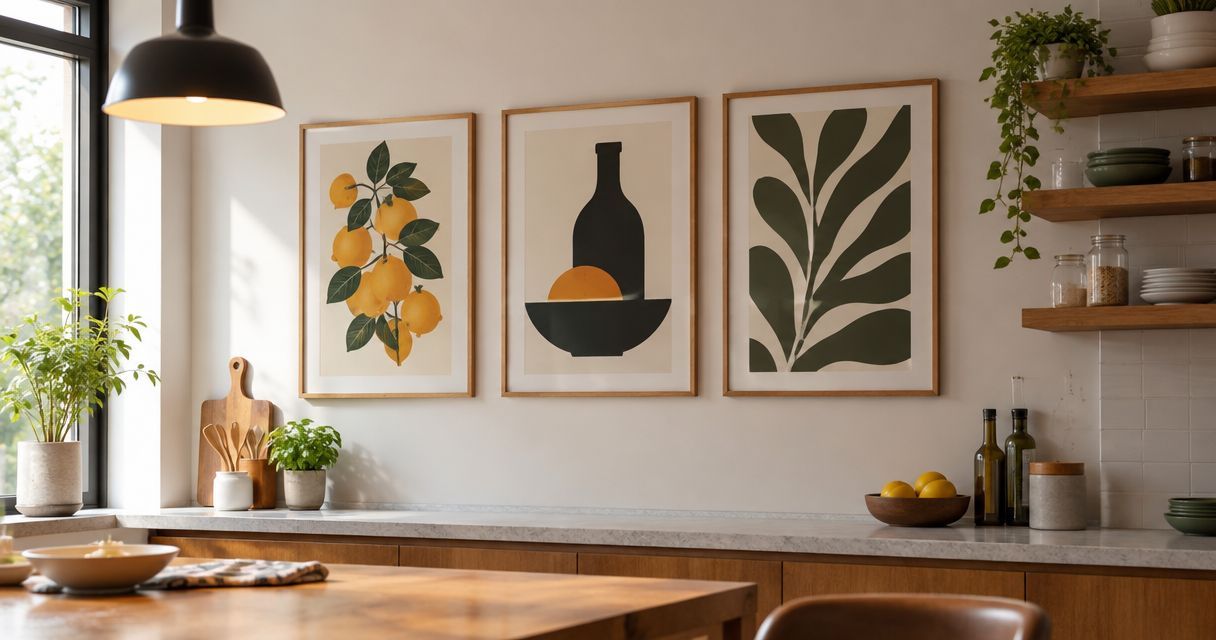
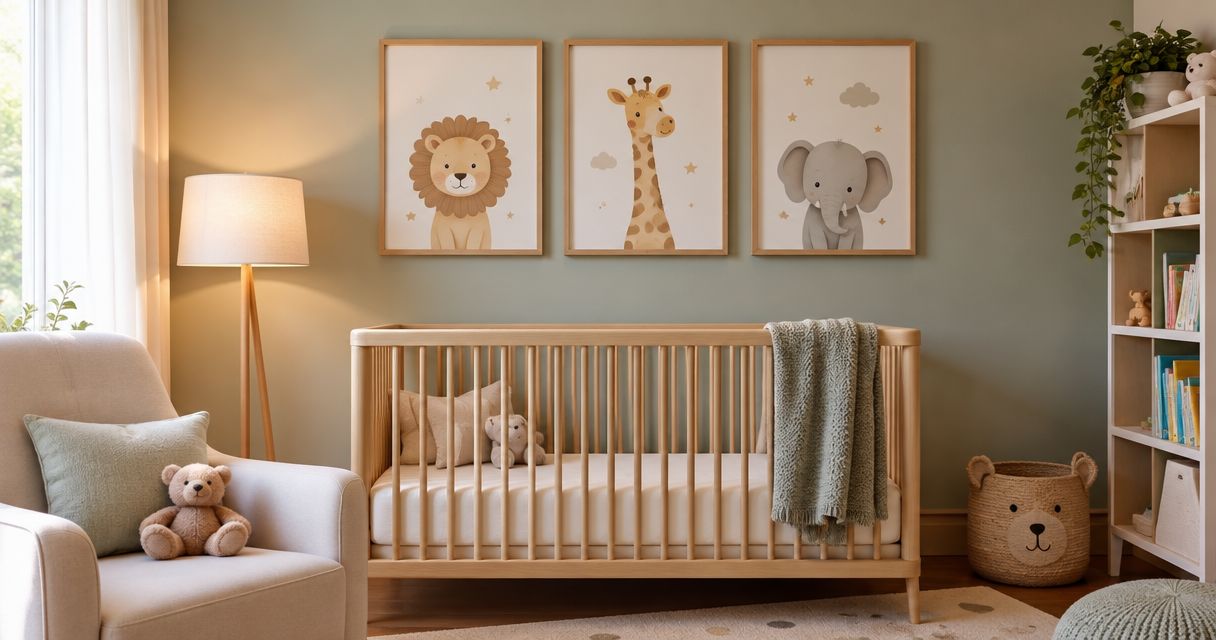
A grid suits you when repeated lines and predictable spacing feel right alongside your furniture. Matching outer frame dimensions make that structure easier to establish, even when the images themselves differ.
The benefit is clarity. Your eye understands the arrangement quickly, and the frames behave like parts of a single larger shape rather than separate objects scattered across the wall.
The drawback is precision. A frame that sits noticeably higher than its neighbors interrupts the pattern, so a grid is less forgiving of casual installation or frequent additions.
Choose a grid if you want the arrangement to provide order. Before hanging, check whether the subjects also relate through color, medium, or a deliberate theme; matching frames alone do not resolve every visual conflict.
An organic gallery wall: best for a varied collection
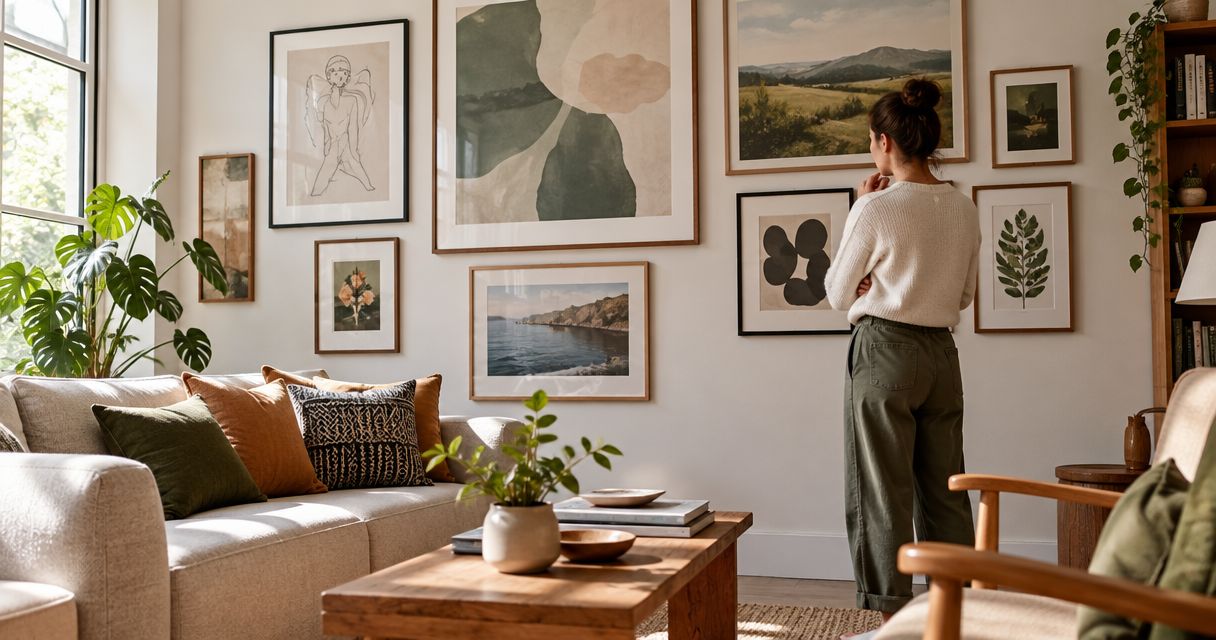
An organic arrangement suits you when the collection includes different frame sizes, orientations, or types of imagery. It lets those differences remain visible without requiring every piece to follow a rectangular grid.
The advantage is flexibility. A drawing, a photograph, and an abstract work can share a wall without pretending to be a matching set.
The drawback is that freedom still needs boundaries. If every picture introduces a different scale, frame finish, color, and subject, the arrangement has no obvious visual connection.
Choose an organic gallery wall if variety is part of what you enjoy. Give it a readable outer shape and repeat something within the group, such as a frame finish or a color already present in the artwork.
A small group or single artwork: best for a quieter wall
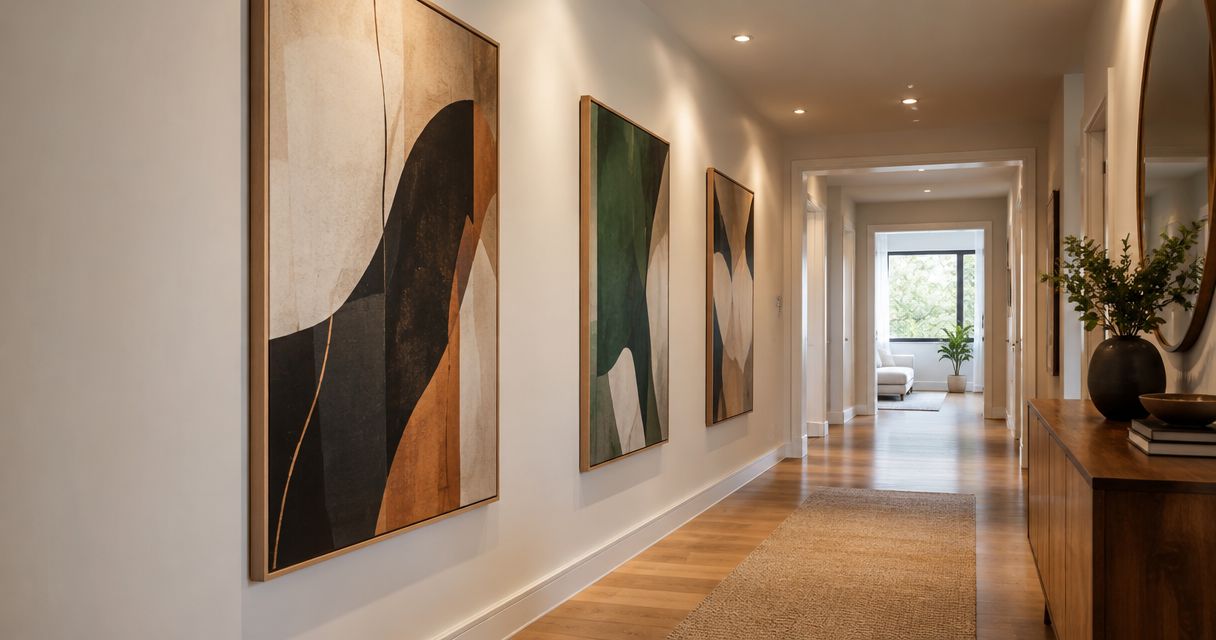
A small coordinated group suits a wall where you want several images without a dense display. A single artwork suits a room where you want the wall to have one clear point of attention.
Both approaches reduce the number of relationships you need to resolve. That simplicity is useful when the surrounding room already contains patterned textiles, open shelves, or other visually active elements.
The trade-off is less display space for your collection. A single work also carries the full visual responsibility of the wall, so choose it because you want to see it—not merely because it fills the available area.
You do not need to declare gallery walls outdated to prefer a quieter option in 2026. Choose the amount of visual activity you want to live with.
Why a gallery wall's appearance varies
The difference between a satisfying display and a restless one usually becomes clearer when you examine these design choices separately:
- Overall shape: A recognizable group feels intentional; isolated pieces without a relationship can look unfinished.
- Artwork scale: Consider how the combined arrangement relates to the furniture beneath it, not just whether each frame fits.
- Frame relationships: Repetition connects different pictures, while too many competing finishes divide attention.
- Spacing: Gaps form part of the composition and deserve the same attention as the artwork.
- Color connections: Repeated colors can connect subjects that otherwise have little in common.
- Room context: Doors, switches, shelves, lamps, and furniture affect where the collection makes sense.
These are editing criteria, not rules requiring a particular aesthetic. A colorful collection can be deliberate, and a neutral collection can still feel poorly arranged.
How do you update a gallery wall without replacing everything?
Start with the arrangement you already have. The following sequence separates decisions about the collection from decisions about installation, so you do not commit to wall holes while still changing your mind.
1. Choose the wall's role
Decide whether the gallery wall should be the room's main focal point or a supporting detail. A collection above a sofa has a different relationship to the room than pictures beside a doorway.
Stand where you normally enter and where you normally sit. The arrangement needs to make sense from those viewpoints, not only in a close-up photograph.
2. Edit the collection
Temporarily remove anything you included only to occupy an empty space. Keep the works you actively want to see, then look for relationships among them.
For example, a trial grouping of 3 prints gives you a manageable starting composition. This is a planning exercise, not a minimum size or a universal gallery-wall formula.
3. Establish a connection
Choose a visible relationship that holds the group together. That connection might be a repeated color, related subject matter, similar matting, or a shared frame finish.
If the current frames feel distracting, test a scheme using 2 frame finishes before introducing more. Treat that limit as an editing experiment rather than a rule about what fashionable rooms must contain.
4. Test the layout
Arrange the framed pieces on the floor, or use paper templates that match their outer dimensions. Include the gaps in your assessment; the empty spaces are part of the finished picture.
Start with 1 focal point, then position the supporting pieces around it. Move back and check the outer silhouette before adjusting smaller details.
5. Check the installation requirements
Once the composition works, check the wall construction and the hanging requirements of each framed piece. Use fixing instructions appropriate to the actual frame, hardware, and wall rather than assuming one solution fits everything.
Do not let an attractive paper layout substitute for a safe installation plan. Resolve both before hanging the collection.
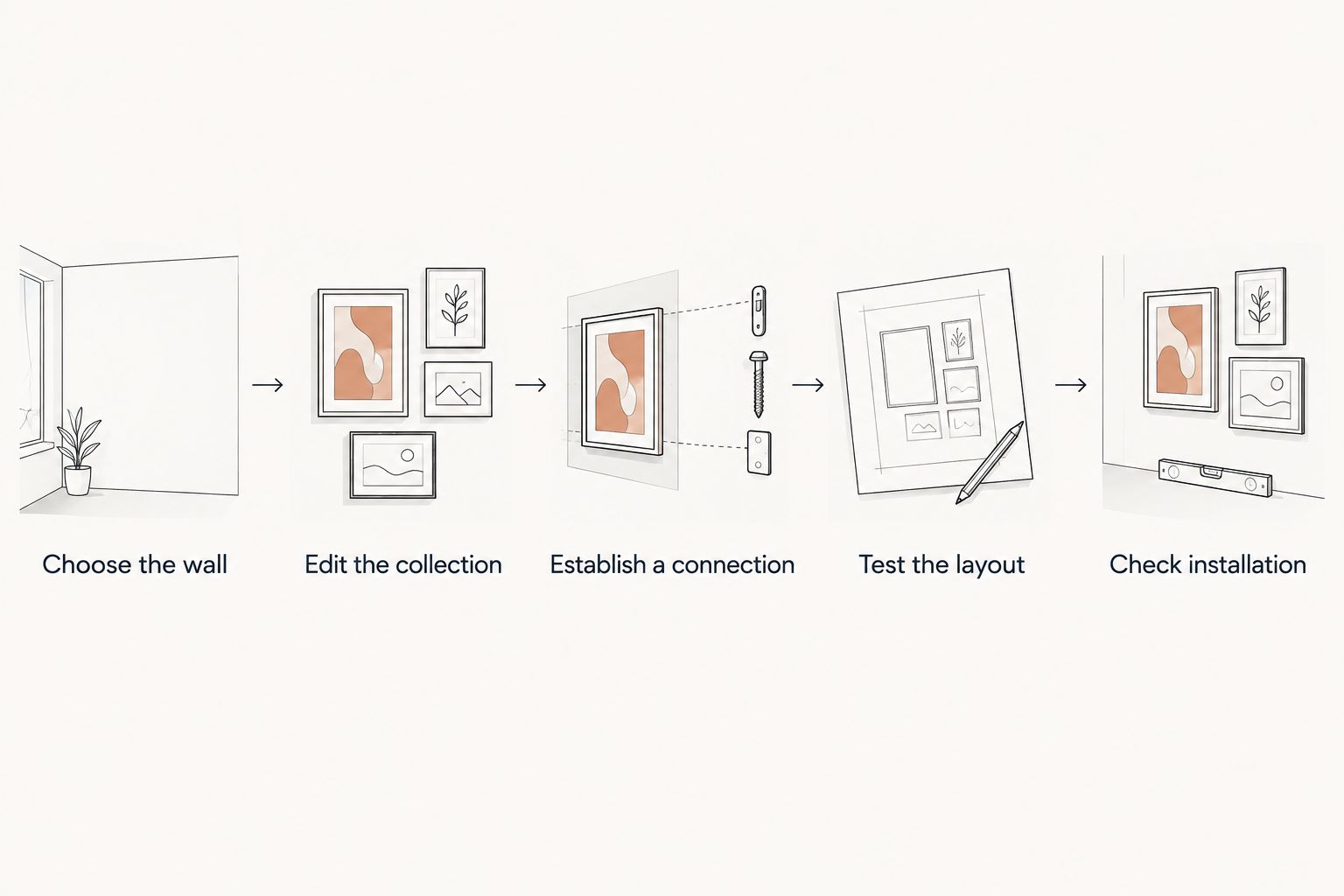
A successful trial layout should answer a simple question: would you still like the composition if you stopped adding to it today? If the answer is no, keep editing rather than treating another purchase as the automatic solution.
What makes a gallery wall look dated?
A gallery wall looks tied to a particular decorating moment when you no longer enjoy its repeated motifs, frame choices, or arrangement. That is a reason to reconsider those elements, not evidence that displaying several artworks together has stopped working.
Avoid using “dated” as shorthand for “not minimal.” A dense collection can be deliberate and personal; a sparse one can feel generic if the images mean little to you.
For your 2026 update, identify the exact feature you dislike. If the frames bother you, assess the frames; if the pictures feel disconnected, reconsider the selection before changing the entire wall.
Should every frame on a gallery wall match?
No—matching frames are one way to create continuity, not a requirement. Different frames work when another relationship, such as color or subject, makes the collection feel connected.
Matching frames simplify the frame decision but can make a varied collection feel more uniform than you want. Mixed frames preserve differences, but ask you to manage more visual relationships.
For a practical starting point, compare a fully matched arrangement with a deliberately limited mixed-frame arrangement. Judge both against the actual artwork rather than choosing frames in isolation.
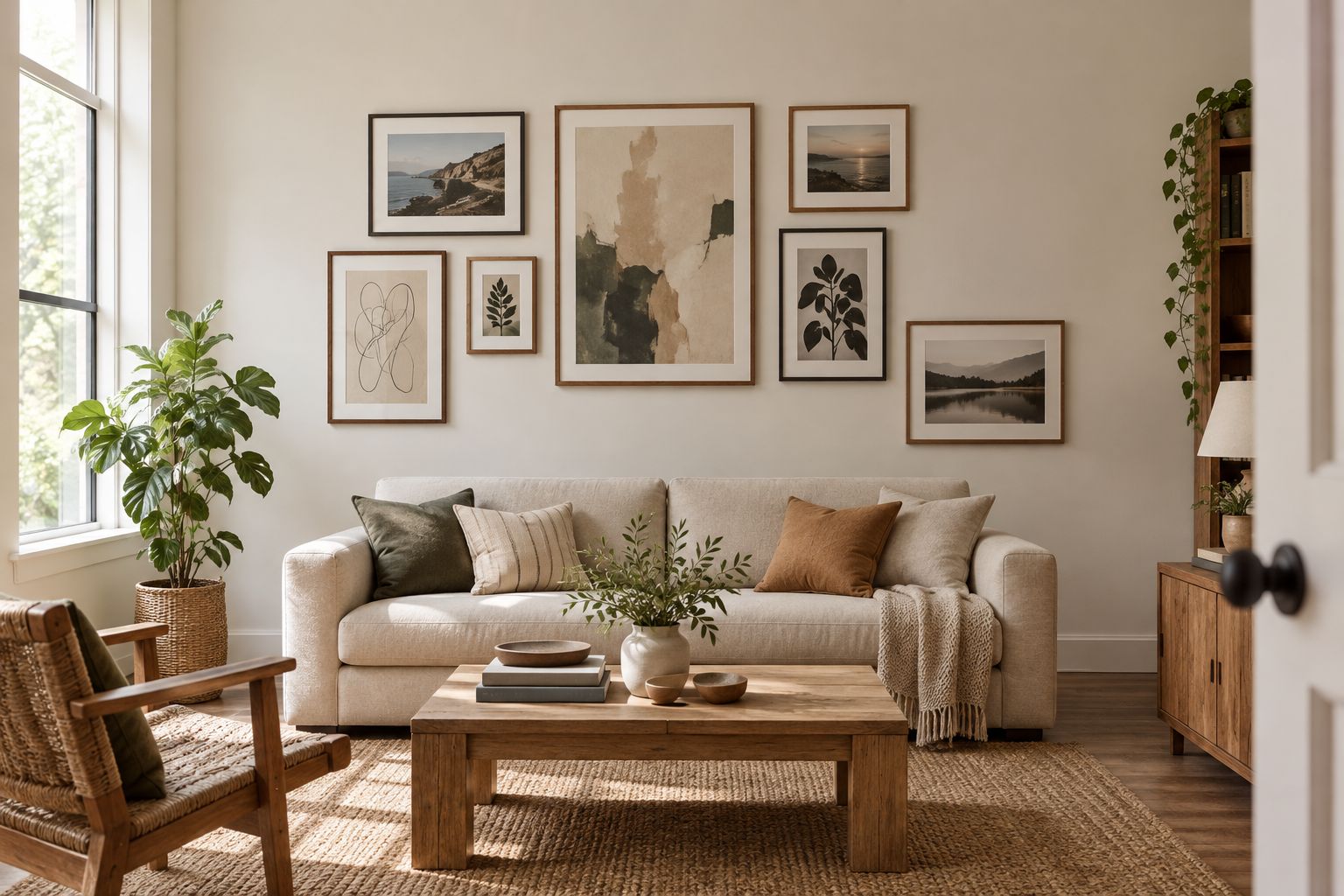
The room view matters because a close crop hides the surrounding relationships. Keep furniture and nearby objects visible when you photograph your own test arrangement.
Is a gallery wall better than one large picture?
A gallery wall is better for showing a varied collection; one large picture is better for a simpler focal point. The right choice depends on what you want to display and how much visual activity the room already contains.
If you are undecided, compare the outer shape of your proposed gallery wall with the space a single work would occupy. Our guide to large wall art for above the sofa addresses that alternative.
Do not compare only individual frame sizes. A collection functions as a combined composition, so its total presence is the useful comparison.
FAQ
Is a gallery wall still in style in 2026?
Yes—a gallery wall remains a valid decorating choice in 2026 when its composition suits the room. Assess the artwork, spacing, frames, and relationship to nearby furniture rather than treating the format as expired.
What's the best gallery wall layout for a calm room?
A regular grid is a clear starting point when you want structure and repeated lines. Its drawback is that uneven spacing and alignment are easy to notice.
Can I mix photographs and art on the same gallery wall?
Yes—photographs and art can share a gallery wall when a visible relationship connects them. Repeated colors, related subjects, or consistent framing can provide that connection.
Do all gallery wall frames have to be the same color?
No—gallery wall frames do not have to be the same color. Matching finishes simplify the composition, while a deliberate mix preserves variety and requires more editing.
How do I refresh a gallery wall without buying new art?
Refresh a gallery wall by editing the selection and testing a different arrangement first. Reconsider the gaps, outer shape, and relationship to furniture before deciding whether anything needs replacing.
Is a gallery wall a good choice for a small room?
A gallery wall works in a small room when its combined composition fits the available wall and nearby furniture. Compare the complete group with a smaller arrangement rather than assuming more pieces are better.
Where does Mercado da Imagem fit into gallery-wall planning?
Mercado da Imagem sells art and wall decoration, making it relevant when you are considering pieces for a gallery wall. Choose your layout and assess the individual artwork before deciding what belongs in the collection.
One last thing
Test subtraction before addition. Temporarily take away the piece that feels least connected, then look at the wall from your usual seat and the room entrance.
That simple comparison reveals whether the composition needs another artwork or more breathing room. For a gallery wall you will enjoy beyond 2026, make the decision around the art and the room—not a deadline attached to a decorating trend.