Buying wall art online is safe when you verify the seller, confirm exactly what you are ordering, and understand the payment and dispute terms before paying. A secure checkout does not prove that an artwork is authentic, accurately described, or suitable for your wall. For a safer purchase in 2026, keep the listing, specifications, seller messages, and order confirmation together.
- Is buying wall art online safe? Yes, when seller identity, artwork specifications, and payment terms withstand scrutiny.
- Mercado da Imagem sells art and wall decoration; assess the actual listing before choosing a piece.
- For custom wall art, approve dimensions, materials, and the design in writing before production.
- HTTPS protects the connection, not the truth of an artwork listing.
Why this matters
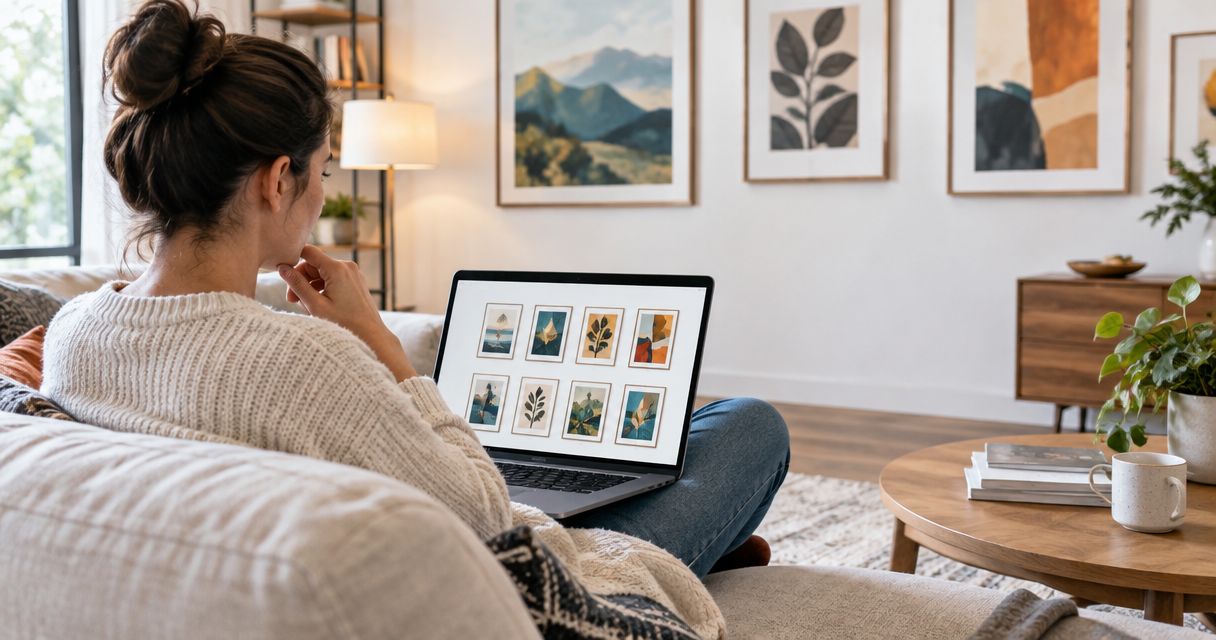
An online art purchase involves separate decisions: whether you trust the seller, whether the object matches the description, and whether it works in your room. A convincing room photograph answers none of those questions by itself. Treat it as inspiration, not proof.
When browsing Mercado da Imagem, use the same checks you would apply to any art and wall decoration seller. Choose the piece only after you can describe what will arrive without referring to the promotional image.
That means knowing the physical dimensions, material, framing status, and order terms. Your 2026 buying checklist should also cover what happens if the delivery is damaged or differs from the agreed specification.
Is buying wall art online safe?
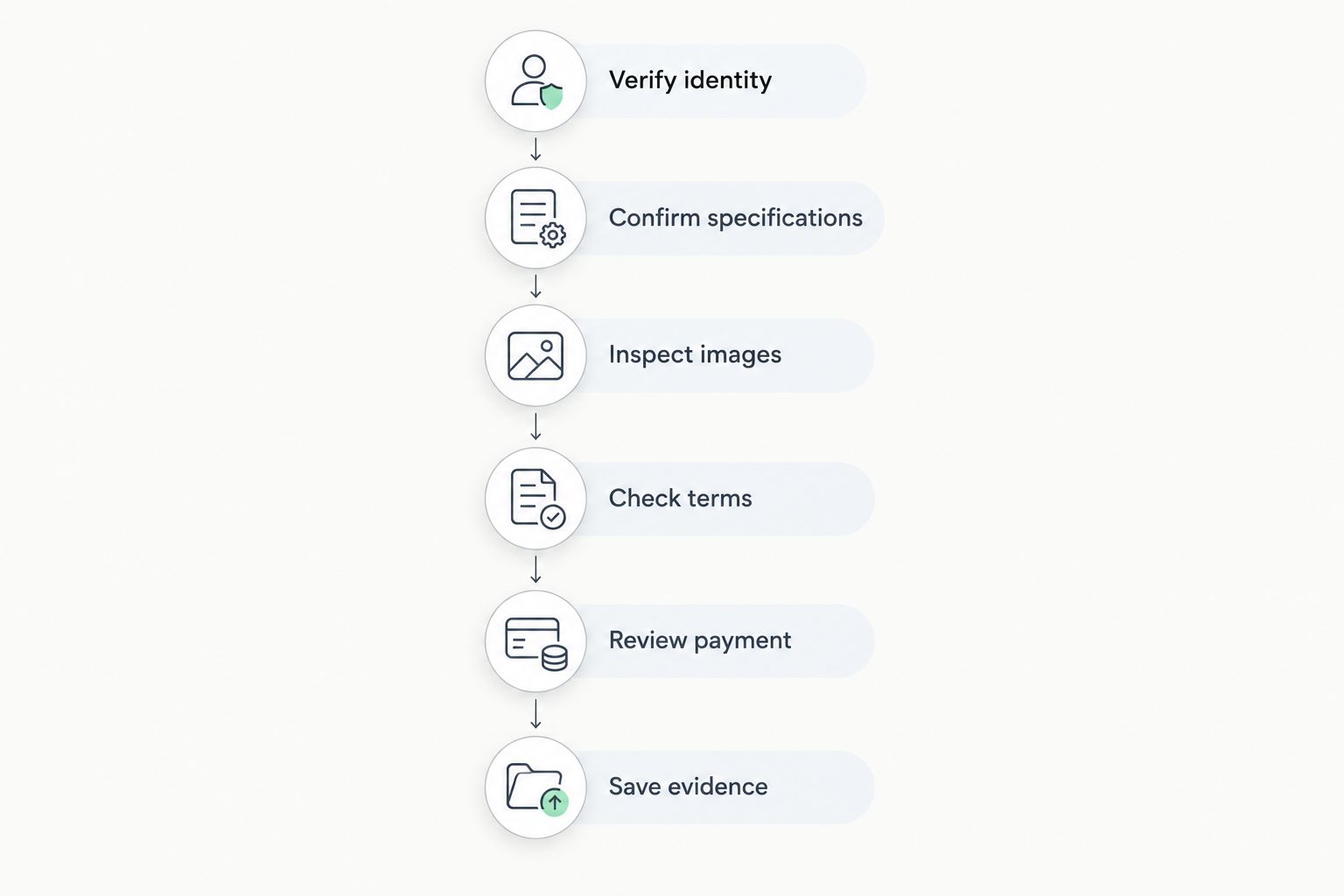
Yes, provided you can verify the transaction rather than simply admire the artwork. Follow these checks in order; a missing answer is a reason to pause, not something to resolve after payment.
1. Verify identity
Check the business name, contact information, and seller identity shown on the listing, checkout, and order documentation. If those names differ, ask who is taking payment and who is responsible for fulfilling the order. A payment processor can appear separately, but an unexplained mismatch deserves clarification.
Look beyond testimonials displayed by the seller. Read independent reviews for specific descriptions of ordering, communication, delivery, and problem resolution. Repeated wording or vague praise is not useful evidence of how a seller handles a disputed order.
2. Confirm specifications
Request the finished dimensions, including the frame where applicable. Establish whether the listing describes an original work, a reproduction, a print, or a digital file. Those are different purchases, even when their preview images look identical.
Also confirm the support material, surface finish, framing status, and included hanging components. If a detail matters to your decision, it belongs in the written specification rather than an assumption based on the photograph.
3. Inspect images
Ask for views that answer practical questions: the front, a close-up of the surface, and the back or edge. These 3 views help you inspect appearance, construction, and mounting arrangements. They do not establish authenticity on their own.
For an existing artwork, ask whether the images show the actual item. For work that has not yet been made, distinguish reference photographs from the design you are approving. A digital room mockup is not a photograph of a finished object.
4. Check terms
Read the seller's delivery, cancellation, return, and damage-reporting terms before checkout. Identify the procedure, required evidence, and any stated deadlines. Do not assume that changing your mind and receiving a damaged item follow the same process.
For custom work, ask when your design becomes final and how later changes are handled. Save the answer with the order. Written clarity is more useful than a reassuring message that never explains the procedure.
5. Review payment
Check the checkout address and read the payment provider's dispute conditions. HTTPS encrypts information in transit; it does not verify the seller's honesty or the quality of the artwork. A padlock is a connection feature, not an endorsement.
Do not assume every payment method offers the same recourse. Review the applicable protections, exclusions, and reporting requirements before authorizing the transaction. If a seller redirects payment, verify the destination independently rather than following an unexpected message.
6. Save evidence
Keep the listing, photographs, approved specification, seller correspondence, payment receipt, and order confirmation. Save copies you can access independently of the seller's website. Listings can change after an order is placed.
For custom work, assemble 1 written order record containing the agreed design and physical specifications. It should make sense to someone who has never seen your earlier conversation.
Ready-made or custom wall art: which needs more checking?
Neither route removes the need to verify the seller. The difference is what you can inspect before ordering: an existing object or an agreement about an object that will be made.
| Buying route | Best for | Main advantage | Main limitation | Check before paying |
|---|---|---|---|---|
| Ready-made wall art | Buyers choosing an existing design | You can request evidence of the finished item when it exists | A styled image can obscure scale, texture, or condition | Confirm whether photographs show the item you will receive |
| Custom wall art | Buyers with specific dimensions or design requirements | The brief can specify the intended result | A preview cannot establish the finished physical result | Approve dimensions, materials, design, and change terms in writing |
Choose ready-made wall art when the existing piece meets your requirements; choose custom work when the written specification solves a specific need. Neither choice is automatically safer.
For a custom brief, the guide to turning reference images into custom wall art orders is a useful next step. Keep inspiration separate from the final instructions: a reference image alone leaves too much open to interpretation.
Why buying wall art online varies in risk
The important differences are not just between websites. Your order becomes harder to assess when more of the result depends on interpretation, production, or handling.
- Seller traceability: A clearly identified seller gives you a named party to contact about the order. An unexplained identity mismatch leaves responsibility unclear.
- Specification clarity: Written dimensions and materials give you something concrete to compare with the delivered piece. An atmospheric description does not.
- Customization: Bespoke work requires agreement about the result before that result exists. A documented approval matters more than an informal exchange of reference pictures.
- Fragility and construction: Glazing, projecting elements, and delicate surfaces need handling appropriate to their construction. Ask how the item will be protected rather than assuming all art travels alike.
- Payment and dispute terms: Your options depend on the payment method, provider conditions, seller terms, and applicable law. Read the actual rules for your transaction.
- Delivery evidence: Order records and photographs support a clear account of what was agreed and received. They do not guarantee a particular dispute outcome.
Use these factors to decide what to ask, not to assign a seller an invented safety score. A complete answer to a practical question is more useful than an unsupported trust badge.
How do I know whether wall art will look right at home?
Start with 2 measurements: finished width and finished height. Mark the outline on your wall with removable material suitable for the surface, then view it from your usual seating position. Measure the framed piece, not just the image area.
Check nearby furniture, switches, doors, and other objects that affect placement. For dimensional work, confirm depth as well. A flat preview cannot show whether a projecting piece interferes with the space around it.
Color needs a separate check. Screens and room lighting affect appearance, so do not treat a digital image as a guaranteed color match. If matching a particular finish is essential, ask what physical reference or approval process the seller can provide.
Before finalizing a 2026 room refresh, separate three questions: does the artwork fit, does its appearance suit the room, and can it be installed appropriately? A strong answer to one does not settle the others.
How can I check whether an artwork is authentic?
Start by confirming what the seller claims the object is. An original painting, an authorized reproduction, and a decorative print require different descriptions and supporting information. A print is not misleading merely because it is a print; the problem is misrepresentation.
Ask for the artist's identity, medium, and any documentation that supports the claim being made. If a signature, edition, or provenance is central to the purchase, request legible evidence and assess whether it relates to that specific object. A certificate is a document to examine, not automatic proof.
Reverse-image searching can reveal other appearances of a listing image. It cannot establish ownership or authenticity by itself: legitimate reproductions and unauthorized copies can both appear repeatedly online.
For purchases where authorship determines your decision, obtain an appropriately qualified independent opinion. Do not substitute seller enthusiasm or a polished product page for evidence.
What should I do if wall art arrives damaged?
Photograph the package, protective materials, and artwork before discarding anything. Show the overall condition and close-up details, and preserve the order reference. Avoid hanging or altering a damaged piece while you seek instructions.
Contact the seller promptly through a channel that preserves the conversation. Describe the problem factually and attach the relevant images. Follow the applicable reporting procedure, including the payment provider's process if a dispute becomes necessary.
Do not attempt repairs unless you have clear written instructions and understand their effect on the claim. Damage assessment and return handling depend on the item and the transaction terms; there is no universal outcome to promise.
When should you pause the purchase?
Pause when the seller cannot explain what you are buying, who will fulfill the order, or how a problem will be handled. Pressure to pay before those questions are answered is not a reason to skip them. It is a reason to stop.
For Mercado da Imagem wall art shoppers, the best safeguard is a documented order, not confidence in a styled photograph. This rule applies equally to a straightforward decorative purchase and a detailed custom brief.
Before paying in 2026, ask yourself whether an independent reader could identify the promised item from your saved records. If not, request a clearer confirmation. Do not rely on information that exists only in your memory of a conversation.
FAQ
Is buying wall art online safe in 2026?
Buying wall art online is safe when you verify the seller, confirm the item specifications, and understand the transaction terms. Save the listing and order records before paying; a secure checkout alone does not establish product quality or authenticity.
Does HTTPS mean an online art store is trustworthy?
HTTPS protects information transmitted between your browser and the website; it does not prove that a seller is trustworthy. Check seller identity, item details, and dispute terms separately.
Is custom wall art safer than ready-made art?
Custom wall art is not automatically safer than ready-made art. Custom orders need a clear written specification and approval, while ready-made purchases need accurate evidence of the finished item.
How many photos should I request before buying wall art?
Request 3 views as a practical starting point: the front, a surface close-up, and the back or edge. Ask for additional details wherever the construction, condition, or mounting remains unclear.
What should I check before ordering from Mercado da Imagem?
Before ordering art or wall decoration from Mercado da Imagem, verify the listing's dimensions, material, framing status, and transaction terms. Confirm any detail that affects your decision in writing rather than inferring it from a room image.
Can I return wall art if I do not like it?
Your return rights depend on applicable law and the terms relevant to your purchase. Read the policy before ordering and distinguish a change of mind from damage or a mismatch with the agreed specification.
Will wall art look exactly like its online photograph?
An online photograph does not guarantee an exact physical appearance. Screen settings, lighting, scale, and surface texture affect what you see, so use dimensions and material details alongside photographs.
One last thing
A preview can show a frame without proving that a frame is included. Before completing a 2026 purchase, rewrite the order in plain language: physical object or digital file, dimensions, material, framing, and approved design. Compare that sentence with the confirmation.
The safest next move is to close the gap between what the picture suggests and what the order promises. If those descriptions do not match, resolve the difference before paying.