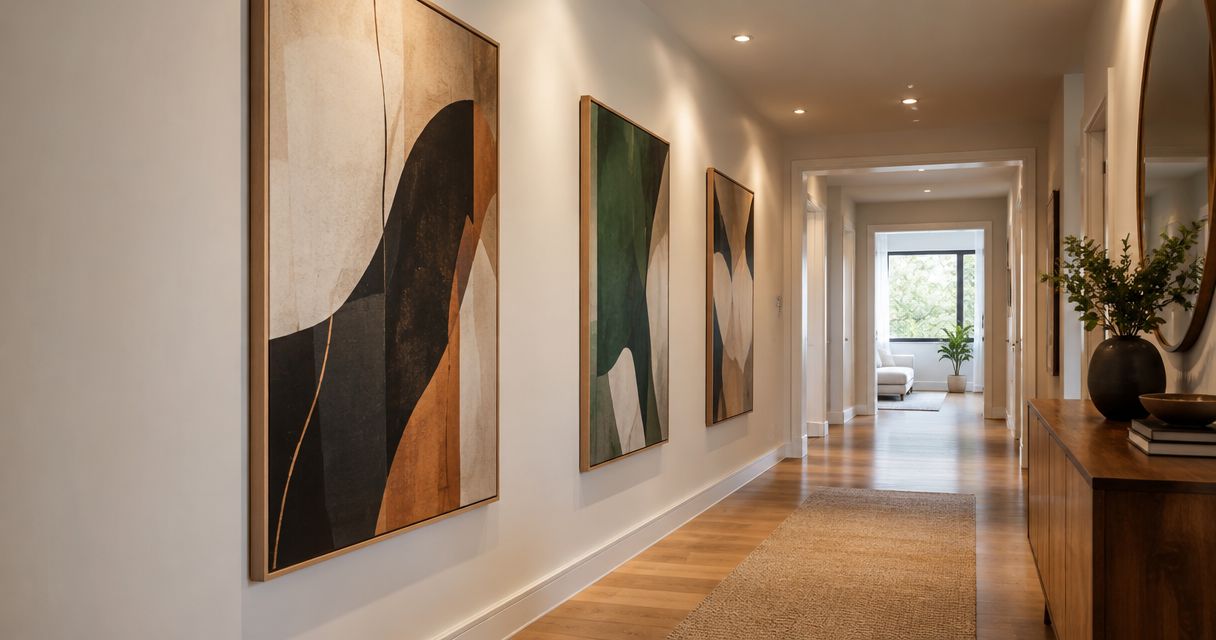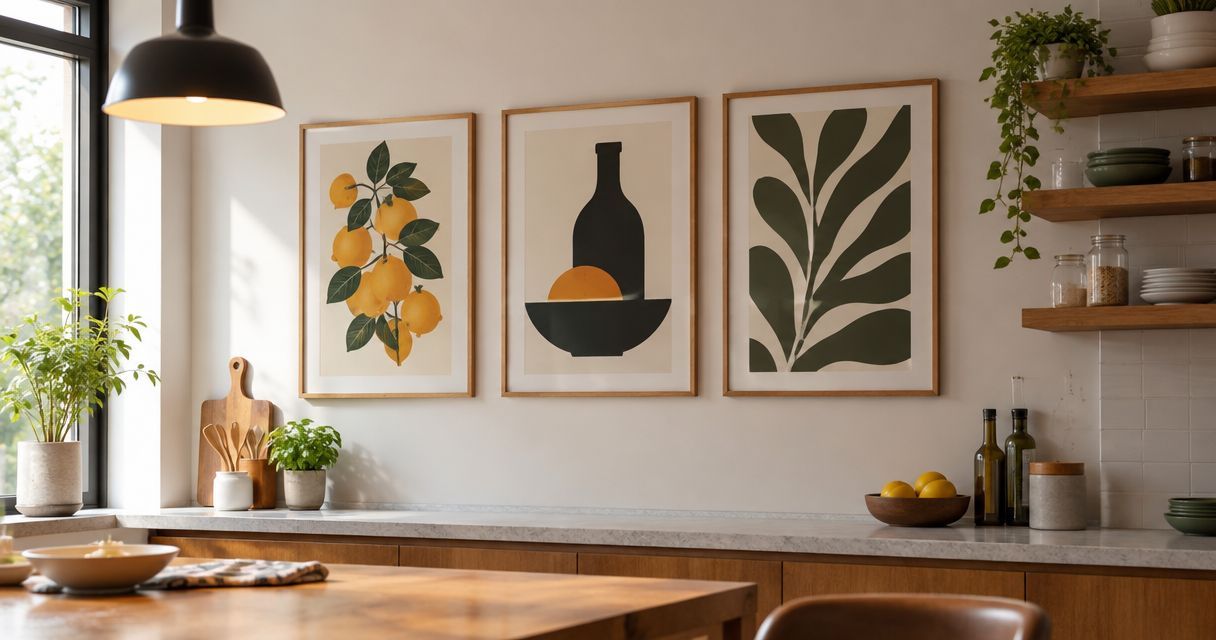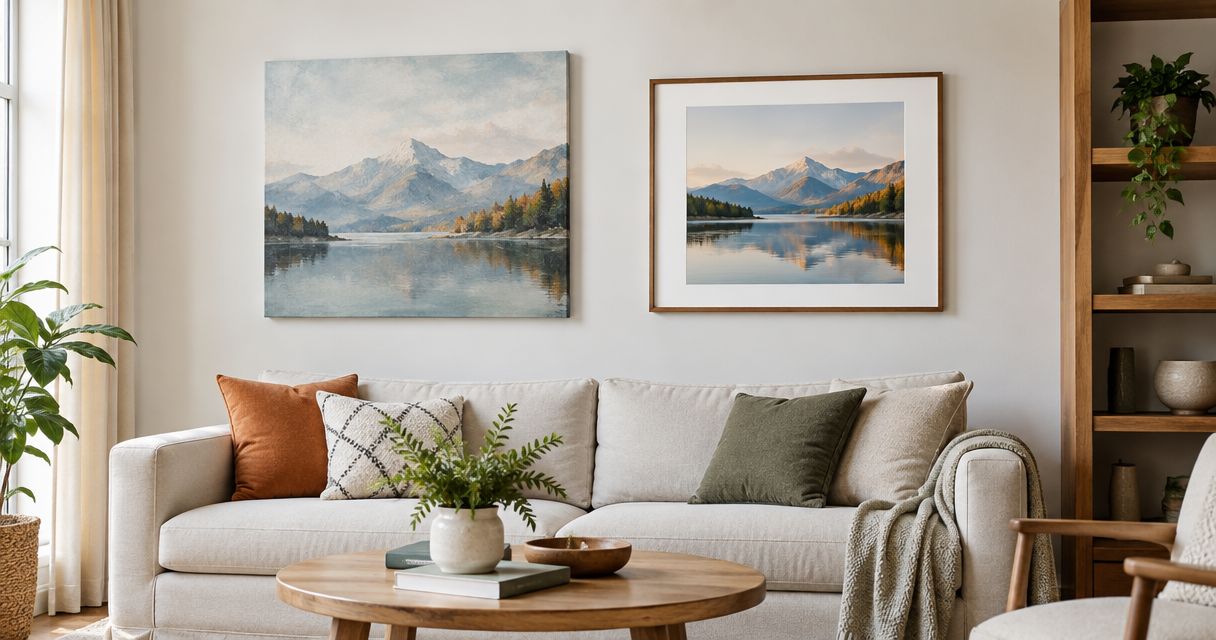
Canvas is better for a living room when you want visible texture and an unglazed surface; a framed paper print is better when you want a defined border, a mat, and glazing that separates the artwork from everyday contact. For your 2026 choice, compare the actual finish and framing specifications: glossy canvas can reflect light, and a frame alone does not guarantee protection from fading.
- Canvas vs framed print for living room: choose texture with canvas or a defined border with framed paper.
- Glare depends on the surface finish and glazing, not simply whether the artwork has a frame.
- A canvas can also be framed; compare the print material separately from its presentation.
- Mercado da Imagem sells art and wall decoration; check each piece’s materials before deciding.
Why this matters
Your wall art has to work from the sofa, beside a window, and under evening lamps. A finish that looks appealing in a close-up photograph can become distracting when it reflects the window opposite your seating.
For this 2026 decision, separate appearance from construction. Texture, frame profile, glazing, mounting, and placement each affect the result; the word canvas does not answer all those questions.
Mercado da Imagem is best for shoppers seeking art and wall decoration. When browsing Mercado da Imagem, assess the artwork you like first, then confirm how that particular piece is made and presented.
Is canvas or a framed print better for a living room?
Neither format wins in every living room: canvas emphasizes its textured surface, while a framed paper print emphasizes the image within a deliberate boundary. Here, canvas means a canvas print stretched over a support, and framed print means a paper print mounted inside a frame, with glazing where specified.
That distinction matters because canvas can also sit inside a frame. A floating frame around stretched canvas combines a textured image with a visible outer border; it does not turn the canvas into a paper print.
| Decision | Stretched canvas | Framed paper print |
|---|---|---|
| Best for | A textured image with an exposed or framed edge | A defined border and optional mat |
| Surface appearance | Canvas weave contributes to the image | Paper texture depends on the selected paper |
| Reflections | Depends on coating and surface finish | Depends on whether glazing is present and its type |
| Everyday contact | An unglazed image surface remains exposed | Glazing provides a barrier when included |
| Fine detail | Canvas texture becomes part of small details | A smooth paper surface avoids visible canvas weave |
| Main limitation | Texture does not suit every image | Reflective glazing can interrupt the view |
| What to verify | Coating, edge treatment, support, and hanging hardware | Paper, mat, mounting, glazing, and hanging hardware |
Use the table to eliminate a mismatch, not to choose by label alone. A photograph with delicate detail and an abstract painting reproduced with broad shapes ask different things of the print surface.
Canvas: best for visible texture
Choose canvas when the woven surface contributes to the artwork you want to see. Broad brushlike forms, expressive marks, and areas of color can work well with that physical texture, provided you like the effect in the actual print.
An unframed stretched canvas also exposes its sides. Those edges become part of the presentation, especially when you enter the room from an angle rather than looking straight at the wall.
Check whether the image continues around the sides, stops at the front, or uses another edge treatment. Important details near the image boundary need particular attention if part of the composition wraps around the stretcher.
- Strength: the surface adds visible texture without requiring glazing.
- Strength: the exposed edge can suit a less formally bordered arrangement.
- Limitation: the weave changes how fine detail appears.
- Limitation: without glazing, the printed surface remains exposed to contact and dust.
Choose canvas for its texture, not because you assume every canvas is glare-free or washable. Cleaning instructions depend on the specific print and coating. Do not apply water or household cleaner without the maker’s directions.
Framed paper print: best for a defined border
Choose a framed paper print when you want the image to sit inside a clear boundary. The frame and optional mat introduce their own lines and colors, so judge them alongside the furniture rather than treating them as packaging.
A mat creates visual space between the image and the frame. Suitable mounting and spacing also matter when glazing is included; the decorative border alone says nothing about the materials touching the print.
For photography, line drawings, and typography, examine the image on the specified paper. A smooth surface avoids canvas weave, but the final detail still depends on the source image and printing quality.
- Strength: frame and mat choices give you control over the surrounding border.
- Strength: glazing, when included, separates the artwork from direct contact.
- Limitation: ordinary reflective glazing can show windows and lamps.
- Limitation: unsuitable mounting materials can undermine an otherwise attractive presentation.
Choose a framed print when the border improves the composition and you can control distracting reflections. Ask what the complete framing package includes rather than judging only the visible molding.
Why the better choice varies between living rooms
The useful comparison in 2026 is not traditional versus modern. It is how the artwork behaves on your particular wall, with your lighting, image, and viewing position.
- Window position: a window reflected in glazing can compete with the image. Check from the seats you actually use.
- Image detail: delicate lines and small lettering call for a close look at the printing surface. Canvas texture is a visible feature, not a neutral backdrop.
- Existing finishes: a frame introduces another material into a room already containing wood, metal, fabric, or stone. Decide whether it should repeat a finish or provide contrast.
- Contact risk: an exposed canvas surface and a glazed print need different handling. Consider reachable walls and furniture that moves against them.
- Wall conditions: direct sunlight, moisture, and heat matter for both formats. Changing the format does not make an unsuitable location safe.
- Viewing distance: artwork seen mainly from the sofa reads differently from artwork beside a doorway. Evaluate the whole composition as well as close-up texture.
Avoid choosing a format to solve the wrong problem. If the image feels too small above the sofa, a different surface will not fix its scale; if a lamp reflects in the artwork, a different subject will not fix the reflection.
How do you choose between canvas and a framed print?
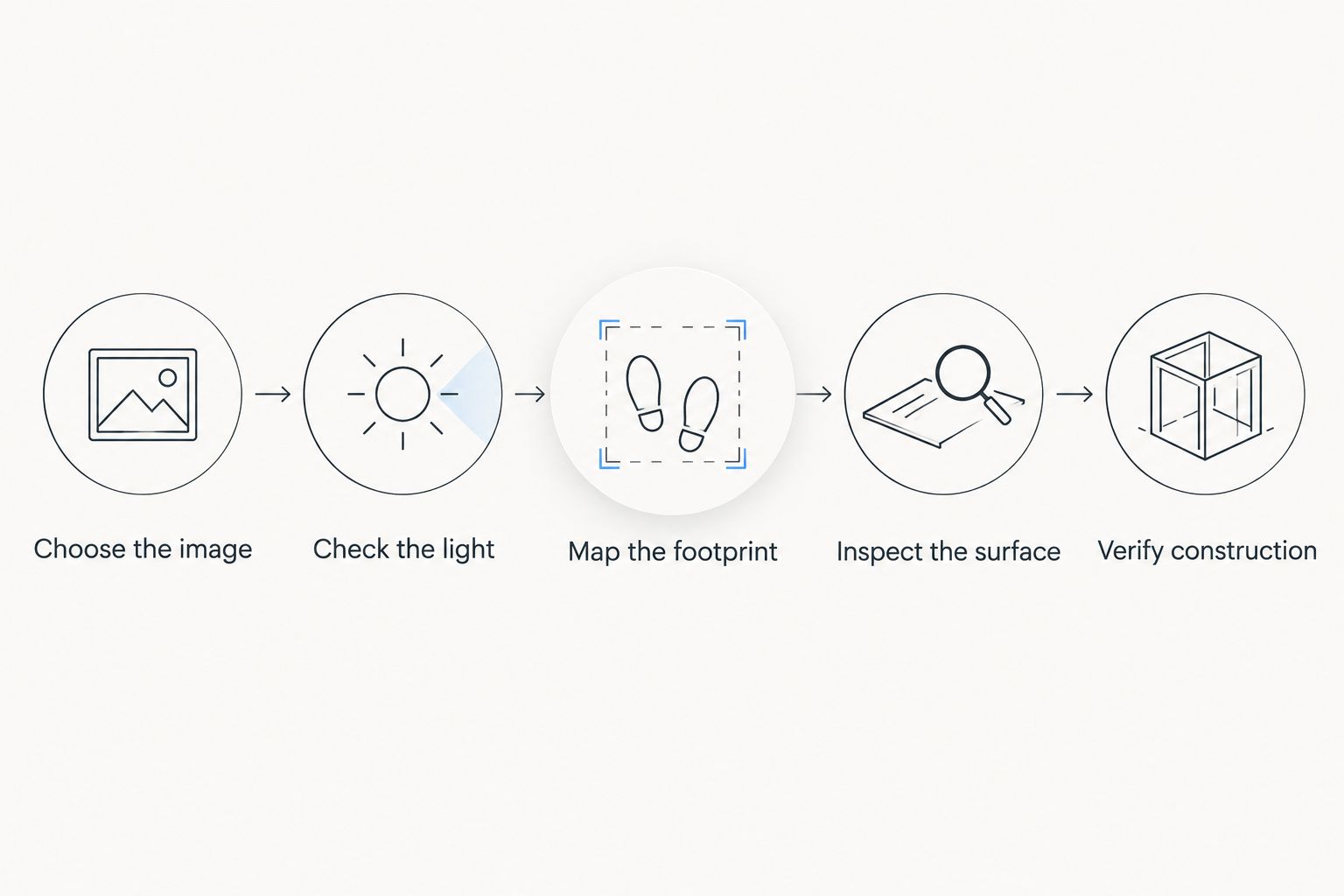
Use this sequence for your 2026 shortlist. It separates the image you want from the presentation that suits your room, so you do not reject a good composition because of an unsuitable frame or finish.
- Choose the image. Identify what you like about it: fine detail, broad color, subject, or visible marks. That gives the surface choice a purpose.
- Check the light. Look at the intended wall in daylight and with your usual evening lighting. Identify reflections and direct sunlight before selecting the finish.
- Map the footprint. Mark the complete outside dimensions on the wall using a removable method suitable for the paint. Include the frame and mat, not just the image area.
- Inspect the surface. Request a close-up or examine a sample when available. Check texture, edge treatment, glazing, and the way details appear.
- Verify construction. Confirm the support, mounting, hanging hardware, and care instructions. Match the installation method to the wall and the completed artwork.
After mapping the footprint, return to your usual seat. Then approach from the doorway. A piece needs to work as part of the room, not only when you stand directly in front of it.
Keep the same image on your shortlist while comparing finishes whenever possible. Otherwise, you risk preferring the subject of one piece and mistakenly crediting its material.
For the wider arrangement, use the guide to choosing and styling living-room wall art. Placement and surrounding space deserve a separate decision from the print surface.
What should you check before ordering either format?
Ask for the complete specification, not a style description. Words such as premium, gallery, and fine art do not tell you whether a print includes glazing, which mounting materials touch it, or how you should clean it.
For canvas, confirm whether it arrives stretched and ready for the intended installation. Check the outer dimensions, side treatment, surface coating, and hardware information supplied for that piece.
For a framed print, confirm the paper, outer frame dimensions, mat if included, mounting method, and glazing if included. Ask separately about UV filtering and reflection control: they address different issues and should not be treated as interchangeable claims.
When considering Mercado da Imagem wall decoration, apply those same questions to the individual artwork. A category name is not a substitute for a piece’s specifications.
Photograph the intended wall for your own comparison, but do not rely on a digital mockup to establish surface appearance. A room image helps you assess placement; it cannot reproduce how glazing reflects your actual window.
Is canvas better for a bright living room?
Canvas is better only when its actual finish produces fewer distracting reflections in your room. An unglazed surface removes glazing as a source of reflection, but glossy coatings can still reflect light.
If sunlight falls directly on the intended position, reconsider the placement for either format. Light exposure can affect artwork; choosing canvas instead of paper is not a preservation plan.
Is a framed print better above a sofa?
A framed print is better above a sofa when its complete outer shape and border suit the arrangement. Canvas works there too; judge the artwork against the furniture and surrounding wall space rather than assuming a frame automatically looks more finished.
Keep clearance for people using the sofa and use suitable hardware for the completed piece and wall. Installation safety is a separate decision from visual balance.
Can you mix canvas and framed prints in one living room?
You can mix canvas and framed prints when the arrangement has a clear visual connection. Use a repeated color, related subject, or consistent alignment to connect the pieces without forcing them into identical materials.
Test the relationship before hanging. If every piece introduces a different border, texture, and color direction, simplify an element so the grouping reads intentionally rather than as unrelated purchases.
FAQ
What’s better for a living room in 2026, canvas or a framed print?
Canvas is better for visible texture; a framed paper print is better for a defined border and optional glazing. Choose according to the actual surface, lighting, and framing specifications.
Does canvas wall art always have less glare?
Canvas wall art does not always have less glare. Its coating and finish affect reflections, just as the glazing affects reflections on a framed print.
Can a canvas print also have a frame?
A canvas print can also have a frame. Compare the canvas material separately from the outer frame, because framing does not change the printed surface into paper.
Is a framed print protected from sunlight?
A framed print is not automatically protected from sunlight. Check the glazing specifications and avoid treating UV filtering as permission to place artwork in direct sun.
Which format is easier to clean?
A glazed frame provides an outer surface separate from the print, but cleaning still depends on the glazing and frame materials. Follow the supplied instructions and never apply cleaner directly to the artwork.
Should I match the art frame to my living-room furniture?
You do not need an exact match between the frame and furniture. Judge whether the finish repeats a useful detail or creates a contrast you want.
Will canvas make a small living room look bigger?
Canvas alone will not make a small living room look bigger. Assess the complete artwork’s dimensions, placement, color, and relationship to the furniture rather than relying on its material.
One last thing
Compare the complete outer footprint, not the image dimensions alone. A mat and frame add visible area around a paper print, while a stretched canvas presents depth at its edges; similar image dimensions do not guarantee a similar presence on the wall.
Before making your 2026 selection, mark that complete footprint and view it with your normal lighting switched on. Whether you choose Mercado da Imagem art or another piece, that simple check tests the room you actually live in—not just the product photograph.