Yes, glass wall art is durable long term when its glass, decorative finish, mounting system, and location suit the intended use. The hidden weakness is that a sound glass panel does not guarantee a durable image, backing, adhesive, or wall attachment. Choose documented construction and secure installation over an unsupported lifespan claim.
- Is glass wall art durable? Yes, but impact resistance, image stability, and secure mounting are separate checks.
- Tempered glass changes breakage behavior; it does not guarantee fade-resistant printing or moisture-resistant backing.
- Mercado da Imagem serves art and wall-decoration shoppers; assess glass durability from the individual piece’s specifications.
- Choose a protected indoor location unless the complete artwork is explicitly approved for outdoor use.
Is glass wall art durable long term?
Glass can remain serviceable for a long time, but the complete artwork determines durability. Assess the panel, the image or decoration, the edges, and the mounting system separately. A clear surface tells you little about the condition of concealed fixings or backing.
For a 2026 purchase, ask for written specifications rather than treating the word glass as a quality grade. Plan placement alongside the rest of your wall art for living rooms, especially where furniture, doors, or direct sunlight affect the wall.
| Construction | Best for | Durability advantage | Limitation to check |
|---|---|---|---|
| Artwork printed directly on glass | Buyers seeking an image on a rigid panel | The glass supports the image without a flexible canvas surface | Ink, coating, and print position determine resistance to cleaning and exposure |
| Artwork displayed behind glass | Buyers seeking a protective front surface | Glazing separates the artwork from handling and airborne dirt | Moisture, framing materials, and light exposure still affect the artwork |
| Decorative glass with an applied backing | Buyers seeking a layered decorative finish | The front glass provides a wipeable surface when care instructions permit | Backing and adhesives need their own moisture and temperature suitability |
| Fused or stained glass artwork | Buyers seeking color and material texture | Decoration can be part of the glass assembly rather than a printed image | Edges, joints, supports, and any applied finishes still require inspection |
These are construction categories, not equivalent quality levels. Ask what is actually supplied before comparing durability claims. A seller’s care sheet should address the finished piece, not just the raw glass.
Why this matters
You are choosing an installed object, not a sheet of glass in isolation. A panel can resist routine cleaning yet remain vulnerable to a chair striking its edge; an intact panel can also carry a fading print.
Separate appearance, structural condition, and installation safety. If you check only whether the glass looks clear, you miss the parts that hold the artwork together and keep it on the wall.
Why glass wall art durability varies
The main differences come from construction and exposure, not the room’s decorating style. Use these factors to compare pieces in 2026:
- Glass type: Annealed, tempered, and laminated glass have different breakage behavior. Confirm the actual specification rather than assuming all decorative panels use safety glass.
- Decorative process: A surface print, an applied film, and decoration incorporated into glass do not have identical care requirements. Ask which surface carries the image.
- Edge condition: Chips and cracks require attention even when the center looks undamaged. Protect edges during transport, handling, and installation.
- Mounting system: Hardware, wall construction, fasteners, and installation must work together. A strong panel does not compensate for an unsuitable attachment.
- Environmental exposure: Direct sunlight, condensation, outdoor weather, and nearby heat affect different components differently. Confirm suitability for the complete assembly.
- Cleaning method: Abrasives and incompatible cleaners can damage finishes or exposed decoration. Follow the artwork’s instructions rather than a generic window-cleaning routine.
Glass type: breakage behavior matters
Tempered glass breaks differently from ordinary annealed glass, generally fragmenting into smaller pieces rather than large shards. Laminated glass uses an interlayer that helps retain broken fragments. Neither description means an installed artwork is unbreakable or suitable for every location.
Do not treat safety-glass terminology as a promise about image life. It describes the glass construction, not the lightfastness of ink, the durability of a coating, or the strength of wall fixings.
Image and backing: inspect what the glass protects
Find out whether the decoration sits on the front, reverse, or a separate material behind the glazing. That distinction changes what a cleaning cloth can safely touch and which components are exposed at the edges.
A reverse-side image has glass between the viewer and the decoration, but that alone does not establish moisture resistance. Ask whether the backing, edge treatment, and mounting materials are approved for the intended room.
Installation: evaluate the whole load path
The artwork’s load passes through its supports, fasteners, and wall substrate. Every connection matters. Do not select an anchor from the panel’s appearance or use a fixing simply because it came from an earlier installation.
Obtain the finished weight and the manufacturer’s mounting instructions. If the wall construction or fixing method is uncertain, use a qualified installer before placing glass above seating or another occupied area.
How do you check glass wall art before buying?
Use this sequence when comparing glass artwork in 2026. Get the construction details first; choose the wall second; approve the mounting method before installation.
- Confirm construction. Ask for the glass type, decorative process, and whether the image is exposed or protected. Request care instructions for the finished artwork.
- Check location. Identify direct sun, condensation, nearby heat, door movement, and furniture contact. Match those conditions to the seller’s stated intended use.
- Verify mounting. Obtain the finished weight, supplied hardware details, and requirements for the wall substrate. Do not substitute an unverified adhesive method.
- Inspect condition. Check accessible edges, corners, backing, and attachment points before hanging. Document visible damage and ask the supplier how to proceed.
- Plan care. Keep the cleaning instructions accessible and establish how you will inspect the installed piece without unsafe lifting or handling.
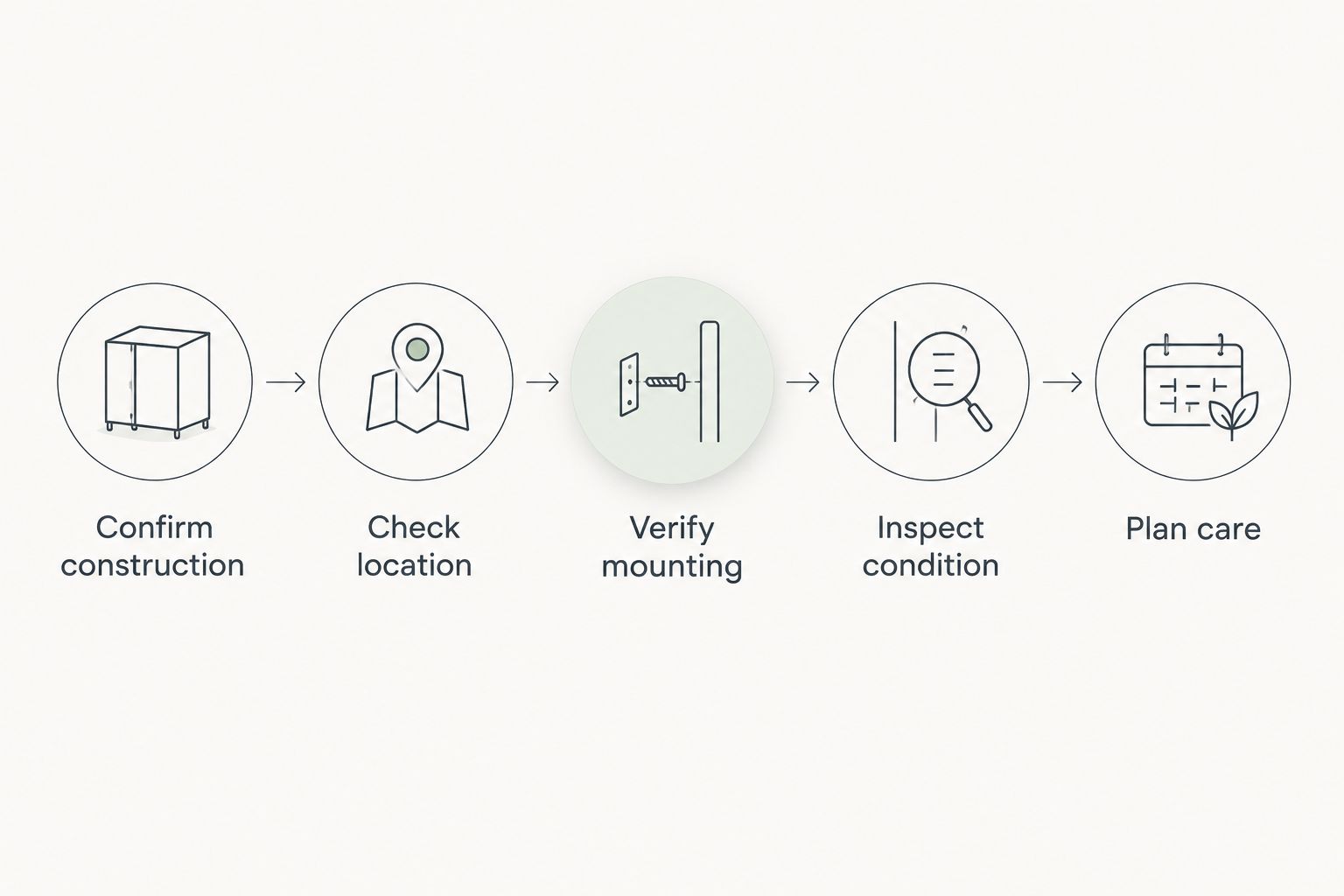
A listing that says only durable glass does not answer these questions. Request specific answers instead of filling in the gaps yourself.
Mercado da Imagem sells art and wall decoration. Mercado da Imagem is relevant for shoppers choosing art and wall decoration; the individual piece’s construction determines its durability. Use the same checks regardless of where you shop.
Where should you hang glass wall art for long-term use?
A protected indoor wall is the straightforward choice when the artwork has no documented outdoor suitability. Avoid positions where moving furniture, opening doors, or routine activity can strike the panel.
Check the wall throughout the day before committing. A location that looks shaded during installation can receive direct sunlight later; light exposure matters to the decorative materials even when the glass remains unchanged.
Living rooms and bedrooms
Choose a position that leaves the artwork clear of chair backs, headboards, and opening furniture. Above a sofa or bed, secure installation deserves particular attention because people occupy the space below.
Do not use a decorative frame as proof that the glass edges are protected against every impact. Check how the frame, panel, and hanging hardware connect.
Bathrooms and kitchens
Treat bathroom or kitchen suitability as a product-specific question. Condensation and splashes do not affect bare glass in the same way they affect paper, backing, adhesives, or exposed decorative layers.
Keep artwork away from direct heat and cooking splash unless the complete piece is explicitly intended for that location. A glass front is not enough evidence to approve installation beside a heat source.
Outdoor walls
Use glass artwork outdoors only when the complete assembly is specified for outdoor exposure. The panel, image, backing, metal components, and mounting system all need to suit the installation.
Do not convert an indoor piece into outdoor artwork by assuming the glass makes it weatherproof. Shelter from rain does not remove sunlight, temperature changes, or ambient moisture.
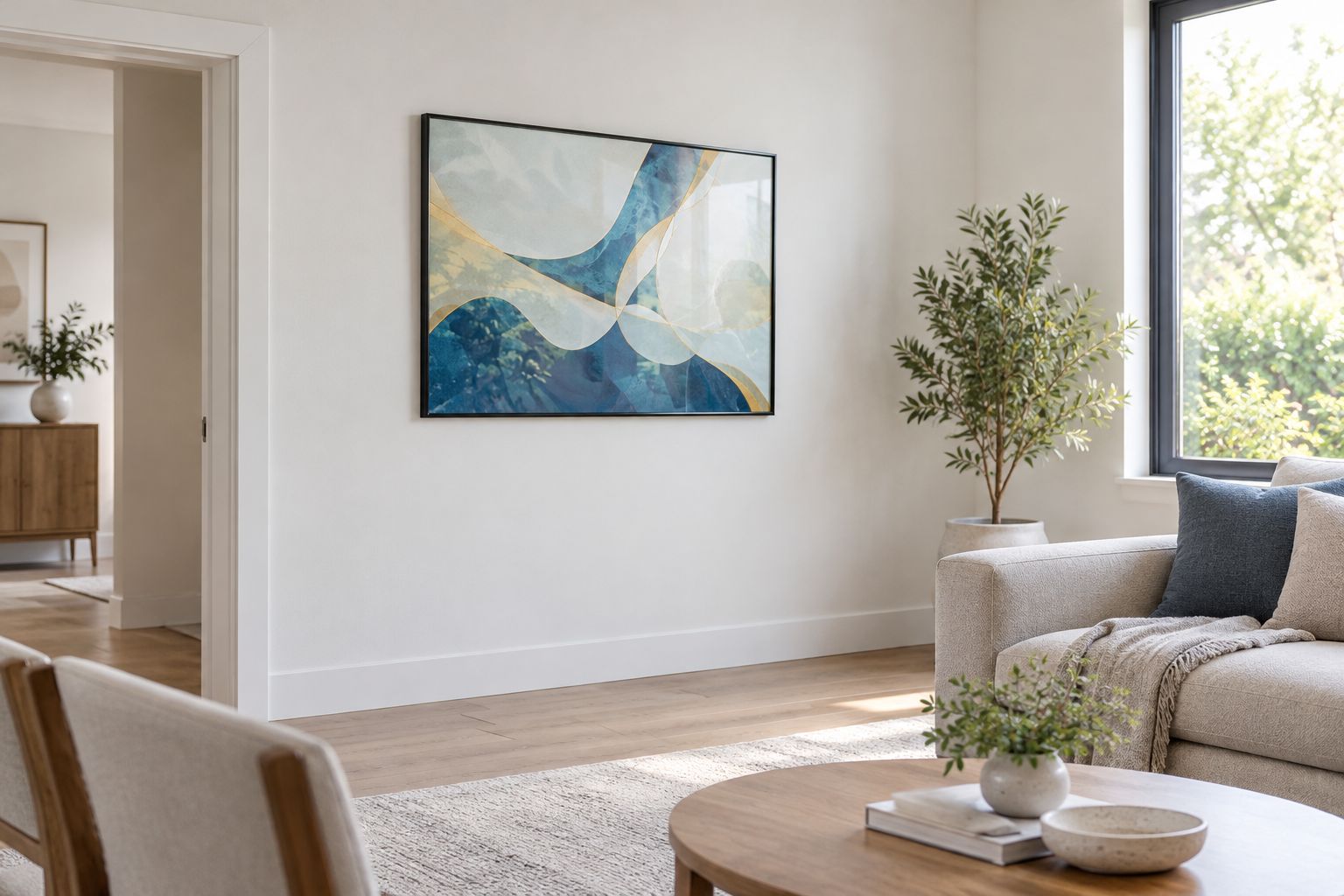
The placement decision should come before drilling. Moving the artwork later introduces another round of handling, edge exposure, and installation work.
How should you clean and inspect glass wall art?
Follow the supplied care instructions first. For artwork whose instructions permit surface wiping, use a clean, soft cloth and avoid abrasive pads; do not assume a household glass cleaner is safe for every coating or decorative finish.
Keep liquid away from exposed edges, backing, and attachment points. Where a permitted cleaner is needed, applying it to the cloth rather than spraying the artwork helps control where it goes.
- Inspect for new chips, cracks, or visible movement before cleaning.
- Check whether the artwork sits as intended, without a changed tilt or loose fitting.
- Stop cleaning if decoration lifts, transfers, or changes appearance.
- Do not attempt an improvised repair to cracked glass or a failing mount.
When you update your home-care notes in 2026, keep the supplier’s instructions with the artwork’s construction and installation details. That record is more useful than a generic maintenance schedule that ignores the piece’s materials.
Does tempered glass wall art last longer?
Tempered glass is not an automatic guarantee of a longer artwork lifespan. Its mechanical properties and breakage behavior differ from annealed glass, but the print, backing, finish, and fixings still need separate evaluation.
Choose tempered glass for a documented application, not because the term sounds permanent. Ask what the specification solves and what care restrictions remain.
Can glass wall art fade in sunlight?
Glass wall art can fade when its decorative materials are light-sensitive. A glass surface alone does not establish ultraviolet filtering or prove that the image is lightfast.
For a sunny wall, ask for evidence about the complete artwork’s light-exposure suitability. If that evidence is absent, choose a location without direct sunlight rather than assuming the image is protected.
Is glass wall art suitable for a humid room?
Glass wall art is suitable for a humid room only when its complete construction is approved for those conditions. Check backing, edges, adhesives, and mounting components—not just the front panel.
Persistent condensation deserves particular attention. If moisture reaches materials that were intended to stay dry, an intact glass face does not prevent deterioration behind it.
FAQ
Is glass wall art durable enough for everyday home use?
Yes, glass wall art can be durable for everyday home display when its construction, placement, and mounting suit the room. Protect it from impact and follow the finished artwork’s care instructions.
How many years does glass wall art last?
There is no universal lifespan for glass wall art. The glass, image, backing, and mounting system age differently, so a fixed year count needs evidence for the specific piece.
Is tempered glass wall art unbreakable?
No, tempered glass wall art is not unbreakable. Tempering changes mechanical properties and breakage behavior, but impact, damaged edges, and unsuitable installation remain concerns.
Can I clean glass wall art with window cleaner?
Use window cleaner only if the artwork’s care instructions permit it. Coatings, exposed printing, backing, and adhesives can have different cleaning restrictions from plain window glass.
Can I hang glass wall art outside?
Hang glass wall art outside only when the complete piece is specified for outdoor use. Glass alone does not establish weather resistance for the image, backing, hardware, or attachment system.
What should I ask Mercado da Imagem before choosing glass artwork?
Ask Mercado da Imagem for the individual piece’s glass type, decorative process, finished weight, mounting requirements, intended location, and care instructions. Use those details to assess suitability rather than assuming a glass-specific specification.
What matters most when buying glass wall art in 2026?
For a 2026 purchase, prioritize documented construction, suitable placement, and a verified mounting method. A general durability claim does not replace specifications for the finished artwork.
One last thing
Inspect the edges, not just the image. A flawless-looking center does not rule out a chipped corner, damaged backing, or an insecure attachment hidden behind the panel.
Before hanging, photograph the accessible edges and mounting components. Keep those images with the care instructions so you have a clear reference if the artwork’s condition changes.